
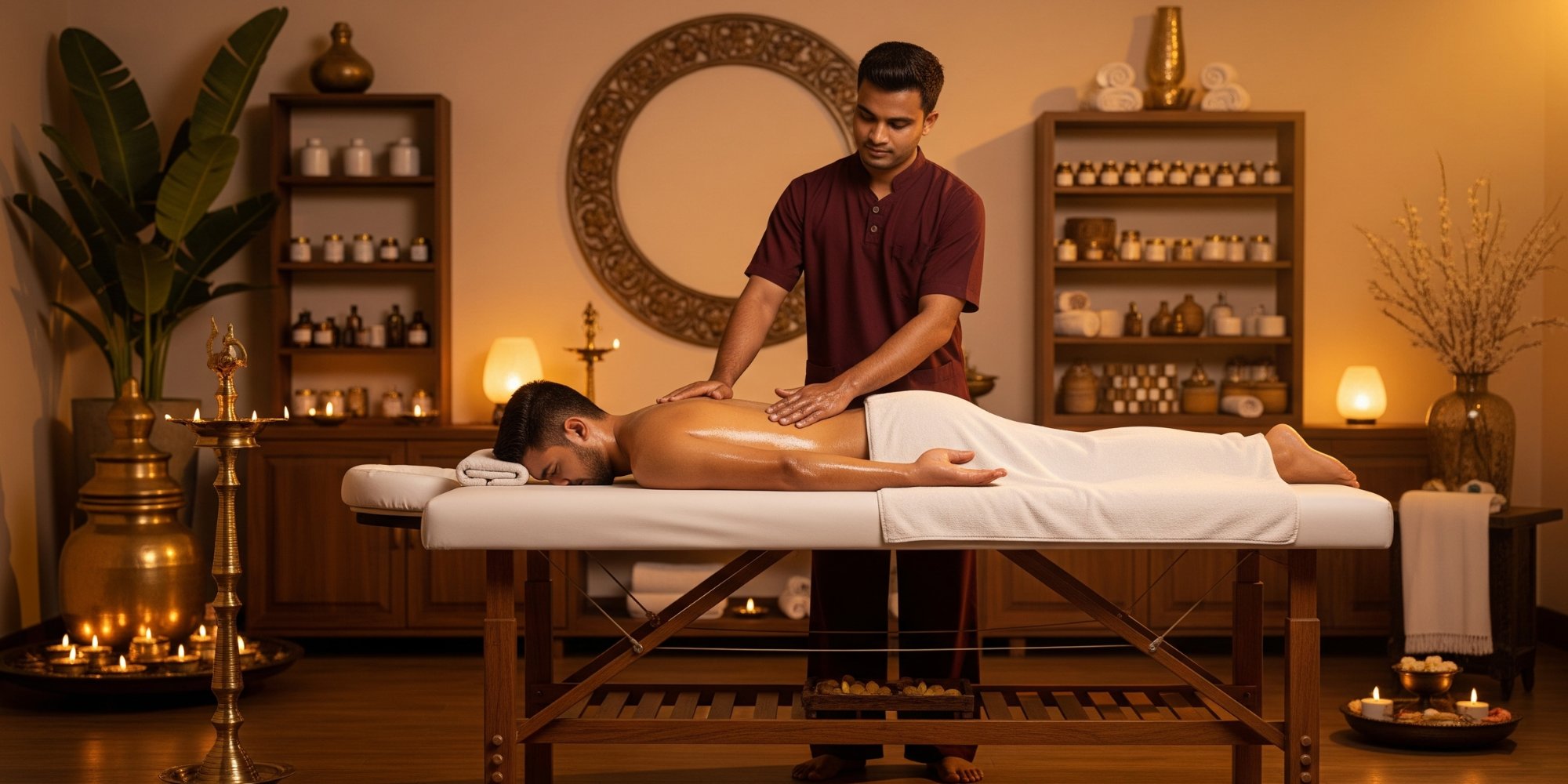
Abhyanga (Therapeutic Oil Massage)
Overview: Abhyanga (Therapeutic Oil Massage) Treatment
- ✓Doctor-Guided Diagnosis & Prakriti Assessment
- ✓Multi-Disciplinary ANP³ Integrated Care Plan
- ✓Targeted Root-Cause & Systemic Dosha Balancing
- ✓Supervised Panchakarma & Post-Therapy Care
Abhyanga is a highly specialized whole-body Ayurvedic massage. It is fundamentally classified as an external Snehana (oleation) therapy. The core objective is not merely muscle relaxation, but the strategic saturation of the bodily tissues with deeply penetrating herbal oils.
Unlike western massages that focus on localized muscle manipulation, Abhyanga utilizes heavy oil application coupled with rapid, synchronized, sweeping strokes along the arterial channels. This generates mild heat and opens up the microscopic circulatory pathways (Srotas).
Once the channels are open, the lipid-soluble active ingredients in the medicated oil are absorbed through the skin barrier, reaching deeper tissues. This process helps lubricate stiff joints, is traditionally used to help pacify the Vata dosha (which governs movement and pain), and supports moving accumulated toxins back toward the digestive tract for elimination.
Medically Reviewed By: Dr. Pasalapudi Visalaanjani, B.A.M.S, MD (Kayachikitsa)
Registration No: 1146/A/2016
Disclaimer: The information provided is for educational purposes and should not replace professional medical advice. Outcomes may vary.
Core Therapeutic Advantages
- Subdues Vata Dosha: Highly effective in calming the erratic, dry, and cold qualities of Vata, curing generalized body aches and neurological tremors.
- Enhances Deep Sleep: When the nervous system is saturated with warm oil, the brain effortlessly shifts into parasympathetic rest, curing insomnia.
- Improves Joint Mobility: Continuous oleation heavily lubricates the synovial joints, increasing flexibility and preventing age-related stiffness.
- Boosts Circulation: The downward sweeping strokes forcefully flush metabolic toxins (Ama) from deep tissues into the GI tract for elimination.
- Nourishes the Skin: Creates a robust lipid barrier, drastically improving skin tone, texture, and resilience against external infections or dryness.
- Strengthens Vision: Specific applications of oil on the feet (Padabhyanga) and head reflexologically cool and strengthen the optical nerves.
Phased Treatment Procedure
Phase 1: Purvakarma
A brief consultation is done to determine the current state of Vata dosha in the body, which dictates the specific type of warm medicated oil (like Ksheerabala or Dhanwantharam) that will be used.
The selected Ayurvedic oil is gently heated in a water bath to slightly above body temperature, ensuring optimal skin penetration without destroying the delicate herbal properties.
The treatment begins with the patient seated. Warm oil is first applied to the crown of the head (Shiro Abhyanga) and the ears to ground the nervous system.
Phase 2: Pradhana Karma
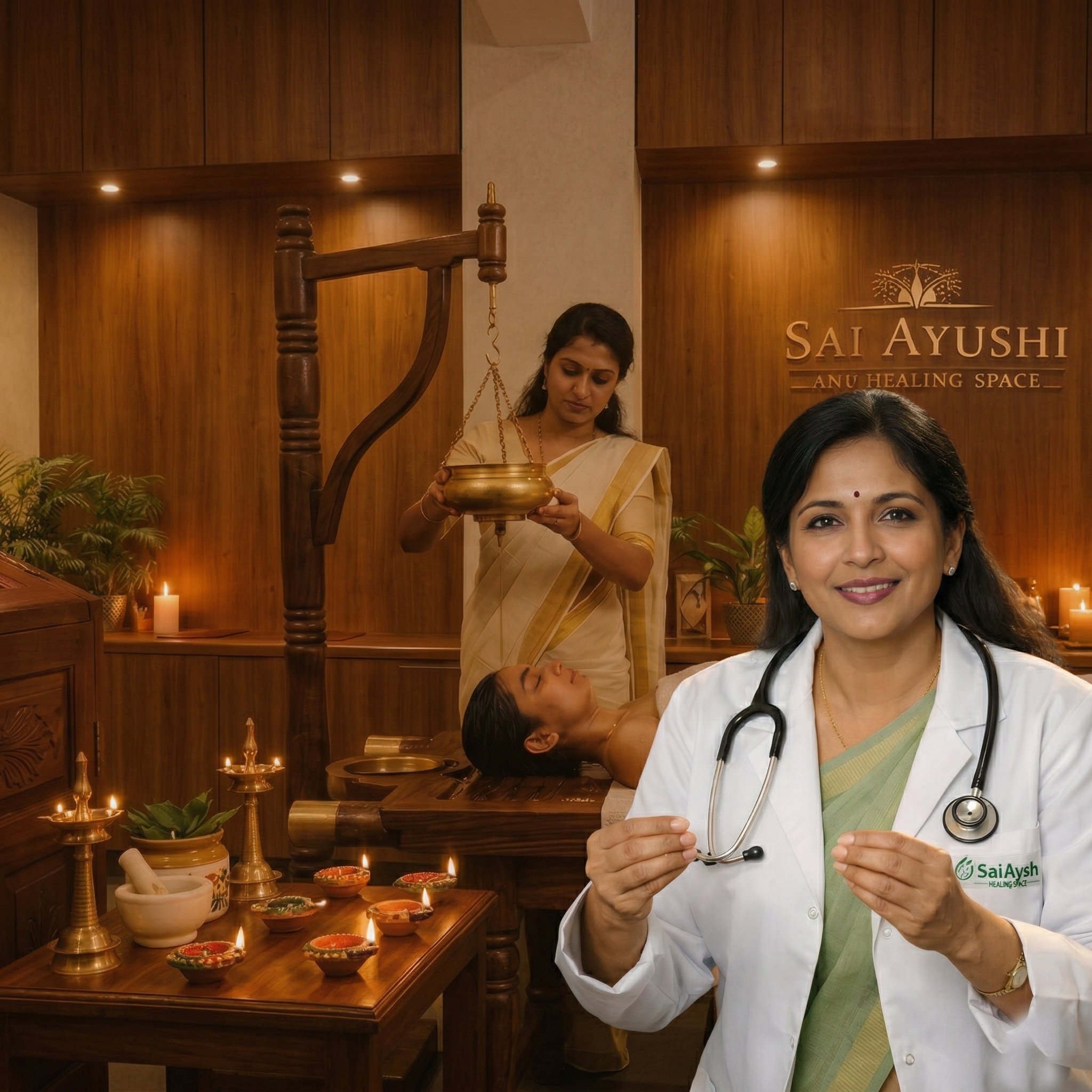
The patient lies on the Droni (wooden massage table). Copious amounts of warm oil are continuously painted over the entire body, from the neck down to the toes.
One or two therapists apply long, sweeping, rhythmic strokes (Anuloma) in the direction of arterial blood flow and hair growth. Circular strokes are applied precisely over the joints.
The patient is guided through seven specific postures—sitting, supine, lateral left, lateral right, prone, etc.—ensuring that every marma point and muscle group receives uniform pressure and saturation.
Phase 3: Pashchatkarma
The patient rests on the table for 10-15 minutes, allowing the pores to fully absorb the lipid-soluble herbs into the deeper tissue layers (Dhatus).
Depending on the condition, the patient may undergo a brief session of mild herbal steam (Nadi Sweda) to open the pores and induce therapeutic sweating.
The heavy oils are washed off using traditional herbal scrubbing powders (like Snana Choornam) and warm water. Cold water drafts must be absolutely avoided.
Clinical Ayurvedic Massage vs. Regular Spa Massage
- Focuses only on muscle relaxation
- Uses generic, basic massage oils
- Administered by general massage therapists
- Provides temporary surface-level relief
- Root-Cause Focus: Prescribed by doctors based on Dosha analysis
- Medicated Oils: Uses warm, condition-specific herbal oils
- Expert Care: Administered by trained Panchakarma therapists
- Deep Healing: Flushes out toxins and heals neurological issues