

PCOS Appointment Checklist should Follow
Preparing for a PCOS consultation can help your doctor understand your menstrual pattern, symptoms, medical history and current treatment more accurately.
You do not need to arrange every possible hormone test or scan before your first appointment. Bring the reports you already have and allow the doctor to decide whether further investigations are appropriate.
PCOS cannot be diagnosed from one symptom, an online questionnaire or an ultrasound report alone. Other possible causes of irregular periods, excessive hair growth, acne or fertility difficulties may need to be considered.
Quick PCOS appointment checklist
Bring the following, where available:
- A record of your periods from the past 6–12 months
- Previous ultrasound or pelvic scan reports
- Blood-test reports
- Current prescriptions
- A list of Ayurvedic medicines, supplements and herbal products
- Details of contraception or fertility treatment
- Records of recent weight or symptom changes
- Relevant discharge summaries or previous consultation notes
- A list of allergies and previous medicine reactions
- Questions you want the doctor to answer
- Pregnancy test results, if relevant
- Identification and insurance documents, if required by the hospital
Do not postpone an appointment simply because some reports are unavailable. The consultation can begin with your history and the documents you currently have.
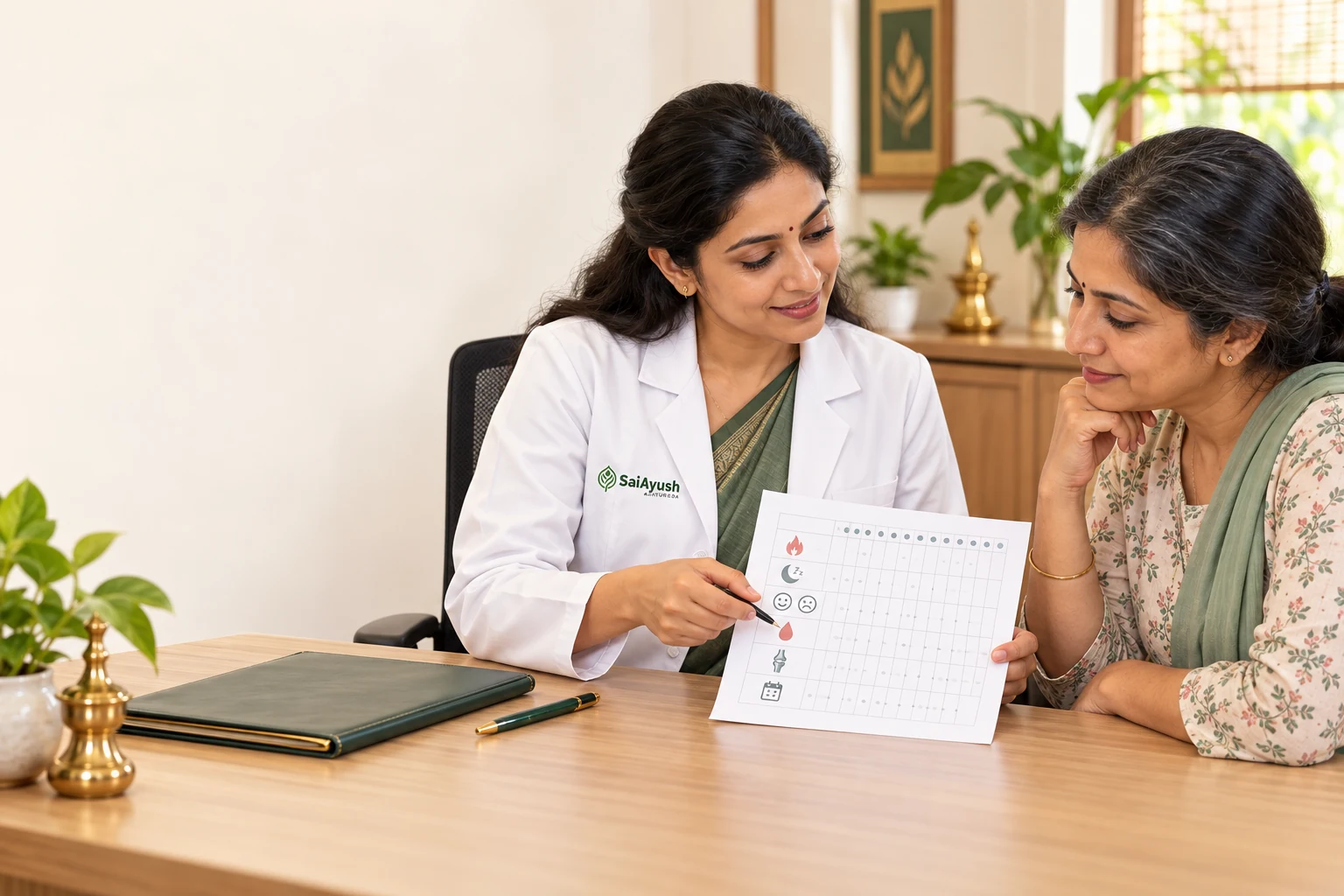
Record your menstrual-cycle history
A clear menstrual record is one of the most useful things to bring to a PCOS consultation.
For each period, record:
- The first day of bleeding
- The number of days bleeding continued
- Whether the flow was light, moderate or heavy
- Whether bleeding occurred between periods
- The number of pads, tampons or menstrual cups used
- Whether clots were present
- Pain or cramping
- Dizziness, weakness or unusual tiredness
- Any medicine taken for pain or bleeding
If you use a period-tracking application, bring the phone or export the information. A paper calendar or handwritten record is equally acceptable.
Do not alter dates to create a “normal-looking” cycle. Irregularity itself is clinically useful information.
Period-record table
Use this table before your appointment:
| Period start date | Days of bleeding | Flow | Pain 0–10 | Bleeding between periods | Medicines taken | Notes |
| If you have not had a period for several months, record the approximate date of the last one and whether pregnancy is possible. |
Record symptoms beyond irregular periods
PCOS can involve menstrual, skin, hair, fertility and metabolic concerns. Symptoms vary, and not every person experiences all of them.
Record whether you have noticed:
- Periods that are infrequent, unpredictable or absent
- Heavy or prolonged bleeding
- Acne
- Increased facial or body hair
- Scalp hair thinning
- Recent weight gain or difficulty managing weight
- Darkened or thickened skin around the neck, underarms or other folds
- Difficulty becoming pregnant
- Pelvic discomfort
- Sleep problems
- Snoring or excessive daytime sleepiness
- Changes in mood
- Previous high blood sugar or cholesterol results
Include when each symptom started and whether it has changed. Photographs may help document acne or hair changes, but they are optional and should be stored securely.
Pelvic pain is not automatically caused by PCOS. Significant, persistent or sudden pain requires proper medical assessment.
Bring previous ultrasound reports and images
If you have undergone a pelvic ultrasound, bring:
- The written report
- Printed images, if supplied
- The imaging centre’s digital access details, if available
- Reports from earlier scans for comparison
- The date in your menstrual cycle when the scan was performed, if known
An ultrasound finding of polycystic-appearing ovaries does not automatically establish PCOS. Conversely, a person may have PCOS without the ultrasound appearance commonly associated with it.
The clinician must interpret imaging alongside menstrual history, symptoms, examination findings and appropriate investigations.
Do not repeat an ultrasound solely for this appointment unless a clinician has advised it.
Which blood-test reports should you bring?
Bring all relevant reports you already have, even if they were ordered for another reason.
These may include:
- Blood glucose or HbA1c
- Lipid profile
- Thyroid-function tests
- Prolactin
- Hormone reports
- Liver or kidney-function tests
- Complete blood count
- Iron or ferritin reports
- Vitamin reports
- Pregnancy-test results
- Fertility-related investigations
Do not order a large hormone panel independently based on an online checklist. The appropriate tests and their timing differ according to age, symptoms, menstrual pattern, pregnancy possibility, current medicines and the purpose of the consultation.
Some tests may need to be interpreted according to the timing of the menstrual cycle. Tell the clinician when the sample was collected and whether you were using hormonal medicines at that time.
Bring every medicine and supplement you use
Prepare one complete list that includes:
- Prescription medicines
- Birth-control pills or other hormonal medicines
- Fertility medicines
- Medicines for diabetes, thyroid conditions or high blood pressure
- Acne medicines
- Hair-loss treatments
- Pain medicines
- Ayurvedic medicines
- Herbal powders, teas or tonics
- Vitamins and nutritional supplements
- Protein, weight-loss or gym supplements
- Non-prescription products
For each item, record:
- Product or medicine name
- Dose
- How often it is taken
- When it was started
- Why it was prescribed or selected
- Whether it caused any adverse reaction
Bring the packaging or clear photographs of the labels if you do not know the exact names.
Do not stop prescribed hormonal, thyroid, diabetes, fertility or psychiatric medicines before an Ayurveda appointment unless the prescribing clinician advises you to do so. Sudden changes may affect symptoms, blood tests and general health.
Tell the doctor about contraception and pregnancy possibility
Inform the clinician if you:
- Use oral contraceptive pills
- Have a hormonal or non-hormonal intrauterine device
- Use injectable contraception
- Use implants, patches or rings
- Have recently stopped hormonal contraception
- Are trying to become pregnant
- Could currently be pregnant
- Are undergoing fertility treatment
- Are breastfeeding
- Have recently given birth
- Have had a miscarriage or pregnancy complication
Menstrual delay should not automatically be attributed to PCOS. Pregnancy may need to be considered when relevant.
Do not begin an Ayurvedic medicine, detoxification programme or Panchakarma procedure until pregnancy status and individual suitability have been considered.
Prepare your medical and family history
Tell the doctor about previous or current conditions such as:
- Diabetes or prediabetes
- Thyroid disease
- High cholesterol
- High blood pressure
- Liver or kidney conditions
- Anaemia
- Eating disorders
- Depression, anxiety or another mental-health condition
- Sleep apnoea
- Endometriosis
- Fibroids
- Previous ovarian cysts
- Previous pelvic surgery
- Fertility difficulties
- Pregnancy complications
Relevant family history may include:
- PCOS
- Diabetes
- High blood pressure
- High cholesterol
- Early heart disease
- Menstrual disorders
- Fertility difficulties
Family history does not prove that you have PCOS, but it may provide useful context.
Record changes in weight, activity, sleep and eating patterns
PCOS assessment should not be reduced to body weight alone. People across different body sizes can have PCOS.
It may still be helpful to record:
- Recent weight changes
- Waist measurement, if already tracked
- Typical activity level
- Exercise routine
- Work and sitting patterns
- Average sleep duration
- Snoring or interrupted sleep
- Shift work
- Recent restrictive diets
- Episodes of overeating
- Smoking
- Alcohol intake
- Significant stress
Be factual rather than trying to present a “perfect” routine. Accurate information helps the clinician recommend realistic next steps.
Avoid fasting, crash dieting or excessive exercise immediately before an appointment to influence weight or test results.
If pregnancy is your priority
Tell the doctor early in the consultation if you are trying to conceive. The assessment and questions may differ from those used when the primary concern is acne, irregular bleeding or metabolic health.
Bring information about:
- How long you have been trying to conceive
- Frequency and pattern of periods
- Previous pregnancies or miscarriages
- Ovulation tracking
- Fertility medicines or procedures
- Previous fertility reports
- Relevant partner evaluations, if already completed
PCOS does not mean pregnancy is impossible, but fertility advice must be individualised. Avoid claims that any particular medicine or procedure guarantees natural conception.
Questions to ask during your PCOS consultation
Take a written list so important concerns are not forgotten.
Consider asking:
- Do my symptoms suggest PCOS, or should other causes be investigated?
- What diagnostic criteria are being considered?
- Are any additional blood tests or scans required?
- Could a current medicine be affecting my periods or test results?
- Should pregnancy be ruled out?
- Do I need screening for blood sugar, cholesterol or blood pressure?
- What should I track between appointments?
- Which symptoms require earlier review?
- Should I continue my current medicines?
- Could any proposed Ayurvedic medicine interact with them?
- Is an external therapy or Panchakarma procedure appropriate in my case?
- What are the possible benefits, limitations and adverse effects?
- How will progress be assessed?
- When should I return for follow-up?
- Should I also consult a gynaecologist, endocrinologist, dermatologist, dietitian or fertility specialist?
Ask for clear instructions before making changes to medicines, supplements, diet or exercise.
When should urgent medical care be sought?
Seek prompt medical assessment for:
- Sudden or severe pelvic or abdominal pain
- Pelvic pain accompanied by vomiting, fainting or marked weakness
- Very heavy vaginal bleeding
- Bleeding accompanied by dizziness, breathlessness or fainting
- A positive pregnancy test with pain or bleeding
- Fever with pelvic pain or unusual discharge
- Rapid abdominal swelling
- Symptoms of a serious allergic reaction
- Thoughts of self-harm or an acute mental-health crisis
Do not wait for a routine PCOS or Ayurveda appointment when urgent symptoms are present.
What should you expect from an Ayurveda consultation?
An Ayurveda physician may review:
- Menstrual and reproductive history
- Previously confirmed diagnoses
- Current symptoms
- Digestion and bowel habits
- Sleep and stress
- Eating and activity patterns
- Current medicines and supplements
- Previous treatment responses
- Blood-test and imaging reports
- Pregnancy plans
- Suitability for any proposed Ayurveda procedure
An Ayurveda consultation should not be used to discontinue necessary medical care or replace urgent gynaecological assessment.
Ayurvedic medicines and Panchakarma procedures are not automatically suitable for every patient with PCOS. Recommendations should follow an individual assessment, with attention to pregnancy possibility, current medicines and relevant medical conditions.
Preparing for a PCOS consultation at Sai Ayush
At Sai Ayush Ayurveda Hospital, recommendations for women with PCOS-related concerns are made after reviewing menstrual history, existing reports, current medicines, metabolic risk factors, pregnancy plans and individual suitability.
For information about consultation-led services, visit the Sai Ayush PCOD and PCOS care page.
A consultation does not guarantee that an Ayurvedic medicine, Panchakarma procedure or specific programme will be recommended. Referral or coordination with a gynaecologist, endocrinologist, dermatologist or fertility specialist may be advised when appropriate.
Frequently asked questions
Do I need an ultrasound before my first PCOS appointment?
Not necessarily. Bring any previous scans you have. The clinician should decide whether new imaging is required after reviewing your history and symptoms.
Can PCOS be diagnosed from an ultrasound alone?
No. Ultrasound findings must be interpreted with menstrual history, symptoms and other appropriate clinical information. Polycystic-appearing ovaries do not automatically mean a person has PCOS.
Should I stop birth-control pills before the appointment?
No. Do not stop hormonal contraception without guidance from the prescribing clinician. Tell the doctor which product you use and when you started it.
What if I cannot remember my previous period dates?
Bring whatever information is available from messages, calendars, applications or previous prescriptions. Start recording dates from now onward.
Should I fast before the consultation?
A consultation itself generally does not require fasting. If a clinician orders a fasting blood test, follow the laboratory’s specific instructions.
Can I attend while menstruating?
Usually, a consultation can still take place during menstruation. If an examination or procedure is planned, confirm with the hospital beforehand.
Should I bring Ayurvedic medicines I already use?
Yes. Bring the packaging, prescription or photographs of the labels. The clinician needs to know the ingredients, dose and duration before recommending anything else.
Will every patient with PCOS need Panchakarma?
No. Panchakarma is not routinely appropriate for everyone. Suitability depends on the individual assessment, health status, medicines, pregnancy possibility and clinical objectives.
Key takeaway
A useful PCOS appointment record includes period dates, bleeding patterns, symptoms, previous scans, blood-test reports and a complete list of medicines and supplements.
Do not arrange unnecessary investigations, stop prescribed medicines or begin a restrictive diet solely to prepare for the consultation. Bring the information you already have and allow the clinician to identify the next appropriate steps.
Medical disclaimer: This article is intended for general education and consultation preparation. It does not diagnose PCOS or provide an individual treatment plan. Seek advice from an appropriately qualified healthcare professional before changing medicines, supplements, diet or treatment.
Medically Reviewed By
Dr. Pasalapudi Visalaanjani, B.A.M.S, MD (Kayachikitsa), Reg No: 1146/A/2016
Updated on October 20, 2026