


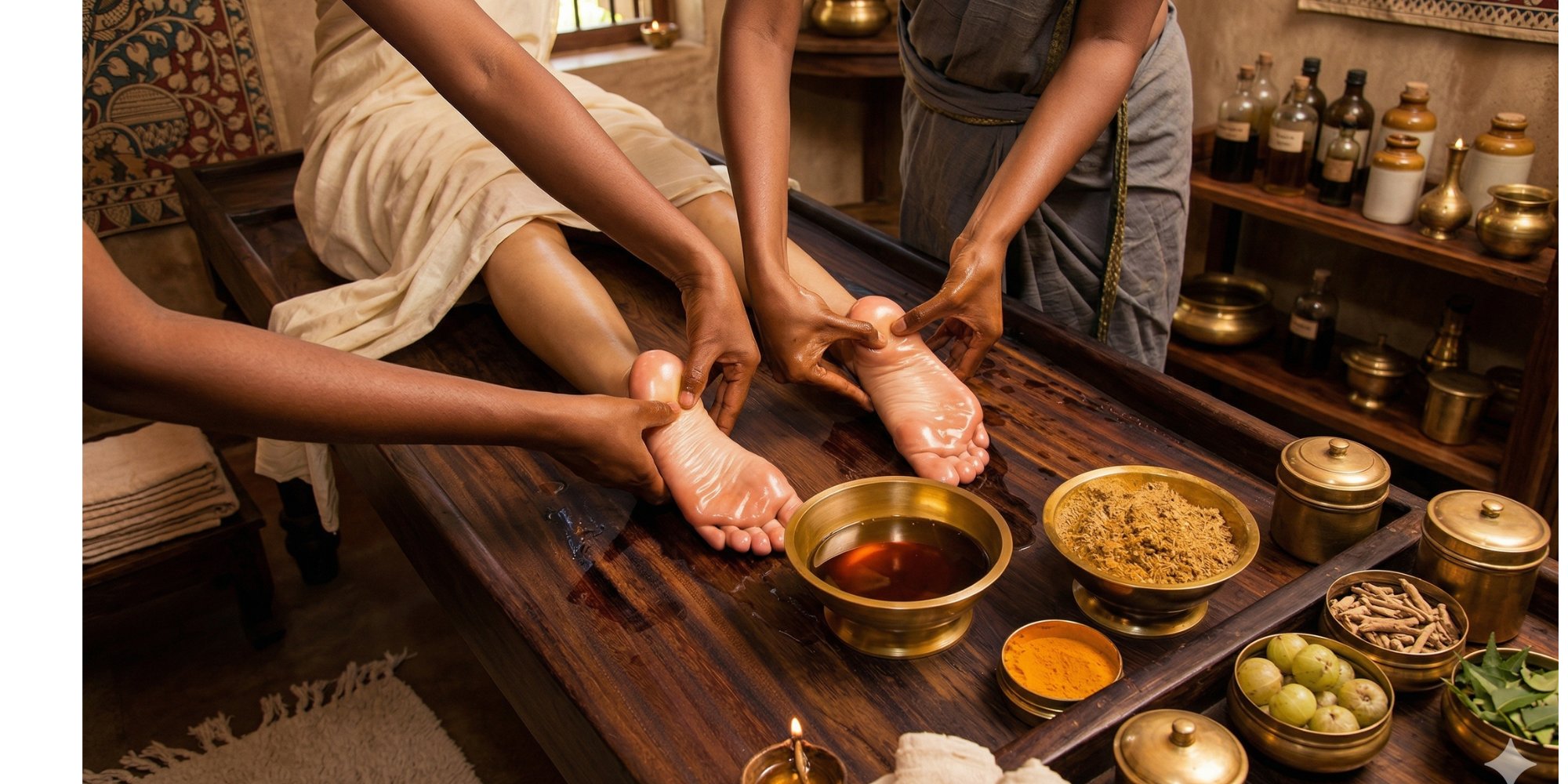
Padabhyanga (Foot Massage Therapy)
Overview: Padabhyanga (Foot Massage Therapy) Treatment
- ✓Doctor-Guided Diagnosis & Prakriti Assessment
- ✓Multi-Disciplinary ANP³ Integrated Care Plan
- ✓Targeted Root-Cause & Systemic Dosha Balancing
- ✓Supervised Panchakarma & Post-Therapy Care
Padabhyanga (Pada meaning foot, Abhyanga meaning massage) is a highly venerated sub-therapy in Ayurvedic practice. It involves the rigorous, friction-heavy application of warm, medicated, or pure herbal oils specifically to the soles, heels, ankles, and toes.
In Ayurvedic anatomy, the feet are densely packed with Marma points (vital structural junctions) that connect directly to the central nervous system, and reflexologically, straight to the optic nerve.
Modern lifestyles—marked by constant mental overstimulation and wearing thick, insulated rubber shoes—cause our life force (Prana) to disconnect from the earth, getting trapped in the head as anxiety and sleeplessness. Padabhyanga physically pulls this erratic Vata downward. By flooding the feet with dense, warm oil, the entire nervous system is instantly pacified, anchored, and "grounded," leading to radical improvements in sleep quality and systemic calmness.
Medically Reviewed By: Dr. Pasalapudi Visalaanjani, B.A.M.S, MD (Kayachikitsa)
Registration No: 1146/A/2016
Disclaimer: The information provided is for educational purposes and should not replace professional medical advice. Outcomes may vary.
Core Therapeutic Advantages
- Cures Insomnia: One of the most potent, fastest-acting therapies for inducing heavy, dreamless sleep by aggressively anchoring the erratic Vata dosha downward.
- Reverses Optical Strain: Reflexologically connected to the eyes. Regular foot massages actively cool and soothe severely strained, burning, and exhausted eyes.
- Heals Cracked Heels: The heavy oil drastically hydrates the thick, dead skin layers of the sole, permanently healing deep fissures and extreme dryness.
- Soothes Diabetic Neuropathy: Restores dying circulation to the extremities, highly effectively combatting the burning, tingling, and numbness associated with diabetic nerve damage.
- Removes Central Fatigue: Instantly melts away generalized physical exhaustion and heaviness in the legs caused by prolonged standing or walking.
- Stimulates Brain Function: Clarifies the mind, reduces extreme psychic stress, and clears brain fog by drawing the chaotic active energy away from the head.
Phased Treatment Procedure
Phase 1: Purvakarma
The patient’s feet are washed thoroughly with warm water infused with mild herbs or rock salt to remove surface dirt and soften the tough epidermal layer of the soles.
The patient lies supine or comfortably reclines on a wooden chair. A bolster is placed under the knees to prevent lower back strain during the deep foot massage.
A grounding medicated oil (such as Ksheerabala Tailam for insomnia, or plain Sesame oil for generalized Vata) is heated to a very warm, comforting temperature.
Phase 2: Pradhana Karma
Copious amounts of the warm oil are slathered over the entirety of the foot, focusing intensely on the sole, the heel, the ankle joint, and between the toes.
The therapist uses the heels of their hands and thumbs to apply deep, sweeping strokes. Because the sole skin is extremely thick, the friction is forceful and vigorous.
Specific acupressure points (Marmas) located centrally in the sole (Kshipra Marma) are rhythmically pressed. According to Ayurveda, these points are directly hardwired to the optical nerves and brain.
Phase 3: Pashchatkarma
After the feet have absorbed as much oil as possible, the therapist carefully wipes away the remaining heavy, slippery residue using a warm, wet towel.
A very mild hot towel wrap may be applied briefly over the feet to seal the heat into the cracked heels and joint spaces.
The patient must wear thick socks or slippers immediately. Walking barefoot on cold tiles after the therapy forces the heat back out and ruins the therapeutic effect.

































