


Vamana (Therapeutic Emesis)
Overview: Vamana (Therapeutic Emesis) Treatment
- ✓Doctor-Guided Diagnosis & Prakriti Assessment
- ✓Multi-Disciplinary ANP³ Integrated Care Plan
- ✓Targeted Root-Cause & Systemic Dosha Balancing
- ✓Supervised Panchakarma & Post-Therapy Care
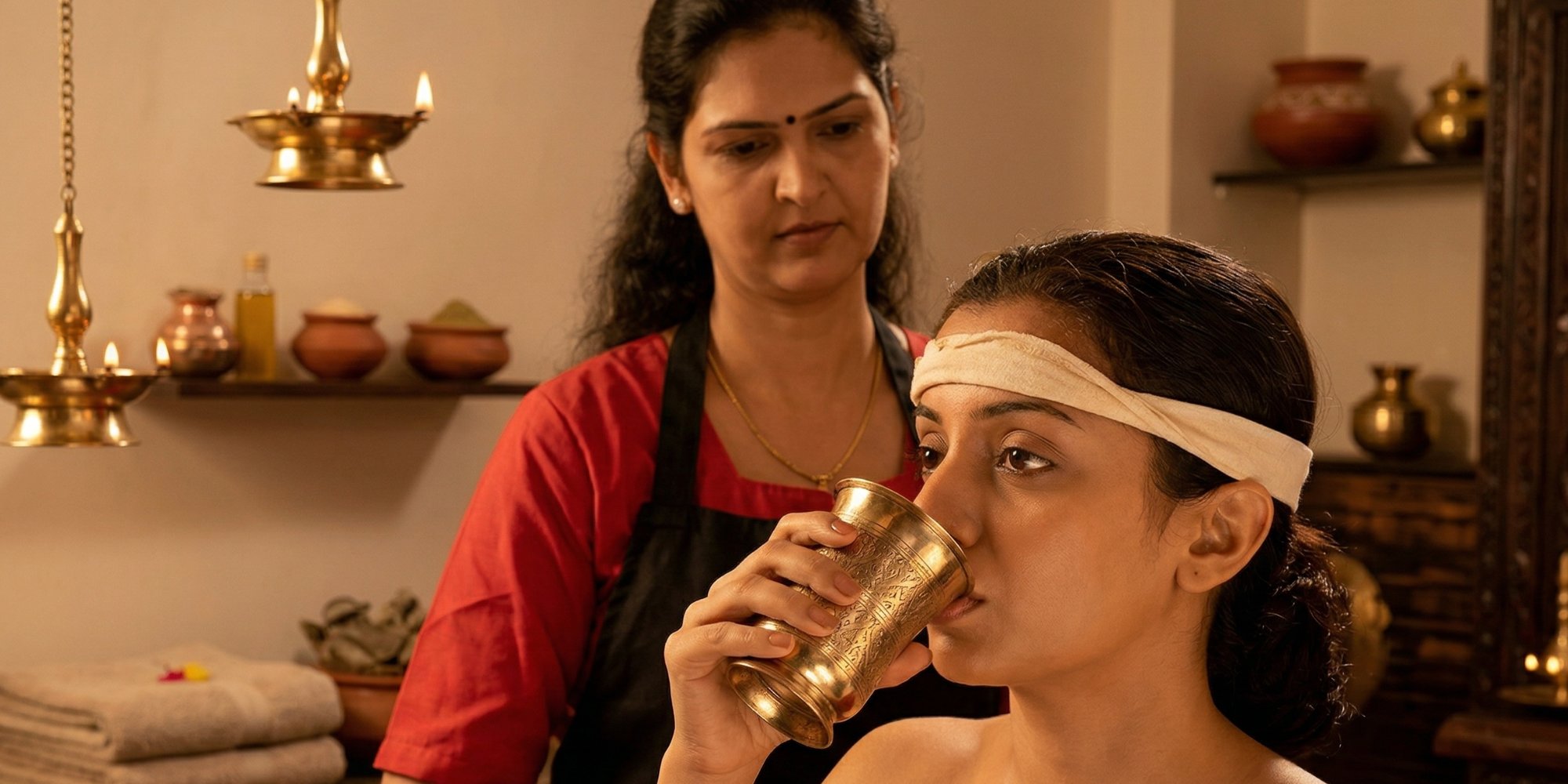
Vamana Karma is a specialized Ayurvedic bio-purification technique classified under Shodhana Chikitsa (purificatory treatment). According to Charaka Samhita (Kalpa Sthana), Vamana refers to the therapeutic induction of vomiting using carefully selected emetic dravyas (medicinal substances) to expel morbid Kapha from the stomach, chest, and upper GI tract.
In classical Ayurvedic texts, the upper body region (Urdhva Bhaga) is the natural abode of Kapha dosha. When Kapha becomes vitiated, it accumulates in the Amashaya (stomach) and Uras (chest) — making Vamana the most logical and direct purificatory intervention.
Modern clinical Ayurveda positions Vamana as a neuro-gastroenterological intervention, stimulating the emetic center via the chemoreceptor trigger zone (CTZ), promoting systemic Kapha elimination and metabolic recalibration. Clinical research from institutions under the Ministry of AYUSH continues to validate its therapeutic efficacy across Kapha-predominant conditions.
Medically Reviewed By: Dr. Pasalapudi Visalaanjani, B.A.M.S, MD (Kayachikitsa)
Registration No: 1146/A/2016
Disclaimer: The information provided is for educational purposes and should not replace professional medical advice. Outcomes may vary.
Core Therapeutic Advantages
- Respiratory Rehabilitation: Clears Kapha from Pranavaha Srotas; reduces bronchial hypersensitivity; first-line therapy for asthma and COPD.
- Metabolic Reset: Stimulates Jatharagni; corrects Mandagni; improves insulin sensitivity in Prameha and metabolic syndrome.
- Dermatological Clearance: Eliminates Kapha-Pitta toxins through upper body purification; validated for Psoriasis, Urticaria, and chronic eczema.
- Neuropsychiatric Benefits: Indicated in Kapha-type Unmada and Apasmara; clears Manovahasrotas obstruction; improves cognitive clarity.
- Weight & Lipid Management: Reduces Meda Dhatu excess; lowers Ama endotoxins; effective in central adiposity and dyslipidaemia.
- Systemic Dosha Balance: Achieves Dosha Samavastha; enhances Ojas; post-Vamana Rasayana produces long-term rejuvenative effects.
Phased Treatment Procedure
Phase 1: Purvakarma
Administering digestive herbs like Trikatu, Chitrakadi Vati, and Hingwashtak Churna to prepare Agni (digestive fire) and liquefy morbid Kapha. This phase activates Sama Dosha conversion for effective purification.
Administering medicated ghee (Ghrita) in increasing doses — Mahatikta Ghrita, Panchatikta Ghrita, or plain Goghrita — on an empty stomach. This loosens Kapha from Dhatu tissues and mobilizes it toward the GI tract (Koshtha).
Full-body warm oil massage using Bala Taila, Dhanwantaram Taila, or Mahanarayan Taila to further loosen Kapha and enhance peripheral circulation. Focuses on Uras (chest) and Prushtha (back) regions.
Steam therapy (Nadi Sweda or Bashpa Sweda) applied to liquefy Kapha further and dilate the Srotas (body channels). Sarvanga Sweda (full-body steam) is preferred.
The night before Vamana, the patient receives Kapha-provoking foods — curd, sesame preparations, sweet preparations, and unctuous foods — to further accumulate Kapha in the Amashaya for efficient elimination.
Phase 2: Pradhana Karma
On the day of Vamana, the patient is given Madhuyashti (Licorice) milk decoction and Kapha-provoking substances. The primary Vamana drug is administered after confirming optimal Kapha accumulation.
Pravara Shuddhi (Superior): 8 Vegas. Madhyama Shuddhi: 6 Vegas. Avara Shuddhi: 4 Vegas. Clinicians monitor Vamana Samyak Shuddhi Lakshanas throughout.
Vamana Atiyoga (excessive purification) is managed with Stambhana therapy. Vamana Ayoga (insufficient purification) is addressed with Dhoomapana or Vyayama. All vitals are documented.
Phase 3: Pashchatkarma
Post-Vamana controlled inhalation of medicated smoke from Vacha, Haridra, and Guduchi preparations is administered to dry residual Kapha from the respiratory channels and stabilize Pranavahasrotas.
A precise dietary reintroduction protocol to gradually restore digestive strength: Day 1–2: Peya. Day 3–4: Vilepi. Day 5: Akrita Yusha. Day 6: Krita Yusha. Day 7: Akrita Mamsarasa. Normal diet resumes on Day 8.

































