

Panchakarma Discharge: Understanding Home-Care Plan
Completing the scheduled procedure is not always the end of a Panchakarma programme. Your physician may prescribe a period of individualised home care, sometimes described as Paschatkarma, based on the procedure performed, your response and your general health.
Your written discharge plan may include instructions about food progression, fluid intake, medicines, rest, bathing, physical activity and follow-up. These instructions are not identical for every patient.
Follow the plan issued by your treating physician. Do not replace it with another patient’s schedule, an internet “detox diet” or a standard Panchakarma routine.
Why is a written home-care plan important?
Panchakarma is a broad term covering different physician-selected Ayurvedic procedures. Home-care requirements may vary substantially depending on whether the person underwent Vamana, Virechana, Basti, Nasya or another supervised procedure.
A written plan helps clarify:
- What you may eat and when
- How your diet should progress
- How much fluid you should take
- Which medicines should be continued
- Which products should be stopped
- Whether activity should be limited
- Bathing and personal-care instructions
- Symptoms to record
- The date of the next consultation
- Whom to contact if a concern develops
- Which symptoms require urgent medical attention
Ask the clinical team to explain any unfamiliar Ayurvedic or medical terms before you leave.
Information your discharge document should contain
Before leaving the hospital or clinic, check whether you have received the following information.
Procedure details
The document should identify:
- The procedure or procedures performed
- The dates on which they were performed
- The treating physician
- Relevant observations made during the programme
- Whether any scheduled procedure was modified or discontinued
- Known allergies or reactions observed during care
Keep this document with your prescriptions and previous medical records.
Medicine instructions
For every prescribed medicine, confirm:
- The medicine’s name
- The dose
- When it should be taken
- Whether it is taken before or after food
- How long it should be continued
- Storage instructions
- What to do if a dose is missed
- Possible reactions that should be reported
Do not use abbreviations or appearance alone to identify a medicine. If the handwriting or label is unclear, ask the hospital to clarify it before discharge.
Diet progression
Some patients may receive a staged dietary plan after selected Panchakarma procedures. The physician should specify:
- Which food or fluid to begin with
- Approximate portion sizes
- Meal timing
- How long each stage should continue
- When ordinary food may be resumed
- Foods temporarily restricted
- What to do if nausea, vomiting, abdominal pain or diarrhoea occurs
- Whether an existing medical diet must continue
Do not assume that every patient requires the same traditional diet sequence. The plan may need modification for diabetes, kidney disease, food allergies, pregnancy, eating disorders or other medical conditions.
Activity and rest
Ask for specific guidance about:
- Walking
- Exercise
- Yoga
- Driving
- Work
- Lifting
- Travel
- Sexual activity
- Prolonged sun or heat exposure
- Sleep and rest
“Take rest” can mean different things. Confirm whether gentle walking is permitted and when usual activity may be resumed.
Use this discharge-plan checklist
Before leaving, confirm each item with the clinical team:
| Discharge item | Confirmed | Notes |
| Procedure name and date | ☐ | |
| Medicine list and doses | ☐ | |
| First permitted meal or fluid | ☐ | |
| Diet-progression schedule | ☐ | |
| Fluid instructions | ☐ | |
| Foods or drinks temporarily restricted | ☐ | |
| Bathing and personal-care guidance | ☐ | |
| Activity and work restrictions | ☐ | |
| Existing medicines reviewed | ☐ | |
| Warning signs explained | ☐ | |
| Hospital contact number provided | ☐ | |
| Follow-up date confirmed | ☐ | |
| Reports and prescriptions collected | ☐ |
If any instruction is unclear, ask for it to be written in plain language.
How should the prescribed diet be followed?
Follow the sequence and duration written by your physician. Do not advance to the next stage simply because you feel hungry, and do not remain on a restricted diet longer than prescribed.
Useful precautions include:
- Eat only the foods listed in your plan during the specified period.
- Use the advised portions rather than having a large meal.
- Avoid adding oils, spices, supplements or herbal powders unless permitted.
- Record foods that produce nausea, pain, bloating, vomiting or diarrhoea.
- Ask before restarting alcohol, caffeinated drinks or highly processed foods.
- Do not begin fasting independently.
- Do not copy the diet of another patient.
If you have diabetes or take glucose-lowering medicine, clarify how reduced food intake affects your medicine schedule and glucose monitoring. Never adjust diabetes medicine independently.
Patients with kidney, liver, heart or fluid-balance conditions should follow condition-specific medical advice rather than generic hydration or diet recommendations.
What about fluids after discharge?
Your discharge plan should state which fluids are permitted and whether there are restrictions.
Do not force excessive amounts of water as a method of “flushing toxins.” Excessive fluid intake can also be harmful, particularly in people with kidney, heart or electrolyte problems.
Contact your treating team if you experience:
- Repeated vomiting
- Inability to keep fluids down
- Persistent diarrhoea
- Very dark urine
- Passing much less urine than usual
- Increasing dizziness
- Marked weakness
- Dry mouth accompanied by reduced urination
These symptoms should not automatically be dismissed as part of detoxification.
Continue regular medicines unless advised otherwise
At discharge, confirm what to do with medicines prescribed for other conditions, including:
- Diabetes
- High blood pressure
- Thyroid disease
- Heart disease
- Epilepsy
- Asthma
- Mental-health conditions
- Blood thinning
- Pain management
- Hormonal treatment
Do not stop, restart or change the dose of a regular medicine unless the relevant prescribing clinician has advised it.
Provide every doctor involved in your care with a complete list of:
- Prescription medicines
- Ayurvedic medicines
- Herbal products
- Nutritional supplements
- Non-prescription medicines
- Known allergies and previous reactions
This helps clinicians assess possible duplication, contraindications and interactions.
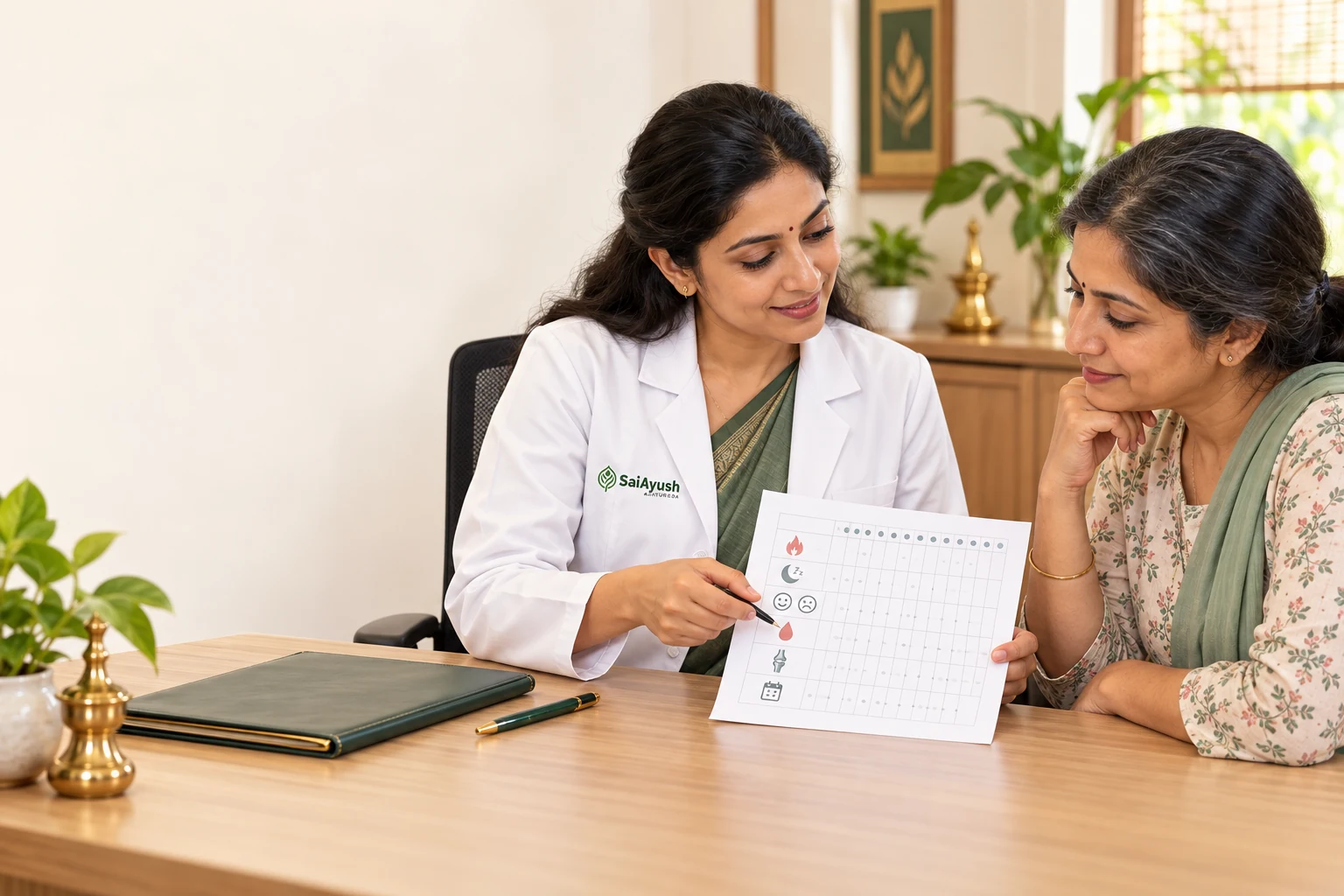
Keep a short recovery record
A daily record can make the follow-up consultation more useful.
| Date | Food and fluids | Bowel movements | Urination | Symptoms | Medicines taken | Activity | Questions |
Record:
- Appetite
- Nausea or vomiting
- Bowel frequency and stool consistency
- Abdominal pain or bloating
- Urination frequency and colour
- Dizziness or weakness
- Sleep
- Temperature, if unwell
- Rash, itching or swelling
- Medicine doses
- Ability to perform normal activities
Use short, factual notes. A symptom diary supports clinical review but does not diagnose a complication.
What symptoms should be reported to the treating team?
Contact the Panchakarma physician or hospital promptly if you develop:
- Persistent vomiting
- Repeated or worsening diarrhoea
- Increasing abdominal pain
- Inability to tolerate the prescribed diet
- Dizziness that does not settle
- Passing much less urine than usual
- Fever or chills
- New rash, itching or swelling
- Persistent headache or unusual weakness
- Constipation accompanied by increasing pain or abdominal swelling
- Bleeding
- Symptoms that began after taking a prescribed medicine
- A significant worsening of an existing medical condition
Do not wait until the scheduled review if symptoms are worsening.
When is emergency medical attention required?
Seek urgent or emergency medical care for:
- Fainting, collapse or confusion
- Severe or rapidly worsening abdominal pain
- Vomiting blood
- Blood in the stool or black, tar-like stool
- Heavy or uncontrolled bleeding
- Severe breathlessness or chest pain
- Swelling of the lips, tongue, face or throat
- Inability to keep fluids down with signs of dehydration
- Very little or no urine with increasing weakness
- Severe drowsiness or difficulty waking
- New weakness, speech difficulty or another neurological symptom
- Any sudden or severe deterioration
Do not wait for an Ayurveda follow-up appointment when emergency symptoms are present.
Avoid calling every symptom a “detox reaction”
Fatigue, nausea, diarrhoea, dizziness, pain or a skin rash should not automatically be described as evidence that toxins are leaving the body.
Such symptoms may have several causes, including:
- Dehydration
- Infection
- A medicine-related adverse effect
- Low blood sugar
- Low blood pressure
- Electrolyte disturbance
- An unrelated medical condition
- A complication requiring assessment
Contact your clinical team for guidance. Persistent or severe symptoms require proper medical evaluation rather than reassurance based on a detox explanation.
Questions to ask before leaving
Consider asking:
- What procedure did I receive?
- Were there any unexpected findings or reactions?
- What should I eat for my first meal at home?
- How should my diet progress?
- How much fluid should I drink?
- Which prescribed medicines should I continue?
- What should I do with my regular medicines?
- Are there any temporary restrictions on bathing, work, exercise or travel?
- Which symptoms can be monitored at home?
- Which symptoms should be reported immediately?
- Whom should I contact outside consultation hours?
- When is my follow-up appointment?
- Do I need any blood tests or other investigations?
- When may I resume my ordinary diet and routine?
- What records should I bring to follow-up?
Ask the clinician to write down any important answer that is not already in the discharge plan.
Planning your follow-up appointment
Your discharge document should provide a follow-up date or instructions for scheduling one.
Bring the following to your review:
- Discharge summary
- Current prescription
- Daily recovery record
- List of regular medicines and supplements
- Any new test results
- Details of unexpected symptoms
- Questions about food, activity or medicines
During follow-up, the physician may review your response, modify medicines, change the diet plan or recommend another medical assessment.
A follow-up consultation does not automatically mean that another Panchakarma procedure will be advised.
Returning to work, exercise and travel
There is no universal recovery period applicable to every patient. The timing depends on:
- The procedure performed
- Your response
- Food and fluid tolerance
- Existing medical conditions
- The physical demands of your work
- Medicine-related effects
- The clinician’s assessment
Ask for an individual return-to-work and activity plan. Avoid booking strenuous travel or exercise immediately after discharge unless your physician has confirmed that it is appropriate.
Home care after Panchakarma at Sai Ayush
At Sai Ayush Ayurveda Hospital, Panchakarma programmes and their recovery instructions are selected according to individual clinical assessment.
Patients seeking information about physician-supervised procedures can visit the Sai Ayush Panchakarma page.
Your written discharge plan should remain the primary guide after leaving the hospital. Contact the treating team if an instruction is unclear or your symptoms change.
Individual outcomes vary, and completing Panchakarma does not guarantee prevention, reversal or cure of a medical condition.
Frequently asked questions
Can I follow a Panchakarma diet found online?
No general online diet can account for the procedure you received, your health conditions, medicines or response. Follow the written diet provided by your physician.
Can I eat my ordinary food as soon as I feel hungry?
Follow the prescribed progression. Ask the treating team if hunger increases or the diet feels inadequate rather than changing it independently.
Should I stop my regular medicines after Panchakarma?
No. Continue or modify regular medicines only according to advice from the relevant prescribing clinician.
Is weakness normal after Panchakarma?
The significance of weakness depends on its severity, duration and accompanying symptoms. Contact the clinical team if it is persistent, worsening or associated with dizziness, reduced urination, vomiting or diarrhoea.
How much water should I drink?
Follow the quantity and type of fluids recommended for you. Do not force excessive water intake. People with heart, kidney or fluid-balance conditions may require specific advice.
When can I return to exercise?
There is no fixed timeline. Ask your physician when walking, yoga, gym exercise and strenuous activity may be resumed.
What if I lose my discharge instructions?
Contact the hospital and request a replacement or verified digital copy. Do not reconstruct the plan from memory or another patient’s prescription.
Can I repeat Panchakarma at home?
No. Physician-selected Panchakarma procedures should not be repeated using online instructions or household preparations.
Key takeaway
After Panchakarma discharge, follow your individual written plan for diet, fluids, medicines, activity and follow-up.
Do not copy another patient’s recovery schedule, stop regular medicines independently or dismiss persistent symptoms as detoxification. Contact the treating team when instructions are unclear and obtain urgent medical care for severe or rapidly worsening symptoms.
Medical disclaimer: This article provides general education about understanding discharge instructions. It does not prescribe a post-Panchakarma diet, medicine schedule or recovery programme. Follow the written advice of your treating physician and seek appropriate medical care for concerning symptoms.
Medically Reviewed By
Dr. Pasalapudi Visalaanjani, B.A.M.S, MD (Kayachikitsa), Reg No: 1146/A/2016
Updated on October 20, 2026