


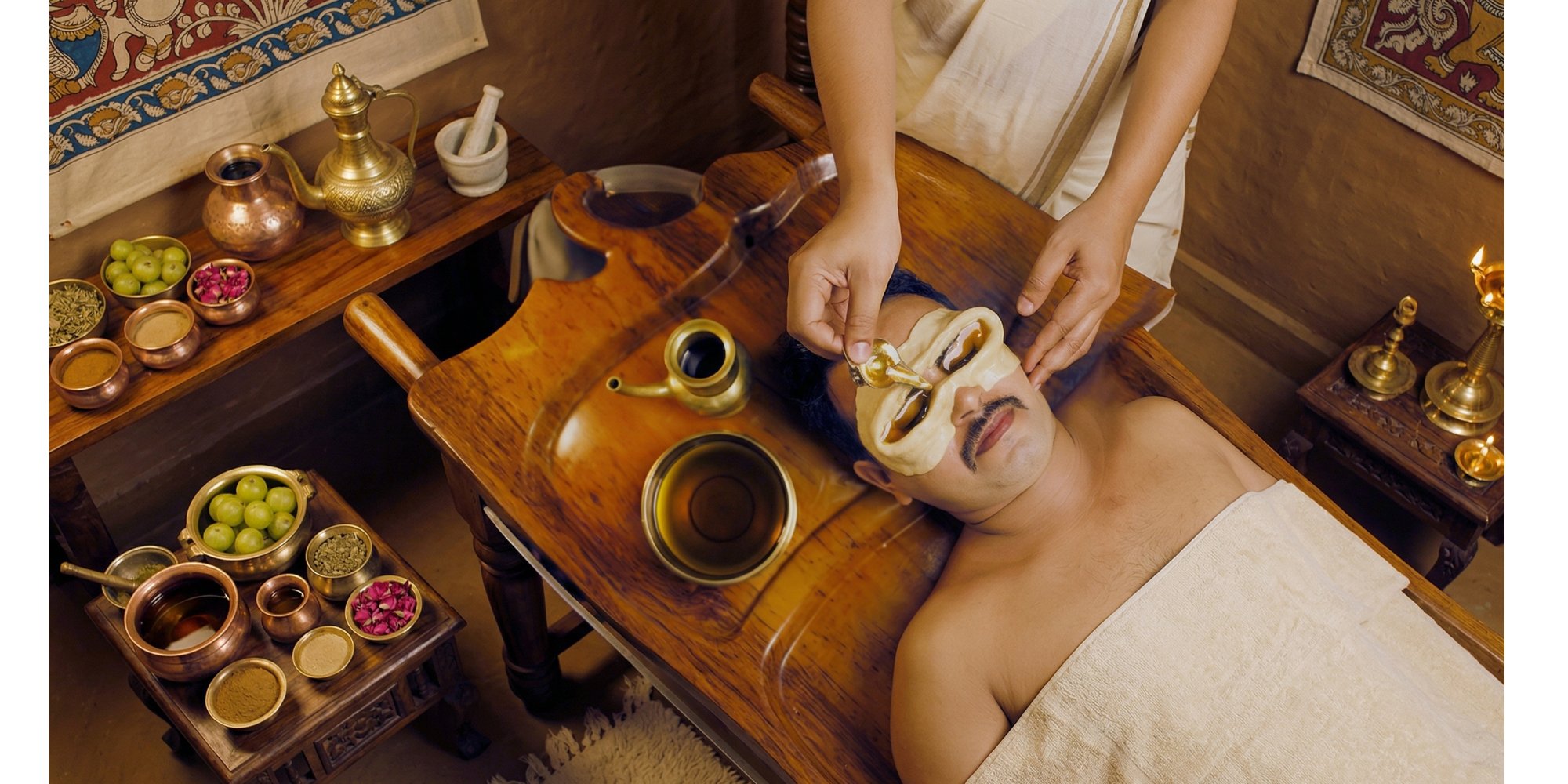
Netra Tarpana (Eye Rejuvenation)
Overview: Netra Tarpana (Eye Rejuvenation) Treatment
- ✓Doctor-Guided Diagnosis & Prakriti Assessment
- ✓Multi-Disciplinary ANP³ Integrated Care Plan
- ✓Targeted Root-Cause & Systemic Dosha Balancing
- ✓Supervised Panchakarma & Post-Therapy Care
Netra Tarpana (also called Akshi Tarpana) is a classical therapy within Ayurvedic ophthalmology (Shalakya Tantra). It is a specialized, localized therapy wherein the eyes are bathed in pools of medicated, liquefied Ghee.
In our modern digital era, human eyes are chronically starved. Continuous exposure to blue light, suppressed blinking, and harsh air-conditioning severely aggravate Pitta (heat) and Vata (dryness) in the fragile optical nerves, resulting in Computer Vision Syndrome.
Medicated ghee's lipid constitution is thought to help it interact with ocular tissues more readily. By having the eyes "bathe and blink" in this medicine for up to 30 minutes, Netra Tarpana is used to help relieve retinal dryness, support the tear film, and soothe an overstressed optic nerve, as part of a broader approach to eye health.
Medically Reviewed By: Dr. Pasalapudi Visalaanjani, B.A.M.S, MD (Kayachikitsa)
Registration No: 1146/A/2016
Disclaimer: The information provided is for educational purposes and should not replace professional medical advice. Outcomes may vary.
Core Therapeutic Advantages
- Relieves Dry Eye Symptoms: Used to help relieve dry, gritty, burning eyes associated with prolonged screen time (computer vision syndrome).
- Supports Long-Term Eye Health: Traditionally used to nourish the optic nerve and support eye health; not a substitute for regular ophthalmological monitoring of conditions like macular degeneration or cataracts.
- Relieves Eye Strain: Used to help ease muscular tension in the ocular muscles from intense focus and screen glare.
- Supports Visual Comfort: Daily protocols of Triphala Ghrita are traditionally used to support visual clarity and comfort; changes to myopia should be assessed by an eye specialist.
- Soothes Light Sensitivity: May help soothe the corneal surface and ease photophobia (discomfort from bright light) associated with migraines.
- Supports Eyelid Muscle Tone: Used to help strengthen the levator muscles framing the eye as a complementary support for drooping eyelids or eye twitching; persistent symptoms should be evaluated medically.
Phased Treatment Procedure
Phase 1: Purvakarma
The physician evaluates the patient to rule out acute conjunctivitis or infective eye disorders, as this therapy is primarily structural/nourishing rather than antibacterial.
A firm, leak-proof dough is prepared using black gram (Urad dal) flour. This dough is specifically chosen for its sticky, non-reactive capability to hold liquids.
The patient lies supine. The therapist forms the dough into two circular "reservoirs" and adheres them firmly around the orbital borders of both eyes.
Phase 2: Pradhana Karma
Highly refined, medicated Ayurvedic ghee (like Triphala Ghrita or Jeevantyadi Ghrita) is melted in a water bath to achieve a precise, deeply soothing lukewarm temperature.
The patient keeps their eyes closed as the therapist gently pours the lukewarm ghee into the dough rings until the eyelashes are completely submerged.
The patient is instructed to slowly open their eyes underwater (in the ghee). They softly blink and roll their eyes in all directions, allowing the medicine to coat the entire cornea and sclera.
Phase 3: Pashchatkarma
After the prescribed retention time (often dictated by blinking counts), a small hole is made in the dough ring, and the ghee is drained away cleanly.
The dough is removed, and the eyes are gently wiped with a sterile, warm cloth to remove the heavy lipid residue without scratching the eye.
The patient is given herbal smoke (Dhoomapana) to clear Kapha from the upper respiratory tract. They must wear sunglasses and strictly avoid screen-time, bright lights, and harsh sun for the rest of the day.

































