


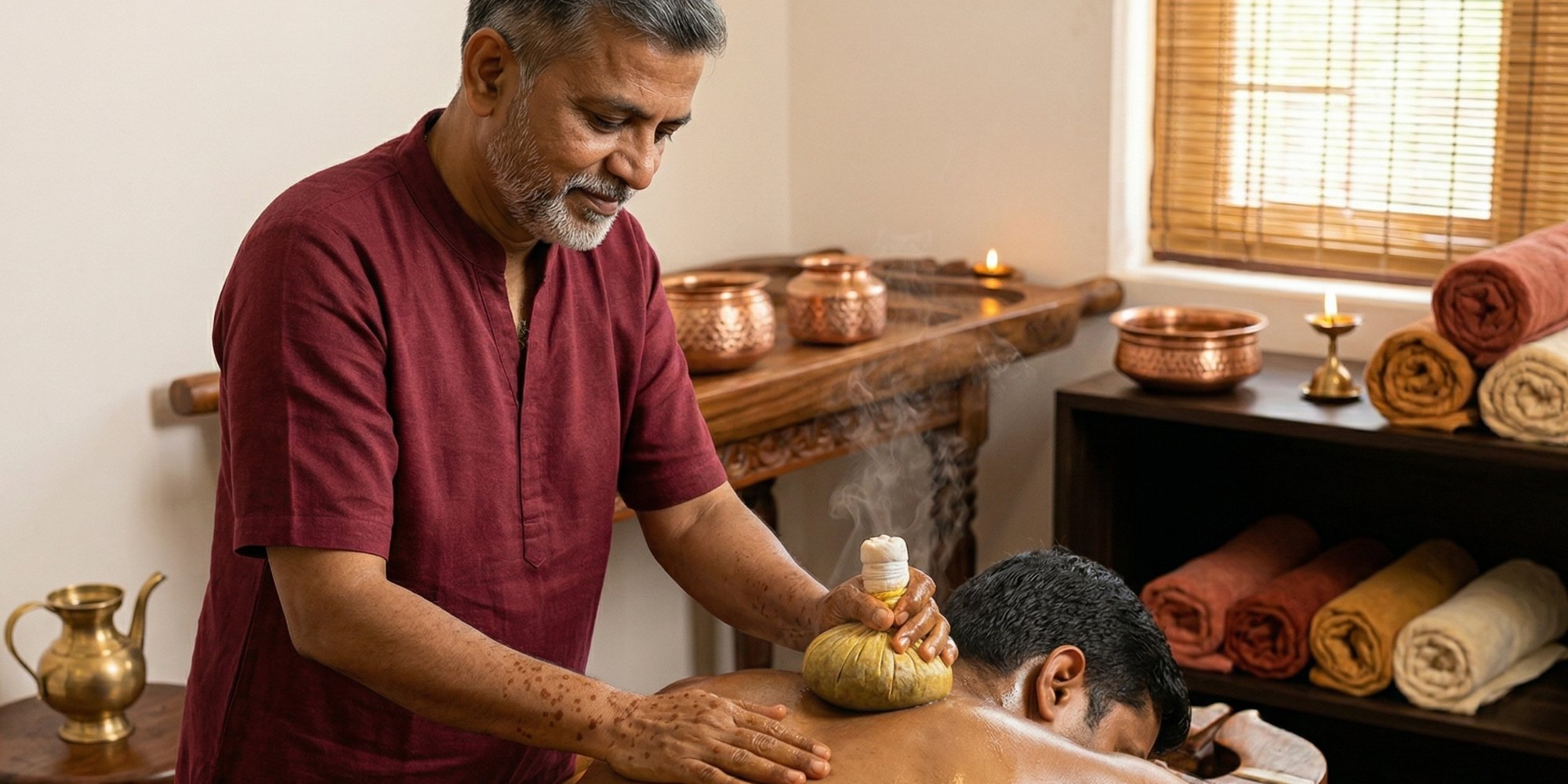
Naranga Kizhi (Lemon & Garlic Poultice)
Overview: Naranga Kizhi (Lemon & Garlic Poultice) Treatment
- ✓Doctor-Guided Diagnosis & Prakriti Assessment
- ✓Multi-Disciplinary ANP³ Integrated Care Plan
- ✓Targeted Root-Cause & Systemic Dosha Balancing
- ✓Supervised Panchakarma & Post-Therapy Care
In Malayalam, Naranga means lemon/citrus, and Kizhi means poultice or bolus. This is a highly specialized variant of Choorna Pinda Sweda where fresh lemons, powerful garlic flakes, grated coconut, and rock salt are fried in herbal oils and bundled into a hot cloth pouch.
When a joint becomes completely "locked" or "frozen," standard oil massages largely bounce off the superficial layers. The heavily acidic (Amla) and sharp (Teekshna) nature of citrus and garlic acts as a biochemical solvent.
By forcefully pounding these hot acidic boluses into the locked joint, the therapy generates immense, highly penetrative infrared-like heat. This shatters the deep Vata-Kapha fibrous blockages, dissolving crystallized stiffness in the synovial capsules, and forcing fresh, oxygenated blood to radically rehabilitate severely restricted muscles and tendons.
Medically Reviewed By: Dr. Pasalapudi Visalaanjani, B.A.M.S, MD (Kayachikitsa)
Registration No: 1146/A/2016
Disclaimer: The information provided is for educational purposes and should not replace professional medical advice. Outcomes may vary.
Core Therapeutic Advantages
- Cures Frozen Shoulder: Instantly breaks down deep adhesions and fibrous bands in the shoulder capsule, vastly improving the range of motion.
- Alleviates Cervical Spondylosis: The acidic heat melts the acute stiffness and nerve compression associated with severe neck and upper back pain.
- Melts Joint Nodules: Highly effective against painful gouty nodules and inflammatory swellings in small joints due to the sharp action of lemons and garlic.
- Relieves Morning Stiffness: Destroys the thick Kapha blockages that cause patients with rheumatoid arthritis to wake up with agonizing, locked joints.
- Soothes Traumatic Injuries: Speeds up the recovery of sports injuries, deep muscle spasms, and severe blunt trauma by rushing massive amounts of blood to the site.
- Balances Vata & Kapha: Perfectly combats the combination of deep pain (Vata) and heavy, cold stiffness (Kapha) simultaneously.
Phased Treatment Procedure
Phase 1: Purvakarma
The physician evaluates the patient to diagnose acute Vata-Kapha blockages, typically presenting as severe morning stiffness, frozen shoulder, or cervical spondylosis.
Fresh lemons (Naranga), garlic, grated coconut, rock salt, and powerful anti-bacterial herbs are aggressively fried in medicated oils to release their sharp, penetrating volatile compounds.
The hot, highly fragrant, acidic herbal mixture is tightly bound into heavy cloth boluses (Kizhis or Potlis), ensuring a firm grip for the therapists.
Phase 2: Pradhana Karma
A swift, localized application of hot medicated oil (like Murivenna or Karpooradi) is applied over the afflicted joint to lower skin resistance and initiate warmth.
The prepared lemon-garlic boluses are heated on a pan with more medicated oil. They are kept continuously, uncomfortably warm throughout the entire procedure.
Therapists rhythmically pound, press, and rub the hot acidic boluses across the stiff joints and frozen muscles, forcing the heat deeply into the inflamed synovial capsules.
Phase 3: Pashchatkarma
The treatment is stopped once intense, localized sweating is achieved and the skin turns slightly pink. The excess oil and citric juices are gently wiped off.
The patient rests briefly while the joint absorbs the final surge of heat. Exposure to cold fans or wind is strictly forbidden to prevent an instant lock-up of the heated muscles.
The patient is instructed to wait at least an hour before taking a very warm bath, assisting the lymphatic system in draining the broken-down inflammatory exudate.

































