


Nasya (Nasal Administration)
Overview: Nasya (Nasal Administration) Treatment
- ✓Doctor-Guided Diagnosis & Prakriti Assessment
- ✓Multi-Disciplinary ANP³ Integrated Care Plan
- ✓Targeted Root-Cause & Systemic Dosha Balancing
- ✓Supervised Panchakarma & Post-Therapy Care
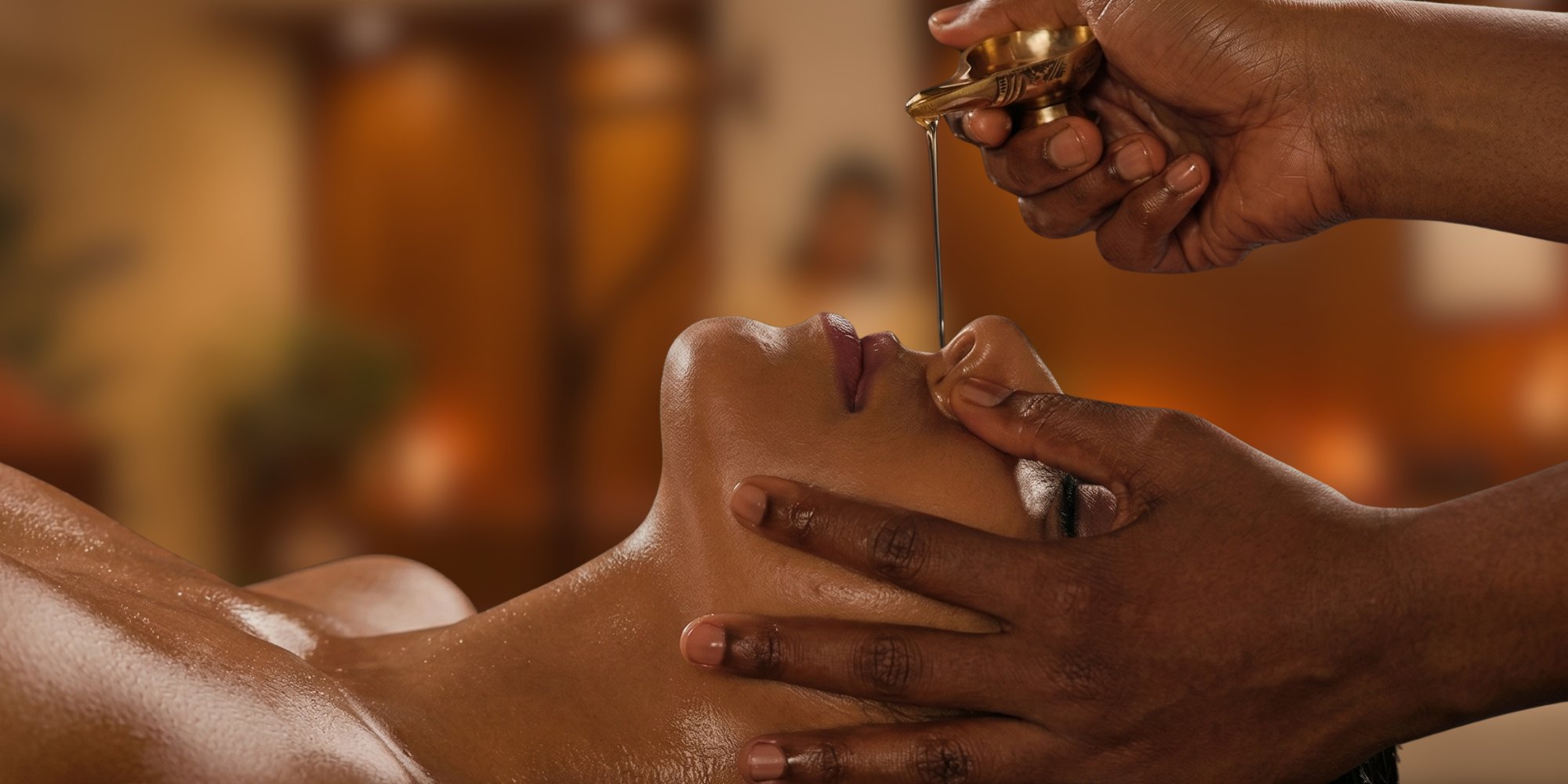
Nasya Karma is the specialized protocol within classical Panchakarma dedicated entirely to the purification and rejuvenation of the Urdhvajatrugata anatomy—every physiological structure located above the clavicle bone (head, neck, sensory organs, and brain). The procedure involves the highly-controlled instillation of specialized medicinal drops through the nasal cavity.
Charaka Samhita explicitly states: "Nasa Hi Shiraso Dvaram" — The nose is the direct gateway to the brain and consciousness. Toxins accumulating in the cranial vault, sinuses, and neuro-motor pathways are exclusively expelled through this route.
Unlike oral medications which undergo hepatic breakdown, Nasya medications are absorbed via the highly vascularized nasal mucosa and olfactory nerve roots. This allows the lipid-soluble Ayurvedic formulations (Medicated Ghritas and Tailas) more direct access toward the central nervous system, which is the traditional basis for its use in neurological and inflammatory conditions.
Medically Reviewed By: Dr. Pasalapudi Visalaanjani, B.A.M.S, MD (Kayachikitsa)
Registration No: 1146/A/2016
Disclaimer: The information provided is for educational purposes and should not replace professional medical advice. Outcomes may vary.
Core Therapeutic Advantages
- Neurological & Cognitive Enhancement: Stimulates the olfactory nerves connected directly to the limbic system and cortex; highly effective in managing Parkinson’s, facial palsy, and severe cognitive fog.
- Sinus & Respiratory Clearance: Clears the frontal and maxillary sinuses, offering profound relief from chronic allergic rhinitis, sinusitis, and persistent nasal congestion.
- Migraine & Headache Resolution: Quickly pacifies Vata-induced vascular headaches, tension headaches, and severe structurally-induced cervical spondylosis pain.
- Ocular & Sensory Rejuvenation: Strengthens the optic nerve and sensory organs (Indriyas); prevents early greying of hair, prevents hair fall, and prevents macular cellular degeneration.
- Endocrine & Pituitary Stimulation: The nasal cavity acts as a gateway to the brain (Shiras). Nasya drugs physically cross the blood-brain barrier, modulating the Hypothalamic-Pituitary axis.
- Psychological Support: Certain types of Nasya (like Brahmi Ghrita Nasya) are traditionally used to help calm the mind, as a complementary support alongside appropriate care for insomnia, anxiety, and mood-related conditions.
Phased Treatment Procedure
Phase 1: Purvakarma
The procedure begins with a gentle, stimulating massage using specific warm medicated oils (like Ksheerabala Taila) concentrated on the face, forehead, scalp, ears, and neck to mobilize deeply lodged toxins (Ama) and Doshas.
Mild herbal steam is directly applied to the face and neck region, specifically targeting the frontal and maxillary sinuses. This dilates the Srotas (channels) and liquefies vitiated Kapha and Vata.
Phase 2: Pradhana Karma
The patient lies securely on their back (Supine position) with their neck slightly extended and head tilted backward (using a soft neck support). This precisely aligns the nasal cavity for maximum drug penetration into the olfactory pathways.
The practitioner instills a precisely measured dose of warm medicated oil, herbal juice, or fine powder (e.g., Anu Taila, Shadbindu Taila, or Brahmi Ghrita) into each nostril using a sterile dropper.
Immediately following the instillation, the practitioner gently massages the vital points (Marmas) on the forehead, cheeks, and palms. The patient is instructed to inhale deeply and spit out any secretions that reach the throat.
Phase 3: Pashchatkarma
To completely clear the oral cavity and throat of expelled toxins and residual oils, the patient performs gargling with warm saline water or a specific medicated herbal decoction.
The patient inhales warm, therapeutic smoke from a medicinal Dhoomavarti (herbal cigar). This actively dries the respiratory passages and solidifies the clearance of Kapha dosha.

































