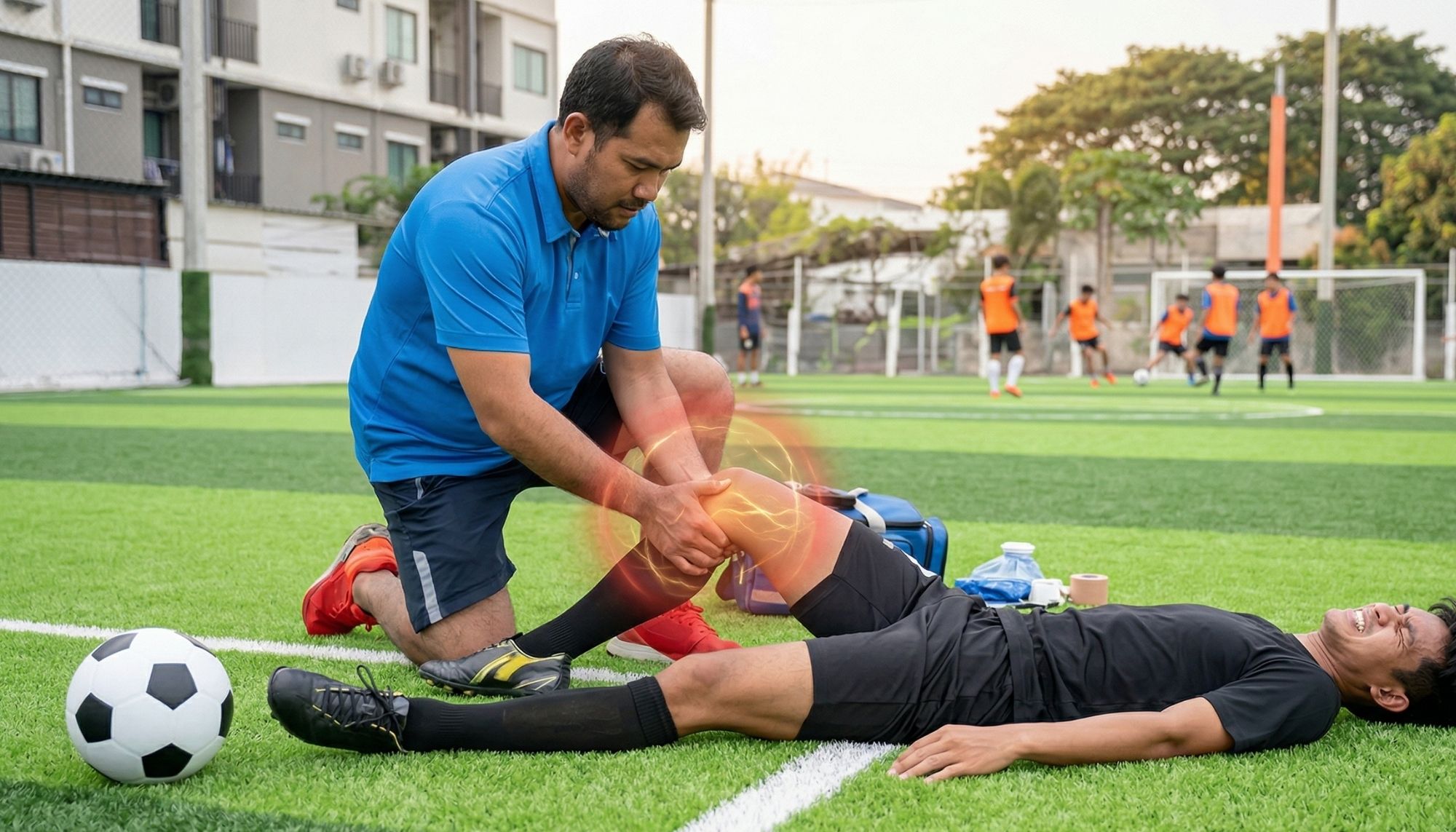
Ayurvedic Sports Injuries Treatment in Hyderabad
Ayurvedic Sports Injuries Treatment in Hyderabad
Recovery: Rapid
Targeted: Trauma
Mechanical: Bio
Integration: ANP³
Sai Ayush Ayurveda Hospital provides authentic, physician-supervised Ayurvedic treatment for sports injuries in Hyderabad. This structured, clinical approach precisely targets acute muscle strains, ligament sprains, and sports-related trauma using classical therapies like targeted Lepanam and deeply healing Pizhichil. Designed specifically for patients seeking safe, non-surgical rehabilitation, all interventions are conducted under strict doctor oversight, with each patient's care planned after a thorough clinical assessment. Sports injuries can affect daily movement, exercise routines, and overall physical independence. For some people, it happens suddenly—a sprained ankle, a twisted knee, or a pulled hamstring during a game or gym session. For others, it becomes a recurring problem connected with overuse, repetitive strain (like tennis elbow), chronic tendonitis, or stiff scar tissue from a previous unhealed injury. At Sai Ayush Ayurveda Hospital, Hyderabad, Ayurvedic sports injury treatment is planned under doctor supervision after understanding the person's injury mechanism, swelling pattern, mobility restriction, medical history, age, and severity of symptoms. Our approach combines classical Ayurveda, stage-specific external treatments, Panchakarma therapies where suitable, guided physiotherapy, and progressive lifestyle guidance. The aim is not just temporary comfort. The focus is to safely manage acute inflammation, support better tissue healing, reduce chronic joint stiffness, rebuild muscle strength, and guide the patient toward a safer, structured return to physical activity.
- Condition focus: Acute ligament sprains, muscle strains, severe tissue contusions, post-dislocation recovery.
- Key therapies: Lepana, Upanaha, Pichu, Shashtika Shali Pinda Sweda.
Quick Reference Matrix
| PARAMETERCLINICAL DIRECTION | |
| Who it may suit | Athletes suffering from massive acute/chronic sprains, tendonitis, or deep muscle tears demanding rapid return-to-play without lingering weakness. |
| Who should avoid | Total Category-3 ligament ruptures (e.g., completely snapped ACL) or compound bone fractures demanding immediate emergency orthopedic repair. |
| Typical duration | Duration fluctuates wildly based on the exact tissue grading of the trauma. |
Clinical Care Framework
This specialized program follows our integrated ANP³ medical model for fast, sustainable healing.
- Treatment Model: ANP³ (Ayurveda, Naturopathy, Physiotherapy)
- Supervision: Senior Ayurvedic Clinical Team
- Target Conditions: Sports Injury, Muscle Strains, Ligament Sprains
- Setting: Hospital Environment (KPHB OP/IP, Madinaguda OP)
- Duration: Typically 7 to 14 days
- Safety Protocol: Rigorous pre-treatment clinical evaluation required
What Are Common Sports Injuries?
Sports injuries are generally categorized into acute trauma (sudden) and chronic injuries (overuse over time). They can happen to professional athletes, gym-goers, or weekend warriors. Common injuries may be associated with:
- Sprains (overstretching or tearing of a ligament, like the ankle or ACL)
- Strains (overstretching or tearing of a muscle or tendon, like a hamstring pull)
- Meniscus tears in the knee
- Achilles tendonitis (inflammation at the back of the heel)
- Epicondylitis (Tennis Elbow or Golfer's Elbow)
- Rotator cuff injuries in the shoulder
- Shin splints from running on hard surfaces
- Chronic joint stiffness post-injury
Common Symptoms of Sports Injuries
People with sports injuries may experience:
- Chronic or sharp pain in the affected area
- Reduced mobility or stiffness
- Associated discomfort that affects daily activities
Ayurvedic View of Sports Injuries
In Ayurveda, acute trauma (Abhighata) immediately aggravates Vata and Pitta doshas. The sudden impact damages local tissues (Mamsa/Asthi Dhatu) and Rakta (blood), causing swelling, heat, and severe pain. Ayurvedic sports rehab focuses on:
- Managing acute 'Rakta-Pitta' with cooling herbs (Sheetala Upachara) initially
- Transitioning to warm oils and heat to treat Vata once swelling subsides
- Supporting the healing of stiffened tissues and scar tissue
- Nourishing weakened muscles (Brimhana) using specialized therapies like Navara
- Restoring normal movement progressively
- Preventing repeated injuries through strengthening and posture correction
Who Should Avoid Immediate Ayurvedic Therapy?
Certain deep-tissue and intensive thermal therapies are strictly contraindicated and must be avoided by:
- Individuals with acute, unhealed, or massive bone fractures
- Patients presenting with massive, hot, highly infectious joint swelling (septic arthritis)
- Individuals with complete, full-thickness ligament/tendon tears requiring immediate orthopedic surgery
- Pregnant women (unless specific, highly gentle OP care is explicitly advised by the physician)
How Is Treatment Performed?
- Detailed Ayurvedic Consultation: The first step is a proper consultation with an Ayurvedic doctor. The doctor reviews how the injury occurred, the current swelling, pain severity, instability, previous reports, and ongoing medications. Where needed, patients may be advised to bring or undergo diagnostic reports such as X-ray or MRI to rule out complete fractures or severe ligament tears requiring surgery.
- Acute Phase: Cooling Lepa and Rest: If the injury is fresh (less than 48-72 hours) and actively swollen, red, or hot, heavy massage and heat are strictly avoided. Cooling, anti-inflammatory herbal pastes (Lepa) and immobilization/rest are advised under doctor supervision to manage the initial trauma.
- Medicated Oil Application (Abhyanga): Once the acute swelling and heat subside, warm medicated oils are applied around the injured muscle or joint. The Vata-pacifying oil helps support blood circulation, relax defensive muscle spasms, and promote tissue nourishment.
- Swedana and Kizhi Therapies: Controlled heat therapy (Swedana) is used in the sub-acute and chronic phases to help soften stiff scar tissue and reduce Vata-related tightness. In selected patients, Kizhi therapies (like Navara rice bolus) may be advised to deeply nourish and strengthen weakened muscles.
- Panchakarma Support Where Clinically Indicated: For chronic injuries that refuse to heal, or widespread Vata aggravation, Panchakarma may be considered after consultation. The doctor will advise this depending on the person's condition, strength, digestion, and medical suitability.
- Physiotherapy and Return to Play Guidance: At Sai Ayush Ayurveda Hospital, sports injury care heavily relies on physiotherapy support. Ayurvedic therapies prepare the tissues, but active, doctor-guided strengthening and biomechanical correction are mandatory to prevent the injury from recurring.
Conditions Where Ayurvedic Rehab Care May Help Support Recovery
Ayurvedic sports injury treatment may be considered for:
- Mild to moderate ligament sprains (Grade 1 & 2)
- Muscle strains and partial tears
- Tennis elbow and Golfer's elbow
- Chronic joint stiffness post-injury
- Tendonitis and repetitive stress injuries
- Supportive rehabilitation after orthopedic surgery
- Muscle spasms from heavy lifting
Why Choose Sai Ayush Ayurveda Hospital for Injury Treatment in Hyderabad?
Sai Ayush Ayurveda Hospital follows a doctor-led approach for musculoskeletal care. The focus is on personalised Ayurvedic care, not one-size-fits-all therapy. Key reasons patients choose Sai Ayush:
- Doctor-supervised Ayurvedic consultation
- Careful stage-based treatment (avoiding heat on fresh injuries)
- Classical Kerala-style strengthening therapies (like Navara Kizhi)
- ANP³ approach: Ayurveda, Naturopathy and Physiotherapy
- OP and IP care options at Hyderabad branches
- Trained therapy team
- Personalised return-to-activity and strengthening guidance
- Supportive care for stubborn, chronic injuries
- Convenient access for KPHB, Kukatpally, Madinaguda, Miyapur, Hafeezpet, Chandanagar and nearby areas
What to Expect During Your Visit
During your first visit, the doctor will understand your injury in detail. You may be asked:
- How exactly did the injury happen (twisting, direct impact, overuse)?
- Did you hear a 'pop' or snapping sound?
- Is the area actively swollen, red, or hot?
- Can you bear weight on the injured joint?
- Do you have previous MRI or X-ray reports?
- Are you taking painkillers or using ice packs?
- Have you had similar injuries in the past?
Lifestyle Guidance for Sports Injuries
Along with Ayurvedic treatment, patience and progressive loading are vital for safe recovery. General recovery guidance may include:
- Follow the R.I.C.E protocol (Rest, Ice, Compression, Elevation) immediately after an acute injury
- Do not apply heat or massage to a fresh, swollen injury
- Do not try to 'push through' acute pain; this turns minor strains into complete tears
- Avoid returning to heavy gym lifting or high-impact sports until cleared by the doctor
- Always warm up properly before exercise to increase blood flow
- Wear supportive footwear appropriate for your specific sport
- Avoid self-medication and random painkiller use
- Follow the complete therapy and strengthening plan advised by the doctor
When an Injury Needs Immediate Medical Attention
Do not delay medical care if a sports injury is associated with:
- Hearing a loud 'pop' sound accompanied by immediate, severe pain
- Visible deformity or bones appearing out of place
- Complete inability to bear any weight on the leg or joint
- Severe, uncontrolled swelling that occurs within minutes of the injury
- Loss of sensation, numbness, or extreme paleness in the limb below the injury
- A joint that 'locks up' entirely and refuses to bend or straighten
Book Ayurvedic Sports Injury Consultation in Hyderabad
If a muscle strain, ligament sprain, or chronic sports injury is keeping you away from your active lifestyle, consult the doctors at Sai Ayush Ayurveda Hospital, Hyderabad. Our team will assess your condition and guide you with a personalised Ayurvedic treatment plan that may include stage-specific therapies, Panchakarma support, physiotherapy guidance, diet correction, and lifestyle care where suitable. [Book your consultation](/contact) today at Sai Ayush Ayurveda Hospital – KPHB or Madinaguda. Also Explore: • [Ayurvedic Knee Pain Treatment](/treatments/pain-spine/knee-pain) • [Ayurvedic Ankle Pain Treatment](/treatments/pain-spine/ankle-pain) • [Ayurvedic Muscle Spasm Treatment](/treatments/pain-spine/muscle-spasm)
Duration of Treatment
The duration of treatment heavily depends on the chronicity and severity of the condition. Acute strains may require 5 to 7 days of targeted OP therapies. Severe, chronic degenerative conditions may require comprehensive 14 to 28-day care protocols, potentially involving In-Patient (IP) admission for intensive daily monitoring.
Clinical Integration
Our ANP³ care model perfectly integrates classical Ayurveda with Naturopathy and Physiotherapy. We routinely manage patients who are on parallel allopathic medications for diabetes, hypertension, or pain management. We ensure complete safety by carefully reviewing your current prescriptions to explicitly prevent any adverse herb-drug interactions.
FAQ Section
- Is Ayurvedic treatment useful for sports injuries?
- Ayurvedic treatment may help support sports injury management in selected cases by focusing on reducing inflammation, healing stiff tissues, Vata balance, and guided physiotherapy. The right treatment depends on the stage and severity of the injury.
- Why shouldn't I get an oil massage immediately after an injury?
- Massaging an acute, swollen, or bleeding injury (like a fresh ankle sprain) will forcefully increase internal bleeding, swelling, and damage. Ayurveda strictly uses cooling pastes and rest first.
- How many days are required for Ayurvedic rehab treatment?
- Recovery depends entirely on the tissue injured. Muscles heal faster (weeks), while ligaments and tendons take much longer (months). The doctor will suggest the duration after consultation.
- Can Ayurveda heal a completely torn ACL without surgery?
- No. A complete (Grade 3) ligament tear usually requires surgical reconstruction if joint stability is lost. Ayurveda is excellent for post-surgical rehabilitation and managing partial (Grade 1 & 2) tears under doctor supervision.
- What is Navara Kizhi and why is it used?
- It is a highly nourishing classical therapy using specialized rice cooked in milk and herbal decoctions. It is often used in the later stages of rehab to strengthen wasted or weakened muscles.
- Do I need an MRI before Ayurvedic sports rehab?
- Yes, an MRI is often crucial for sports injuries. It tells the doctor exactly which ligaments or tendons are injured and the severity of the tear, ensuring therapies are safely planned.
- Is sports injury treatment available at both KPHB and Madinaguda?
- Sai Ayush Ayurveda Hospital provides consultation and therapy support for injuries in Hyderabad. Availability of specific therapies may vary by branch, so it is better to confirm while booking.
- Can Ayurvedic treatment help Tennis Elbow?
- Yes, Tennis Elbow (Lateral Epicondylitis) is a repetitive stress injury that often responds well to localized Ayurvedic therapies, rest, and specific physiotherapy guidance under doctor supervision.
- Should I apply ice or heat immediately after an injury?
- For an acute, fresh injury with massive swelling (high Pitta), extreme cold can reduce blood flow, but Ayurveda prefers gentle, cooling herbal pastes (Lepa) rather than freezing ice, which can block local circulation and delay deep healing.
- Why does an old injury hurt years later during cold weather?
- An improperly healed injury leaves a permanent pocket of weak Vata dosha. When the weather turns cold, this Vata immediately flares up, causing the old joint or muscle to ache sharply.
Medically Reviewed By: Dr. Pasalapudi Visalaanjani, B.A.M.S, MD (Kayachikitsa)
Registration No: 1146/A/2016
Disclaimer: The information provided is for educational purposes and should not replace professional medical advice. Outcomes may vary.