Ayurvedic Post-Operative Rehab Treatment in Hyderabad
Ayurvedic Post-Operative Rehab Treatment in Hyderabad
Rehabilitation: Total
Tissue Release: Scar
Management: Pain
Model: ANP³
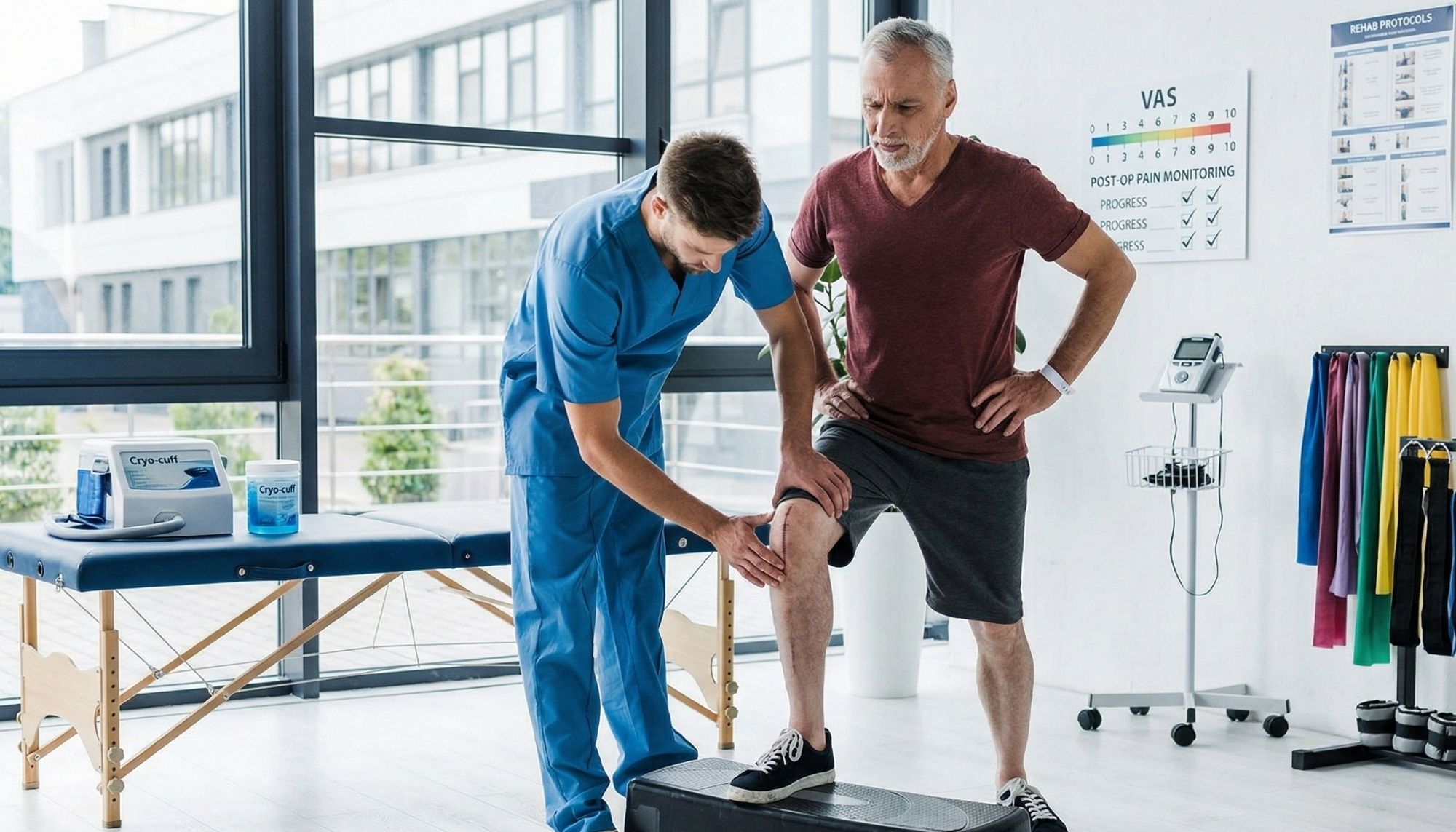
Sai Ayush Ayurveda Hospital provides authentic, physician-supervised Ayurvedic treatment for post-operative rehabilitation in Hyderabad. This structured, clinical approach precisely targets post-surgical stiffness, scar tissue adhesions, and muscle atrophy using classical therapies like targeted gentle Abhyanga and deeply healing Shastika Shali Pinda Sweda. Designed specifically for patients seeking safe, non-surgical functional recovery post-surgery, all interventions are conducted under strict doctor oversight, with each patient's care planned after a thorough clinical assessment. Undergoing orthopedic surgery—such as a joint replacement, ACL reconstruction, or spinal surgery—is only the first step toward recovery. The critical second step is rehabilitation. For many people, post-operative recovery is connected with severe joint stiffness, muscle weakness, slow wound healing, generalized fatigue, and fear of movement. At Sai Ayush Ayurveda Hospital, Hyderabad, Ayurvedic post-operative rehab treatment is planned under doctor supervision after carefully understanding the specific surgery performed, the surgeon's protocols, the current stage of healing, mobility restriction, and severity of symptoms. Our approach safely combines classical Ayurveda, highly specific strengthening therapies, gentle external treatments, guided physiotherapy, and nutritional support where clinically suitable. The aim is not just temporary comfort. The focus is to safely support the healing of cut tissues, safely reduce post-surgical joint stiffness, rebuild wasted muscle mass, manage surgical pain, and guide the patient toward restoring full, confident mobility.
- Condition focus: Post knee replacement stiffness, spinal surgery recovery, severe scar tissue, long-term muscular atrophy.
- Key therapies: Shashtika Shali Pinda Sweda, Abhyanga, Pizhichil, Physiotherapy.
Quick Reference Matrix
| PARAMETERCLINICAL DIRECTION | |
| Who it may suit | Patients who have completed their initial surgical healing but are suffering from chronic stiffness, massive weakness, or lack of projected mobility. |
| Who should avoid | The surgical incision has active, glowing red infection, oozing, or the hardware has dislodged/failed structurally. |
| Typical duration | Dependent strictly upon the type of surgery and current degree of muscular atrophy. |
Clinical Care Framework
This specialized program follows our integrated ANP³ medical model for fast, sustainable healing.
- Treatment Model: ANP³ (Ayurveda, Naturopathy, Physiotherapy)
- Supervision: Senior Ayurvedic Clinical Team
- Target Conditions: Post-Operative Rehabilitation, Muscle Atrophy, Scar Tissue
- Setting: Hospital Environment (KPHB OP/IP, Madinaguda OP)
- Duration: Extensive care program (Typically 21 to 28 days)
- Safety Protocol: Rigorous pre-treatment clinical evaluation required
What Challenges Arise After Surgery?
While surgery fixes the mechanical issue, the body undergoes significant trauma. Muscles are cut or moved, joints are immobilized, and the nervous system is stressed. Post-operative challenges may be associated with:
- Severe stiffness in the operated joint (like after a knee replacement)
- Muscle wasting (atrophy) in the affected limb
- Thick, tight scar tissue restricting movement
- Lingering surgical pain and swelling
- Generalized fatigue and weakness from the anesthesia and trauma
- Fear of falling or re-injuring the area
- Nerve-related tingling or numbness near the incision
- Slow recovery of normal walking patterns
Common Symptoms of Post-Operative Rehab
People with post-operative rehab may experience:
- Chronic or sharp pain in the affected area
- Reduced mobility or stiffness
- Associated discomfort that affects daily activities
Ayurvedic View of Post-Operative Recovery
In Ayurveda, any surgical trauma (Shastra Karma) immediately causes a massive aggravation of Vata dosha and Pitta dosha. Tissues (Dhatus) are cut, leading to a localized loss of strength (Ojo Kshaya) and profound dryness/stiffness. Ayurvedic rehab care focuses on:
- Pacifying the extreme Vata aggravation caused by the trauma
- Using 'Brimhana' (nourishing/building) therapies to restore wasted muscle
- Supporting the 'Bhagna Sandhana' (bone and tissue knitting) process internally
- Carefully softening stiff scar tissue without disrupting the surgical repair
- Restoring 'Agni' (digestion) which is often ruined by heavy antibiotics and painkillers
- Providing psychological support and gentle guided movement
Who Should Avoid Immediate Ayurvedic Therapy?
Certain deep-tissue and intensive thermal therapies are strictly contraindicated and must be avoided by:
- Individuals with acute, unhealed, or massive bone fractures
- Patients presenting with massive, hot, highly infectious joint swelling (septic arthritis)
- Individuals with complete, full-thickness ligament/tendon tears requiring immediate orthopedic surgery
- Pregnant women (unless specific, highly gentle OP care is explicitly advised by the physician)
How Is Treatment Performed?
- Detailed Ayurvedic Consultation & Surgical Review: The absolute first step is a careful consultation with an Ayurvedic doctor. The doctor strictly reviews your surgical discharge summary, the exact date of surgery, the surgeon's weight-bearing restrictions, current wound healing, and ongoing medications (like blood thinners). No therapy is planned without understanding the surgical constraints.
- Internal Medicine for Tissue Healing (Sandhaniya): In the early stages, external massage over the surgical site is avoided. Instead, the doctor may prescribe specific Ayurvedic internal medicines designed to support bone healing (Asthi Dhatu), reduce internal swelling, and boost overall energy and digestion.
- Gentle Medicated Oil Application (Avoiding the Incision): Once the surgical wound has completely healed (stitches removed and closed), gentle Abhyanga using specialized Vata-pacifying and nerve-nourishing oils may be applied to the surrounding stiff muscles. Extreme care is taken to never apply heavy pressure over implants.
- Navara Kizhi and Strengthening Therapies: Post-surgery, the muscles around the joint often waste away (atrophy) due to disuse. Specialized nourishing therapies like Navara Kizhi (boluses of medicated rice cooked in milk) are highly utilized to safely build muscle bulk, improve nerve function, and support strength without heavy gym lifting.
- Panchakarma Support Where Clinically Indicated: For profound post-surgical weakness or severe systemic Vata aggravation, gentle Panchakarma may be considered after consultation. Procedures like mild, nourishing Basti (medicated enemas) are traditionally used to rebuild vitality. The doctor will advise this depending on medical suitability.
- Physiotherapy and Guided Mobility: At Sai Ayush Ayurveda Hospital, post-op rehab heavily relies on integrated physiotherapy support. Ayurvedic therapies soften the stiff scar tissue and nourish the muscles, while guided, active exercises are mandatory to actually restore the joint's range of motion safely.
Conditions Where Ayurvedic Rehab Care May Help Support Recovery
Ayurvedic post-operative rehab treatment may be considered for:
- Recovery after Total Knee Replacement (TKR) or Hip Replacement
- Rehab after ACL or meniscus reconstruction
- Recovery after spinal fusion or disc surgeries
- Post-fracture stiffness after cast removal
- Rotator cuff surgery rehabilitation
- General weakness and fatigue following major surgeries
- Supportive care alongside standard orthopedic physiotherapy
Why Choose Sai Ayush Ayurveda Hospital for Rehab Treatment in Hyderabad?
Sai Ayush Ayurveda Hospital follows a doctor-led approach for post-surgical care. The focus is on safe, personalised Ayurvedic care that respects the surgeon's protocols. Key reasons patients choose Sai Ayush:
- Doctor-supervised Ayurvedic consultation and safety review
- Strict adherence to surgical contraindications (avoiding wrong pressures)
- Classical Kerala-style nourishing therapies (like Navara Kizhi)
- ANP³ approach: Ayurveda, Naturopathy and Physiotherapy integration
- OP and IP care options at Hyderabad branches (crucial for those who cannot travel daily)
- Trained therapy team experienced in handling post-op joints
- Personalised diet and mobility guidance
- Convenient access for KPHB, Kukatpally, Madinaguda, Miyapur, Hafeezpet, Chandanagar and nearby areas
What to Expect During Your Visit
During your first visit, the doctor will understand your surgical history in detail. You MUST bring:
- Your complete surgical discharge summary
- Your surgeon's specific physiotherapy and weight-bearing protocols
- Details of exactly when the surgery occurred
- A list of all ongoing medications, especially blood thinners
- Any recent X-rays taken post-surgery
- Information regarding any active infections or unhealed wounds
- Details about your current pain levels and mobility restrictions
Lifestyle Guidance for Post-Operative Recovery
Along with Ayurvedic treatment, patience and strict adherence to safety rules are vital. General recovery guidance may include:
- Never attempt movements or weight-bearing that your surgeon has forbidden
- Eat a warm, highly nourishing, easily digestible Ayurvedic diet to rebuild tissues
- Keep the operated joint warm and protected from cold drafts
- Perform doctor-advised breathing exercises to clear the lungs after anesthesia
- Do not sit continuously; move safely as advised to prevent blood clots
- Use your walker or cane exactly as instructed to prevent falls
- Avoid self-medication and random painkiller use
- Follow the complete integrated therapy and physiotherapy plan advised by the doctor
When Immediate Medical Attention Is Needed
Do not delay contacting your surgeon or seeking emergency care if your post-op condition involves:
- Sudden, extreme swelling in the calf or leg with severe pain (possible blood clot/DVT)
- Sudden shortness of breath or chest pain (possible pulmonary embolism)
- The surgical wound becomes highly red, hot, swollen, or starts leaking pus
- A high fever with chills
- Sudden inability to move the limb or severe new numbness
- A sudden 'pop' or feeling that the joint has dislocated
Book Ayurvedic Post-Operative Rehab Consultation in Hyderabad
If joint stiffness, muscle weakness, or lingering pain is slowing down your recovery after surgery, consult the doctors at Sai Ayush Ayurveda Hospital, Hyderabad. Our team will carefully assess your surgical history and guide you with a safe, personalised Ayurvedic rehab plan that may include nourishing therapies, internal tissue support, physiotherapy guidance, and lifestyle care where suitable. [Book your consultation](/contact) today at Sai Ayush Ayurveda Hospital – KPHB or Madinaguda. Also Explore: • [Ayurvedic Knee Pain Treatment](/treatments/pain-spine/knee-pain) • [Ayurvedic Spine Care Treatment](/treatments/pain-spine/back-pain) • [Ayurvedic Sports Injury Treatment](/treatments/pain-spine/sports-injury)
Duration of Treatment
The duration of treatment heavily depends on the chronicity and severity of the condition. Acute strains may require 5 to 7 days of targeted OP therapies. Severe, chronic degenerative conditions may require comprehensive 14 to 28-day care protocols, potentially involving In-Patient (IP) admission for intensive daily monitoring.
Clinical Integration
Our ANP³ care model perfectly integrates classical Ayurveda with Naturopathy and Physiotherapy. We routinely manage patients who are on parallel allopathic medications for diabetes, hypertension, or pain management. We ensure complete safety by carefully reviewing your current prescriptions to explicitly prevent any adverse herb-drug interactions.
FAQ Section
- Is Ayurvedic treatment safe after orthopedic surgery?
- Yes, when planned under doctor supervision and integrated with your surgeon's protocols. Ayurveda provides excellent supportive care for reducing stiffness and nourishing weak muscles, provided the wound is completely healed and safety guidelines are followed.
- How soon after surgery can I start Ayurvedic rehab?
- Internal Ayurvedic medicines to support healing can often start early. However, external oil therapies (like Abhyanga or Kizhi) are strictly delayed until the surgical wound is 100% closed, healed, and stitches are removed (usually 3 to 6 weeks, depending on the surgery).
- What is Navara Kizhi and why is it used in rehab?
- Navara Kizhi uses specialized rice cooked in milk and herbal decoctions. It is a highly nourishing 'Brimhana' therapy used to build bulk and strength in muscles that have wasted away (atrophied) after surgery.
- Do I still need physiotherapy if I take Ayurvedic treatment?
- Absolutely. At Sai Ayush, we use the ANP³ approach. Ayurveda softens the stiff tissues and nourishes the muscles, but active, doctor-guided physiotherapy is mandatory to actually train the joint to move properly again.
- Will massage damage my knee or hip implant?
- Deep, aggressive pressure is never applied over surgical implants. The therapies are specifically designed to treat the tight surrounding muscles (like the calves or thighs) and gently soften scar tissue without risking the implant.
- Should I bring my surgical discharge summary?
- Yes, it is absolutely mandatory. The Ayurvedic doctor must know exactly what was done, what hardware was used, and what your surgeon's restrictions are before planning any therapy.
- Is post-op rehab treatment available at both KPHB and Madinaguda?
- Sai Ayush Ayurveda Hospital provides consultation and therapy support in Hyderabad. We also offer In-Patient (IP) care, which is highly beneficial for post-op patients who have difficulty traveling daily.
- Can I stop my blood thinners to take Ayurvedic medicines?
- Never stop blood thinners or any critical post-surgical medications without your surgeon's explicit approval. Inform the Ayurvedic doctor about all medicines so your supportive care plan can be safely coordinated.
- How soon after surgery can I start Ayurvedic rehab?
- This depends entirely on the surgery type and your surgeon's clearance. Generally, gentle, non-contact Ayurvedic medicines for wound healing can start immediately, while physical oil therapies wait until the incision is fully closed.
- Can Ayurveda help with post-surgery scar tissue tightness?
- Yes. Thick, tight scar tissue restricts movement. Specific warm Ayurvedic oil applications and localized swedana (fomentation) help soften the fibrosis and restore elasticity to the surrounding skin and muscles.
Medically Reviewed By: Dr. Pasalapudi Visalaanjani, B.A.M.S, MD (Kayachikitsa)
Registration No: 1146/A/2016
Disclaimer: The information provided is for educational purposes and should not replace professional medical advice. Outcomes may vary.