

Ayurvedic PCOD / PCOS Treatment in Hyderabad
Overview: PCOD / PCOS Treatment
- ✓Doctor-Guided Diagnosis & Prakriti Assessment
- ✓Multi-Disciplinary ANP³ Integrated Care Plan
- ✓Plan Based on Your Assessment and Dosha Balance
- ✓Supervised Panchakarma & Post-Therapy Care
PCOD or PCOS can show as irregular periods, acne, extra facial hair, weight gain or ovarian cysts, and a gynaecologist confirms it with tests and a scan. Ayurvedic consultation and support for PCOD and PCOS in Hyderabad at Sai Ayush is planned after those reports. It may include Virechana, Udvartana, Kashaya Basti and Uttar Basti, with diet and exercise guidance.
PCOD and PCOS are common hormonal conditions. They can cause irregular periods, acne, extra facial hair, weight gain and small cysts on the ovaries, and they can affect fertility.
Your doctor reviews your gynaecologist's tests, scan, weight and daily routine. Ayurvedic therapies may be combined with diet and exercise guidance. Results vary, and steady lifestyle changes matter most.
Ayurvedic care here works alongside your gynaecologist, and prescribed medicines should continue as advised. Very heavy bleeding or a missed period with a possible pregnancy needs a medical check first.
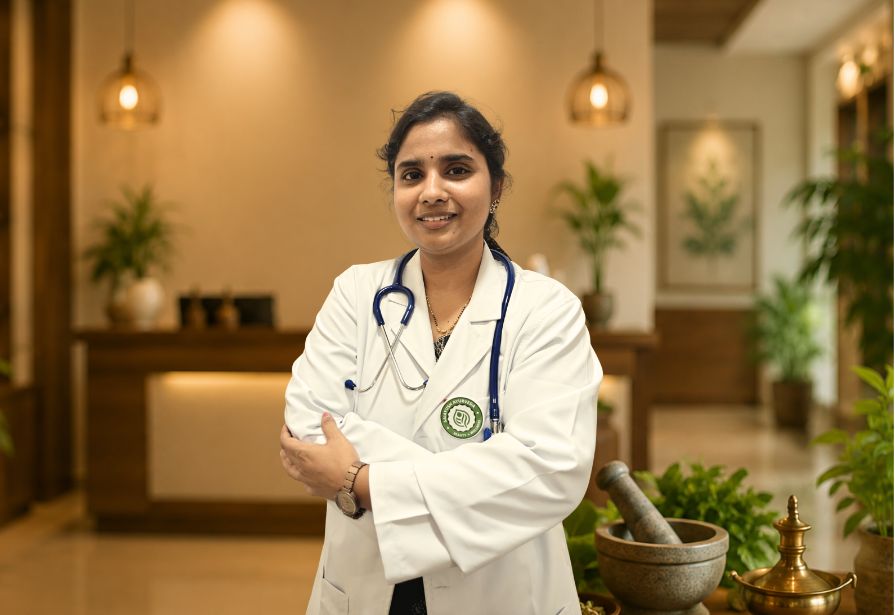
Medically Reviewed By: Dr. Pasalapudi Visalaanjani, B.A.M.S, MD (Kayachikitsa)
Registration No: 1146/A/2016 · Last updated 5 November 2026
Disclaimer: The information provided is for educational purposes and should not replace professional medical advice. Outcomes may vary.
Quick Reference Matrix
| Parameter | Clinical Direction |
|---|---|
| Who it may suit | People with pcod / pcos who want doctor-guided Ayurvedic care, planned after a clinical assessment. |
| Who should avoid | The patient is actively experiencing a severe, acute hemorrhagic cyst rupture requiring immediate emergency surgery. |
| Typical duration | Decided by your doctor after the first assessment. Results vary. |
Clinical Care Framework
Our PCOD / PCOS care follows the integrated ANP³ model (Ayurveda, Naturopathy and Physiotherapy), aiming for steady, sustainable progress.
- Treatment Model: ANP³ (Ayurveda, Naturopathy, Physiotherapy)
- Supervision: Ayurvedic doctors
- Target Conditions: PCOD / PCOS, Hormonal Imbalance, Reproductive Health
- Setting: Hospital Environment (KPHB OP/IP, Madinaguda OP)
- Safety Protocol: Rigorous pre-treatment clinical evaluation required
What Is PCOD / PCOS?
PCOD and PCOS are conditions where the ovaries produce abnormally high levels of male hormones (androgens). This hormonal chaos prevents the ovaries from releasing a mature egg every month. Instead, the immature eggs turn into multiple small fluid-filled sacs (cysts) surrounding the ovary.
In many women, this is heavily linked with severe insulin resistance, chronic low-grade inflammation, obesity, extreme stress, and a sedentary lifestyle.
That is why repeatedly masking the issue with birth control pills is not a long-term solution. A proper assessment helps correct the root metabolic issue, preventing long-term complications like Type 2 Diabetes, high cholesterol, and severe infertility.
Common Symptoms of PCOD / PCOS
You may need Ayurvedic assessment if you experience:
- irregular, delayed periods (sometimes missing for months)
- Very light or excessively heavy bleeding when periods do occur
- Sudden, stubborn weight gain, especially around the abdomen
- Excessive, thick hair growth on the face, chest, or stomach (Hirsutism)
- Severe, painful cystic acne along the jawline
- Hair thinning and scalp hair loss (male-pattern baldness)
- Darkening of the skin around the neck or underarms (Acanthosis Nigricans)
Note: If you experience sudden, severe pelvic pain or heavy, uncontrollable vaginal bleeding that causes severe dizziness, seek EMERGENCY medical care as this could be a ruptured cyst or other serious complication.
Ayurvedic Understanding of PCOD
In Ayurveda, PCOD is correlated with a severe block in the 'Artavavaha Srotas' (reproductive channels).
When a woman has a poor lifestyle, eats heavy/junk foods, and lacks physical exercise, the digestive fire (Agni) weakens. This creates thick, sticky Kapha (Ama), which travels to the ovaries. This heavy Kapha physically blocks the natural downward-moving Vata (Apana Vata). Because Vata is trapped, it cannot release the egg (ovulation fails), leading to the formation of multiple cysts (Granthi).
At Sai Ayush, the treatment focuses entirely on 'melting' this Kapha block through metabolism correction, allowing the Vata to flow naturally and trigger normal ovulation.
Who Should Avoid Immediate Ayurvedic Therapy?
For PCOD / PCOS, some Ayurvedic therapies are not suitable as a first step and are deferred until the treating physician has ruled out the following:
- The patient is actively experiencing a severe, acute hemorrhagic cyst rupture requiring immediate emergency surgery.
- Pregnancy, unless the treating physician has specifically cleared gentle outpatient care
- Any acute, unstable medical emergency needing immediate hospital care
How Is Treatment Performed?
Doctor-Led Hormonal & Metabolic Assessment
The doctor carefully evaluates your cycle history, sudden weight gain, facial hair (hirsutism), stress, sleep, and digestion. This helps identify the exact doshic involvement (usually Kapha blocking Vata in the ovaries).
Metabolism-Correcting Medicines (Agni Deepana)
This naturally reduces the heavy Kapha blockages, helping the body process sugars and hormones correctly.
Strict Dietary & Lifestyle Correction
You cannot manage PCOS while eating heavy, cold, or sugary foods. Our doctors provide strict dietary guidance (emphasizing warm, light, low-glycemic foods) and mandate specific daily physical movements (Vyayama) to melt Kapha and improve insulin sensitivity.
Follow-Up and Long-Term Maintenance
Regular follow-up ensures your dosage is adjusted as your periods slowly return to a natural rhythm.
PCOD and Birth Control Pills
Once you stop the pills, the irregular periods return because the root insulin resistance was never fixed.
When Should You See a Doctor for PCOD?
You should consult a doctor if:
- Your periods are consistently delayed by over 45 days
- You notice thick, dark hair growing on your chin or chest
- You are trying to conceive but facing severe difficulty
- You feel constantly exhausted, moody, and depressed
What Results Can You Expect?
PCOD is manageable, but reversing metabolic damage requires immense patience and strict lifestyle discipline. The practical goals of Ayurvedic PCOD care include:
- Gradual return of a natural, unassisted menstrual cycle
- Improvement in metabolic rate and easier weight management
- Reduction in new cystic acne breakouts
- Slowing down of abnormal facial hair growth
- Improved insulin sensitivity and energy levels
- Better natural fertility potential
Note: Results vary significantly. Supporting hormonal balance usually takes several months of consistent diet, exercise and prescribed medicine, reviewed regularly by your doctor.
About Sai Ayush Ayurveda Hospital
Sai Ayush is an NABH AYUSH Entry Level certified, multi-specialty Ayurvedic hospital in Hyderabad, delivering integrated care through its ANP³ model — Ayurveda, Naturopathy and Physiotherapy — across its KPHB and Madinaguda branches.
Visit Us in Hyderabad
Consultations for PCOD / PCOS are available at both Sai Ayush branches in Hyderabad, convenient for KPHB, Kukatpally, Madinaguda, Miyapur, Hafeezpet, Chandanagar and nearby areas.
- KPHB (Main Branch, OP & IP) — Plot No 59, JNTU–Hitech City Road, KPHB 7th Phase Rd, Hyderabad, Telangana 500085 · +91 81423 28080
- Madinaguda Branch (OP) — 4th Floor, Kosal, Sai Plaza, above FMS Dental, Ramakrishna Nagar, Hafeezpet, Hyderabad 500049 · +91 84668 82266
- Open: Every day, 7:00 AM – 10:00 PM
Duration of Treatment
The number of days and sessions is decided by your doctor after the first assessment and reviewed at each follow-up. Results vary from person to person.
Clinical Integration
Many patients seeking PCOD / PCOS care are also on hormonal medication, oral contraceptives, or fertility treatment, or are managing thyroid conditions alongside their symptoms. We review current medication and treatment history before starting internal Ayurvedic therapies, to avoid interactions and coordinate care with any ongoing gynecological treatment.