
Ayurvedic Paralysis Treatment in Hyderabad
Overview: Paralysis Treatment
- ✓Doctor-Guided Diagnosis & Prakriti Assessment
- ✓Multi-Disciplinary ANP³ Integrated Care Plan
- ✓Plan Based on Your Assessment and Dosha Balance
- ✓Supervised Panchakarma & Post-Therapy Care
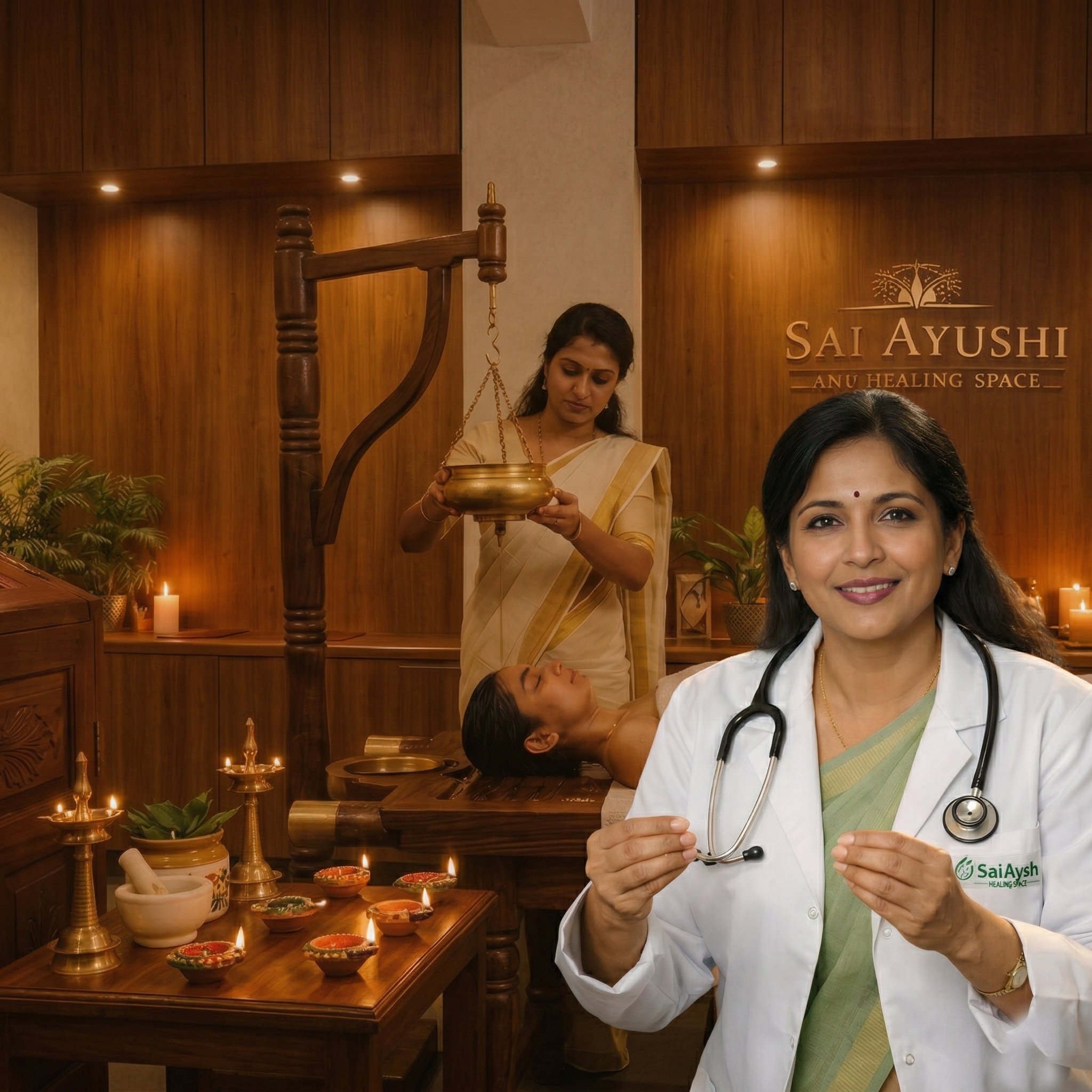
Weakness or loss of movement on one side or in the limbs needs urgent medical evaluation first, and rehabilitation continues for months. Ayurvedic support for paralysis in Hyderabad at Sai Ayush is complementary to physiotherapy and medical care. After assessment, your doctor may suggest therapies such as Navarakizhi and Pizhichil; results vary with the cause and stage.
Paralysis is loss of movement or strength in part of the body. It may affect one side of the face, as in Bell's palsy, one side of the body after a stroke, or the limbs after a spinal problem.
Once the cause is known and you are medically stable, your doctor reviews the reports, current medicines and therapy plan. Ayurvedic therapies may be added alongside physiotherapy to support movement and comfort. Recovery varies with the cause and stage.
New or sudden weakness, facial drooping or slurred speech is an emergency and needs hospital care at once. Ayurvedic care here is complementary to medical care and physiotherapy.
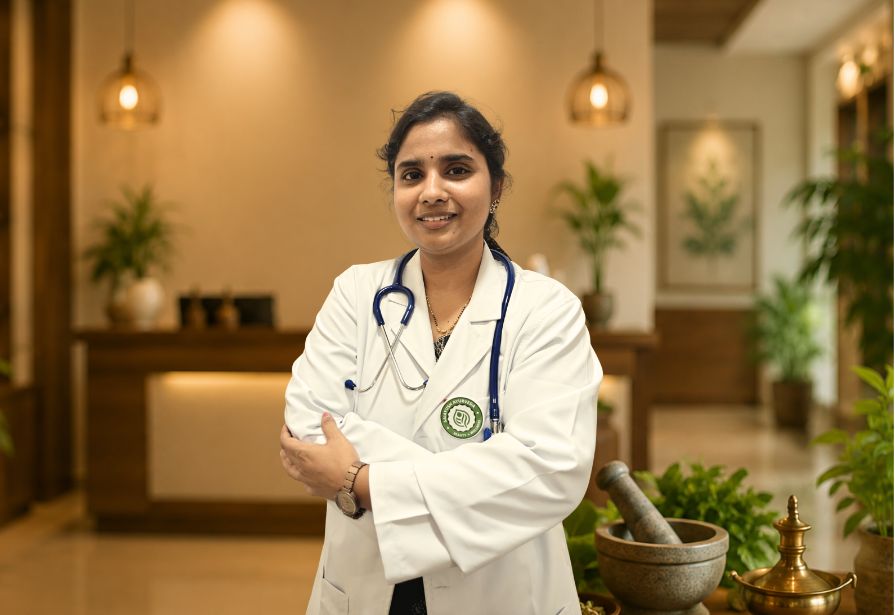
Medically Reviewed By: Dr. Pasalapudi Visalaanjani, B.A.M.S, MD (Kayachikitsa)
Registration No: 1146/A/2016 · Last updated 5 November 2026
Disclaimer: The information provided is for educational purposes and should not replace professional medical advice. Outcomes may vary.
Quick Reference Matrix
| Parameter | Clinical Direction |
|---|---|
| Who it may suit | Patients suffering from motor loss due to spinal compressions or peripheral nerve damage. |
| Who should avoid | Any urgent or unstable medical problem, which needs hospital care first. |
| Typical duration | Decided by your doctor after the first assessment. Results vary. |
Clinical Care Framework
Our Paralysis care follows the integrated ANP³ model (Ayurveda, Naturopathy and Physiotherapy), aiming for steady, sustainable progress.
- Treatment Model: ANP³ (Ayurveda, Naturopathy, Physiotherapy)
- Supervision: Ayurvedic doctors
- Target Conditions: Paralysis, Neurological Deficits, Nerve Degeneration
- Setting: Hospital Environment (KPHB OP/IP, Madinaguda OP)
- Safety Protocol: Rigorous pre-treatment clinical evaluation required
Common Symptoms of Paralysis
Paralysis occurs when there is a breakdown in communication between the brain and the muscles. It can be localized (like the face) or generalized (like one whole side of the body).
Paralysis may be associated with:
- Stroke (the most common cause of one-sided paralysis or Hemiplegia)
- Spinal cord injuries (causing Paraplegia or Quadriplegia)
- Bell's Palsy (sudden, temporary weakness of half of the face)
- Severe nerve compression (like a herniated disc)
- Guillain-Barré syndrome or other autoimmune nerve disorders
- Traumatic brain injuries
- Post-polio syndrome
- Severe muscle spasticity and joint locking following nerve damage
Who Should Avoid Immediate Ayurvedic Therapy?
For Paralysis, some Ayurvedic therapies are not suitable as a first step and are deferred until the treating physician has ruled out the following:
- Pregnancy, unless the treating physician has specifically cleared gentle outpatient care
- Any acute, unstable medical emergency needing immediate hospital care
How Is Treatment Performed?
Detailed Ayurvedic Consultation & Safety Review
The absolute first step is a careful consultation with an Ayurvedic doctor. The doctor reviews the neurologist's or orthopedist's diagnosis, MRI/CT/Nerve Conduction Studies, current blood pressure, and ongoing medications. Recognizing whether the paralysis is from the brain (stroke), spinal cord, or peripheral nerves determines the entire therapy approach.
Udvartana or Gentle Abhyanga (Depending on Muscle Tone)
If the paralyzed limb is heavily swollen, cold, and lacks tone (flaccid), Udvartana (dry herbal powder massage) may be used to stimulate the sluggish nerves. If the limb is stiff and contracted (spastic), warm medicated oil massage (Abhyanga) is used to soften the rigid, painful tissues.
Nasya and Shirodhara for Upper Body / Facial Paralysis
For conditions like Bell's Palsy (Ardita) or brain-related paralysis, Nasya (nasal drops) is considered vital in Ayurveda to clear pathways to the head. Shirodhara is utilized to calm the central nervous system, manage hypertension, and reduce the major psychological stress of paralysis.
Pizhichil and Navara Kizhi for Strengthening
As rehab progresses, nourishing therapies like Pizhichil (warm oil bath) and Navara Kizhi (medicated rice bolus massage) are utilized. These 'Brimhana' (building) therapies are designed to combat muscle wasting (atrophy) and nourish the starved nerves.
Basti (Medicated Enema) for Systemic Vata Balance
Paralysis (Pakshaghata or Ekanga Vata) is considered the ultimate Vata disorder. Basti is the most powerful Panchakarma treatment for Vata.
Intensive Physiotherapy and Occupational Therapy
At Sai Ayush Ayurveda Hospital, neuro-rehab mandates daily physiotherapy.
Conditions Where Ayurvedic Rehab May Help Support Recovery
Ayurvedic paralysis treatment may be considered for:
- Post-stroke hemiplegia (one-sided weakness)
- Bell's Palsy (facial nerve weakness)
- Rehabilitation after severe spinal nerve compression
- Muscle spasticity and severe post-injury stiffness
- Weakness and muscle wasting after prolonged immobility
- Supportive rehab for peripheral neuropathy and weakness
What to Expect During Your Visit
During your first visit, the doctor will carefully assess your condition. You MUST bring:
- Your medical history and neurologist's/surgeon's reports
- MRI, CT, or Nerve Conduction (NCS) scan reports
- A list of your ongoing medications
- Information on how much time has passed since the paralysis occurred
- Details about swallowing ability, speech, and bladder/bowel control
- Information regarding any active bedsores or skin infections
Lifestyle Guidance for Paralysis Recovery
Along with Ayurvedic treatment, daily discipline, nursing care, and safety are vital for rehab.
General guidance may include:
- Ensure the home environment is strictly modified to prevent falls (wheelchair access, grab bars)
- If the patient is bedridden, their position must be changed every 2 hours to prevent fatal bedsores
- Perform doctor-advised passive physiotherapy exercises daily to prevent joints from locking up (contractures)
- Follow a nourishing but easily digestible Ayurvedic diet to maintain energy without causing constipation
- If facial paralysis is present, protect the affected eye from drying out (use drops and patches as advised)
- Manage mental stress and depression—neuro-recovery requires emotional support
- Avoid self-medication and random painkiller use
- Follow the integrated therapy plan advised by the doctor
When Immediate Medical Attention Is Needed
Do not delay contacting emergency care if the patient experiences:
- A sudden worsening of paralysis or new weakness in previously healthy limbs
- Sudden extreme shortness of breath or chest pain
- A deep, red, foul-smelling bedsore that develops quickly
- Inability to pass urine for many hours (requiring catheterization)
- Choking on food or water accompanied by a new, persistent fever (possible aspiration pneumonia)
About Sai Ayush Ayurveda Hospital
Sai Ayush is an NABH AYUSH Entry Level certified, multi-specialty Ayurvedic hospital in Hyderabad, delivering integrated care through its ANP³ model — Ayurveda, Naturopathy and Physiotherapy — across its KPHB and Madinaguda branches.
Visit Us in Hyderabad
Consultations for Paralysis are available at both Sai Ayush branches in Hyderabad, convenient for KPHB, Kukatpally, Madinaguda, Miyapur, Hafeezpet, Chandanagar and nearby areas.
- KPHB (Main Branch, OP & IP) — Plot No 59, JNTU–Hitech City Road, KPHB 7th Phase Rd, Hyderabad, Telangana 500085 · +91 81423 28080
- Madinaguda Branch (OP) — 4th Floor, Kosal, Sai Plaza, above FMS Dental, Ramakrishna Nagar, Hafeezpet, Hyderabad 500049 · +91 84668 82266
- Open: Every day, 7:00 AM – 10:00 PM
Duration of Treatment
The number of days and sessions is decided by your doctor after the first assessment and reviewed at each follow-up. Results vary from person to person.
Clinical Integration
Many patients seeking Paralysis care are also on neurological medication such as anti-seizure drugs, blood thinners, or blood pressure medication, or are under the care of a neurologist for the same condition. We review current prescriptions and recent scans before starting Panchakarma or oil-based therapies, so Ayurvedic care supports, rather than conflicts with, ongoing neurological management.