
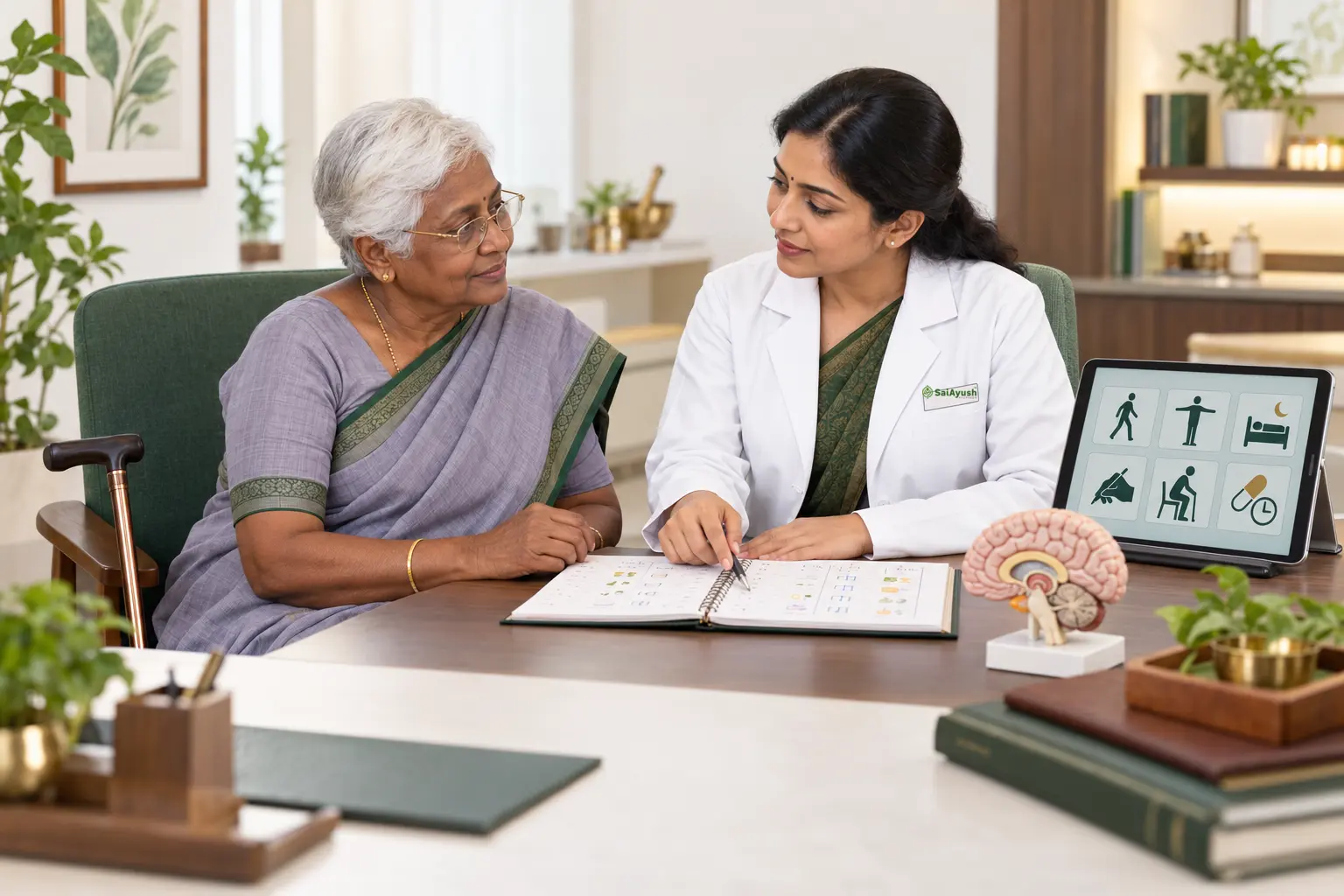
What is Parkinson's disease?
Parkinson's is a long-term, progressive disorder of the nervous system. It develops when nerve cells in part of the brain that produce dopamine (a chemical that helps control movement) gradually decline, leading to the characteristic movement symptoms. It most often appears after age 60, though it can start earlier. In Ayurveda, it is understood as Kampavata — a predominantly Vata disorder affecting movement and the nervous system. You can read about our approach on our Ayurvedic Parkinson's care page.
What are the early signs and symptoms?
Parkinson's symptoms develop gradually and vary from person to person. Common ones include:
- Tremor — often starting in one hand or fingers, at rest
- Slowness of movement (bradykinesia) — everyday tasks take longer
- Stiffness (rigidity) in the limbs or trunk
- Balance and posture problems
- Smaller handwriting, reduced facial expression, a softer voice
- Non-movement symptoms: sleep changes, constipation, low mood, loss of smell
Because early signs are subtle, they are easy to miss. A neurologist makes the diagnosis.
Can Parkinson's be cured?
It's important to be honest: there is currently no cure for Parkinson's disease, and no treatment — conventional or Ayurvedic — can stop or reverse it. However, symptoms can be managed to maintain function and quality of life for years. Conventional medication (prescribed by a neurologist) is the mainstay. Ayurveda's role is supportive — helping with mobility, stiffness, sleep, digestion, mood and overall wellbeing. Be cautious of anyone claiming to cure Parkinson's or stop its progression.
Conventional care and Ayurveda: how they fit together
| Column 1 | Conventional neurology | Ayurveda (complementary) |
| Main role | Diagnosis, medication (e.g. dopamine-based), monitoring | Supportive symptom care & wellbeing |
| Focus | Managing the disease medically | Mobility, stiffness, sleep, digestion, mood |
| Who leads | Neurologist | Ayurvedic doctor, coordinating with the neurologist |
The safest, most effective path is both together — continue your neurologist's treatment, and use Ayurveda as supportive care with your doctors informed of everything you take.
How does Ayurveda support people with Parkinson's?
An Ayurvedic plan for Kampavata is personalised to the individual and may include:
- Vata-pacifying therapies: Abhyanga (oil massage), Swedana (warm therapy) and, where appropriate and supervised, Panchakarma procedures such as Basti and Nasya
- Shirodhara to support sleep, calm and mental wellbeing
- Herbal support prescribed and monitored by the doctor (important: some herbs can interact with Parkinson's medication — see safety note)
- Diet & routine to support digestion and reduce constipation (a common, troublesome symptom)
- Yoga, breathing and gentle movement to help flexibility, balance and mood
The goal is comfort, function and quality of life — supportive care that works with medical treatment.
Important medication-safety note: Some Ayurvedic herbs (for example, certain preparations containing natural L-DOPA sources such as Mucuna) can interact with prescribed Parkinson's medicines and affect dosing. Never combine or adjust treatments on your own — always keep both your neurologist and Ayurvedic doctor fully informed.
Supporting a family member with Parkinson's
Caregivers play a huge role. Practical support includes keeping to regular medication timing, making the home safer to prevent falls, encouraging gentle daily activity, supporting good sleep and nutrition, and watching for low mood — which is common and treatable. Looking after the caregiver's own wellbeing matters too.
Caring for someone with Parkinson's? Learn about our Ayurvedic Parkinson's care, or book a consultation to discuss supportive care alongside their neurology treatment. Online and in-person consultations are available; residential rehabilitation, where appropriate, is at our KPHB hospital.
When to See a Doctor
Please seek prompt medical assessment if you notice:
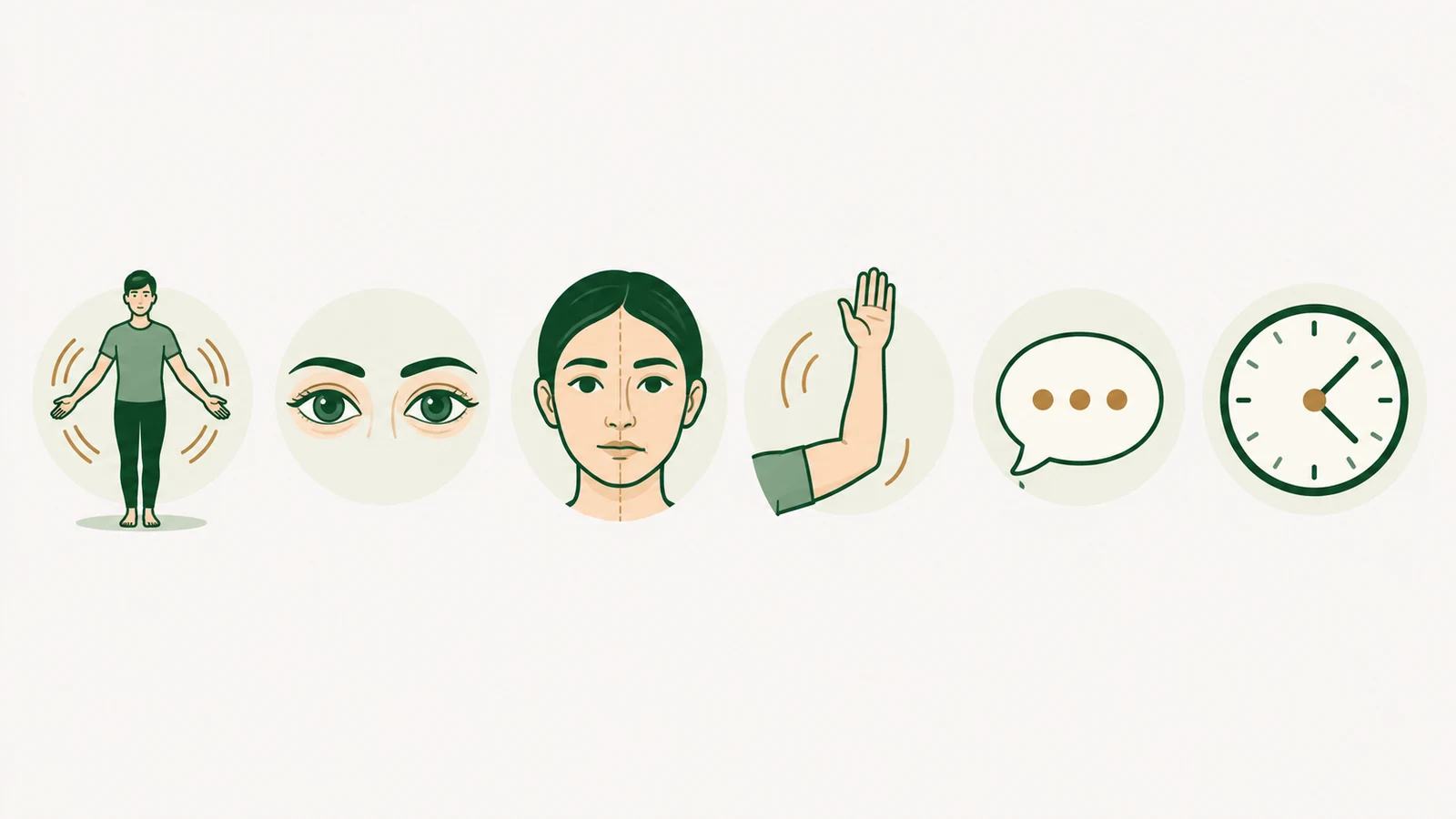
- Sudden weakness or numbness on one side, facial droop or slurred speech (call 108 immediately)
- A sudden, severe headache
- A seizure or loss of consciousness
- New confusion, memory loss or personality change
- Sudden loss of balance or vision
These symptoms need medical evaluation first; Ayurvedic care is not a substitute for emergency treatment. At Sai Ayush Ayurveda Hospital, Hyderabad, our physician-supervised team will assess you and refer you onward where needed.
Frequently asked questions
Can Ayurveda cure Parkinson's disease? No. There is no cure for Parkinson's. Ayurveda offers complementary support for symptoms, mobility and quality of life alongside conventional neurological treatment. It does not cure the disease or stop its progression.
Can I take Ayurvedic treatment with my Parkinson's medicines? Only with your doctors' knowledge. Some Ayurvedic herbs can interact with Parkinson's medication and affect dosing, so both your neurologist and Ayurvedic doctor must be informed. Never stop or change prescribed medicines on your own.
What is Kampavata? Kampavata is the Ayurvedic description of a Vata-predominant disorder affecting movement and the nervous system, used in understanding conditions like Parkinson's.
Which Ayurvedic therapies are used? Commonly Abhyanga, Swedana, Shirodhara and supervised Panchakarma procedures such as Basti and Nasya, chosen by the doctor based on the individual. Yoga and gentle movement are also used.
At what age does Parkinson's usually start? It most often appears after age 60, though earlier onset can occur. A neurologist confirms the diagnosis.
Talk to us
Sai Ayush Ayurveda Hospital — KPHB: +91 81423 28080 · Madinaguda: +91 84668 82266. Online & offline consultations available; residential rehabilitation (where appropriate) is at our KPHB hospital. Learn more on our Ayurvedic Parkinson's care page.
Related reading :
- Mayo Clinic — Parkinson's disease, symptoms & causes: https://www.mayoclinic.org/diseases-conditions/parkinsons-disease/symptoms-causes/syc-20376055
- NHS (UK) — Parkinson's disease: https://www.nhs.uk/conditions/parkinsons-disease/
- Parkinson's Foundation — What is Parkinson's?: https://www.parkinson.org/understanding-parkinsons/what-is-parkinsons
Medical disclaimer
This article is for general information only and is not a substitute for professional medical advice, diagnosis or treatment. Parkinson's disease must be managed by a qualified neurologist. Ayurveda is offered here as complementary supportive care; it does not cure Parkinson's or stop its progression, and results vary. Some herbs interact with Parkinson's medicines — always keep your doctors informed and never stop prescribed medication without consulting them.

Medically Reviewed By
Dr. Chenna Abhilash, B.A.M.S, MS (Shalya), Reg No: PR653/A/2022
Updated on October 27, 2026
This article is for educational purposes only and does not constitute medical advice. Please consult a qualified healthcare professional before beginning any treatment. If you are experiencing a medical emergency, contact your nearest hospital immediately.