If this is happening now: call 108 (ambulance) or 112, note the time symptoms started, and go to the nearest hospital with a CT/MRI scan and a stroke or emergency team. Do not wait to see whether it settles, and do not go to an Ayurveda or wellness centre first.
Why Stroke Is Showing Up Earlier in Life
Stroke is no longer only a problem of old age. A growing share of strokes now affects people in their working years. A review of the international evidence estimates that people under 50 account for roughly 10–14% of all strokes, and that ischaemic stroke in this age group is rising worldwide, especially in low- and middle-income countries (PMC review).
India's numbers follow a similar direction. A Government of India reply in Parliament, citing Global Burden of Disease estimates, noted that the crude incidence of stroke in India rose by about 30% between 1990 and 2019 (Rajya Sabha, Feb 2025). Registry-based reports suggest that about one in seven stroke patients in India is under 45 [verify against the ICMR National Stroke Registry publication before publishing].
The likely reasons are familiar. Blood pressure, blood sugar and cholesterol now rise at younger ages, often without symptoms. Long desk hours, tobacco, irregular sleep and processed food add to the load. Many young adults have simply never had these numbers checked.
The three events people call "stroke"
| Type | What happens | Why it matters |
| Ischaemic stroke | A clot or narrowing blocks blood flow to part of the brain | The most common type at every age |
| Haemorrhagic stroke | A blood vessel in or around the brain bursts and bleeds | Makes up a larger share of strokes in younger adults than in older adults |
| Transient ischaemic attack (TIA, "mini stroke") | Blood supply is cut off briefly and symptoms fade within minutes to hours | A strong warning that a full stroke may follow, so it needs same-day assessment |
Common Risk Patterns in People Under 40
Most strokes in young adults come from the same risk factors seen in older people, just appearing earlier. In a large Finnish study of young stroke patients, the three most frequent were current smoking (49%), abnormal cholesterol (46%) and high blood pressure (36%) (PMC).
- Silent numbers. High blood pressure, raised blood sugar and abnormal cholesterol rarely cause symptoms until they have already damaged blood vessels.
- Tobacco in any form. Cigarettes, beedis, gutka and other chewed tobacco all harm the lining of the arteries.
- Heavy alcohol and recreational drugs. Both raise the risk of clot-related and bleeding strokes.
- Heart conditions. Irregular heart rhythms, structural heart problems and some congenital defects can let a clot travel to the brain.
- Clotting tendencies. Some inherited or acquired conditions make blood clot more easily.
- Neck artery dissection. A small tear in an artery in the neck, sometimes after injury or a sudden forceful neck movement, can lead to a clot.
- Family history. Stroke or heart attack in close relatives at a young age points to a higher personal risk.
Risk factors specific to women
Research also identifies factors that apply mainly to women: oestrogen-containing contraceptive pills (especially with smoking or migraine with aura), pregnancy and the weeks after delivery. These are not reasons for alarm. They are reasons to discuss your personal history openly with your doctor.
When no single cause is found
In a notable share of young patients, no clear cause is identified even after full testing. This is called a cryptogenic stroke (PubMed review). It is one reason why a young person with stroke-like symptoms usually needs a wider set of investigations than an older patient.
Early Warning Signs: Learn BE FAST
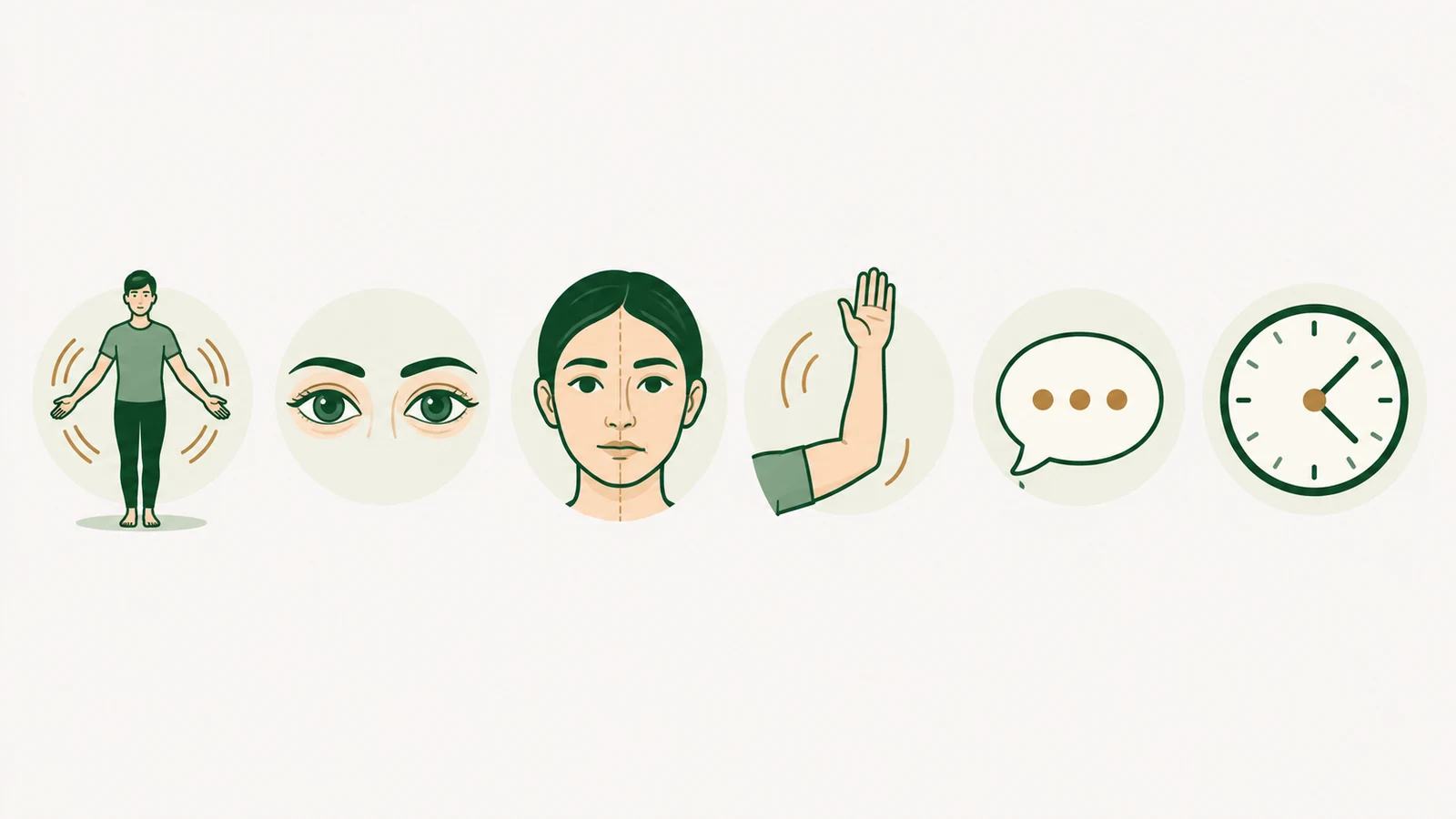
Stroke symptoms usually begin suddenly. The BE FAST checklist adds balance and eye symptoms to the older FAST test because these signs are otherwise easy to miss (Stroke journal, 2017).
- B — Balance: sudden dizziness, unsteady walking or loss of coordination
- E — Eyes: sudden blurred or double vision, or loss of sight in one or both eyes
- F — Face: one side of the face droops; the smile looks uneven
- A — Arm: one arm or leg becomes weak or numb, or drifts down when both are raised
- S — Speech: slurred words, difficulty finding words or trouble understanding others
- T — Time: call for emergency help immediately and note when symptoms began
A sudden, severe headache unlike any before, or sudden confusion, also needs emergency care.
Symptoms that disappear still count. If BE FAST signs come and then go within minutes, it may have been a TIA. The NHS advises that a hospital assessment is still needed even if symptoms fade while waiting for the ambulance (NHS).
What to do in the first minutes
- Call 108 or 112 and say you suspect a stroke.
- Note the time the person was last seen normal. Doctors use this to decide on treatment.
- Do not let the person drive themselves.
- Give nothing by mouth, including aspirin or home remedies. Only a brain scan can show whether the stroke is from a clot or a bleed, and the treatment differs.
- Go to a hospital with round-the-clock CT/MRI and an emergency or stroke team.
Sai Ayush Ayurveda Hospital is not an acute stroke centre. Emergency stroke care comes first, always.
Preventive Strategies for Young Adults
The most effective prevention is finding and controlling risk factors early, before they cause damage.
- Know your numbers in your 20s and 30s. Ask your doctor how often you should check your blood pressure, fasting sugar or HbA1c, and lipid profile, based on your history.
- Stop tobacco completely. This includes chewed and smokeless forms.
- Limit alcohol and avoid recreational drugs.
- Move every day. The WHO recommends at least 150 minutes of moderate activity a week for adults (WHO). Desk workers benefit from short walking breaks every hour.
- Watch the salt. Pickles, papads, namkeen and packaged foods add up quickly.
- Protect your sleep. Regular, adequate sleep supports healthy blood pressure.
- Take prescribed medicines as advised. Do not stop blood pressure or sugar medicines because you "feel fine".
Women with migraine with aura, a past clot or a recent pregnancy should mention this before starting hormonal contraception.
How Ayurveda Supports Balance — Before and After a Stroke
Ayurveda's role is supportive. It can help with lifestyle balance before a stroke and with physician-supervised rehabilitation after one. It does not replace emergency or neurological care at any stage.
In classical Ayurvedic texts, one-sided paralysis after a stroke is described as Pakshaghata, a condition grouped under Vata disorders (Vatavyadhi) (case report, IJRMS 2025).
Before a stroke: Ayurvedic lifestyle guidance on daily routine (Dinacharya), diet, sleep and stress can support the habits that keep blood pressure and blood sugar in check. It is best used alongside, never instead of, the medicines your physician prescribes.
After a stroke: once the neurologist confirms the patient is medically stable, some families choose integrated rehabilitation. This may combine supervised Ayurvedic therapies such as Abhyanga, Basti or Nasya with physiotherapy. Research here is still early. Most published work consists of small trials, study protocols and case reports, often testing Ayurveda as an add-on to standard care (trial protocol, F1000Research).
At Sai Ayush Ayurveda Hospital in Hyderabad, rehabilitation follows the ANP³ method (Ayurveda • Naturopathy • Physiotherapy), within a clinical setting and after a detailed review of the patient's neurology records. Inpatient rehabilitation is available only at our KPHB hospital. Our Madinaguda clinic offers outpatient consultations and follow-up.
What Ayurveda does not do
- It does not treat an acute stroke.
- It does not replace blood thinners, blood pressure medicines or neurologist follow-up.
- It does not promise a specific degree of recovery. Progress depends on the type and extent of the stroke.
When Professional Evaluation Is Needed
Seek emergency care for any BE FAST sign, even if it passes quickly.
Book a planned check-up with your physician if you:
- have never had your blood pressure, sugar or cholesterol tested
- have a close relative who had a stroke or heart attack before 50
- smoke and also have migraine with aura, or take oestrogen-containing pills
- have had a blood clot before, or recently had a baby
Consider an Ayurvedic rehabilitation consultation only after a stroke, once your neurologist has confirmed stability, and bring all your scan and discharge reports. You can explore our approach to physician-supervised paralysis and stroke rehabilitation in Hyderabad.
Frequently Asked Questions
Can a fit, healthy person in their 20s have a stroke?
Yes. Regular exercise lowers risk but does not remove it, because high blood pressure, heart rhythm problems, clotting tendencies or a neck artery tear can be present without symptoms. This is why sudden symptoms should never be dismissed on the basis of age.
Is a "mini stroke" that goes away on its own serious?
Yes. A TIA is a warning sign that a full stroke may follow, sometimes within days. It needs the same urgent hospital assessment as a stroke, even if the person feels normal again.
Should I give aspirin at home if I suspect a stroke?
No. Some strokes are caused by bleeding, and aspirin could make them worse. Give nothing by mouth and let the hospital decide after a brain scan.
Can Ayurveda treat a stroke?
Not in the emergency phase. Acute stroke needs hospital treatment within hours. Ayurveda's place is in prevention-focused lifestyle care and, later, in physician-supervised rehabilitation alongside physiotherapy and neurology follow-up.
Does stroke at a young age run in families?
It can. Genetic and inherited clotting or vessel conditions are more common among young stroke patients than older ones. If a close relative had a stroke early in life, tell your doctor so screening can be planned.
How often should someone under 40 check blood pressure?
There is no single schedule for everyone. Your physician will advise based on your readings, family history and other risk factors. Most people should at least know their baseline numbers by their twenties.
Is Ayurvedic stroke rehabilitation right for me?
It may suit people who are medically stable after a stroke and want an integrated programme alongside their neurologist's plan. A consultation with your physician and an Ayurvedic doctor, with your reports in hand, is the right way to decide.
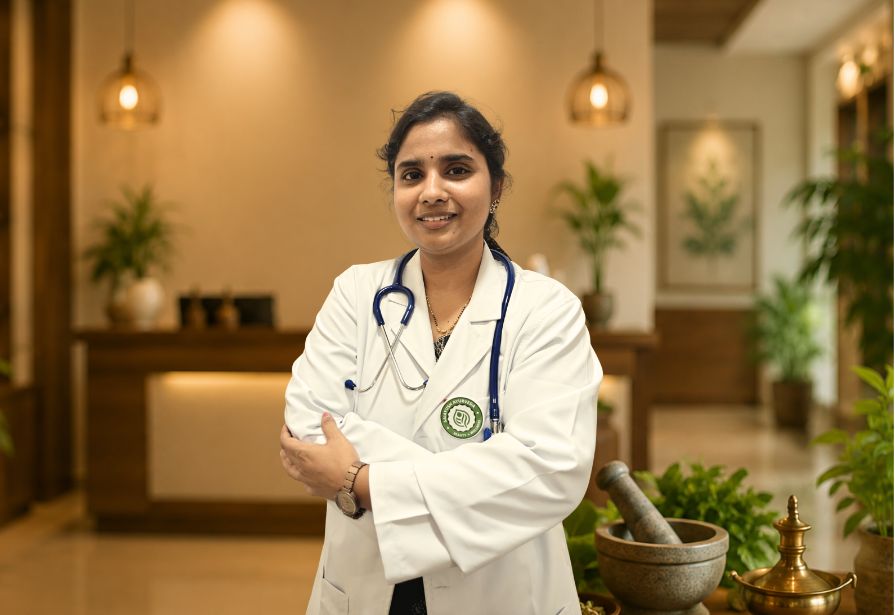
Dr. P.V. Anjani is a consultant in Kayachikitsa (Ayurvedic internal medicine) at Sai Ayush Ayurveda Hospital. She oversees physician-supervised care for lifestyle, neurological and chronic conditions. Her clinical focus is integrating Ayurvedic care safely alongside conventional medical treatment.
Medical disclaimer
This article is for educational purposes only and does not constitute medical advice. Please consult a qualified healthcare professional before beginning any treatment. If you are experiencing a medical emergency, contact your nearest hospital immediately.
Medically Reviewed By
Dr. Pasalapudi Visalaanjani, B.A.M.S, MD (Kayachikitsa), Reg No: 1146/A/2016
Updated on October 28, 2026
This article is for educational purposes only and does not constitute medical advice. Please consult a qualified healthcare professional before beginning any treatment. If you are experiencing a medical emergency, contact your nearest hospital immediately.