
Is arthritis curable?
It's important to be honest: most types of arthritis are chronic conditions that cannot be permanently "cured," but they can be effectively managed. The realistic goals of good care are to reduce pain and inflammation, improve joint mobility, slow further damage, and lower dependence on painkillers. Be cautious of anyone promising a guaranteed cure for arthritis. Ayurveda's strength is in long-term management that addresses the whole body, not just the symptom. You can see our clinical approach on our Ayurvedic joint pain care page.
What does Ayurveda say causes joint pain?
In Ayurveda, most joint pain is linked to aggravated Vata (which governs movement and, when imbalanced, causes dryness, stiffness and pain) and the accumulation of metabolic toxins (ama) from weak digestion. Different presentations map to different patterns — for example, pain with swelling and warmth suggests an inflammatory, ama-dominant picture, while dry, cracking, worse-in-cold-weather pain points to Vata. Treatment is therefore matched to your pattern, not applied identically to everyone.
What are the common types of arthritis?
| Type | What it is | Typical signs |
| Osteoarthritis | "Wear and tear" of joint cartilage, often with age | Pain on movement, stiffness after rest, knees/hips/hands |
| Rheumatoid arthritis | An autoimmune condition attacking the joints | Symmetrical joint swelling, morning stiffness, fatigue |
| Gout | Uric-acid crystals in the joint | Sudden, severe pain often in the big toe |
| Psoriatic arthritis | Joint inflammation linked with psoriasis | Joint pain with skin/nail changes |
Knowing the type matters — treatment differs. A clinical assessment confirms which you have. Learn more: rheumatoid arthritis, osteoarthritis, gout.
How does Ayurveda help manage arthritis and joint pain?
A personalised plan, decided after assessing your constitution (Prakriti) and current imbalance (Vikriti), may combine:
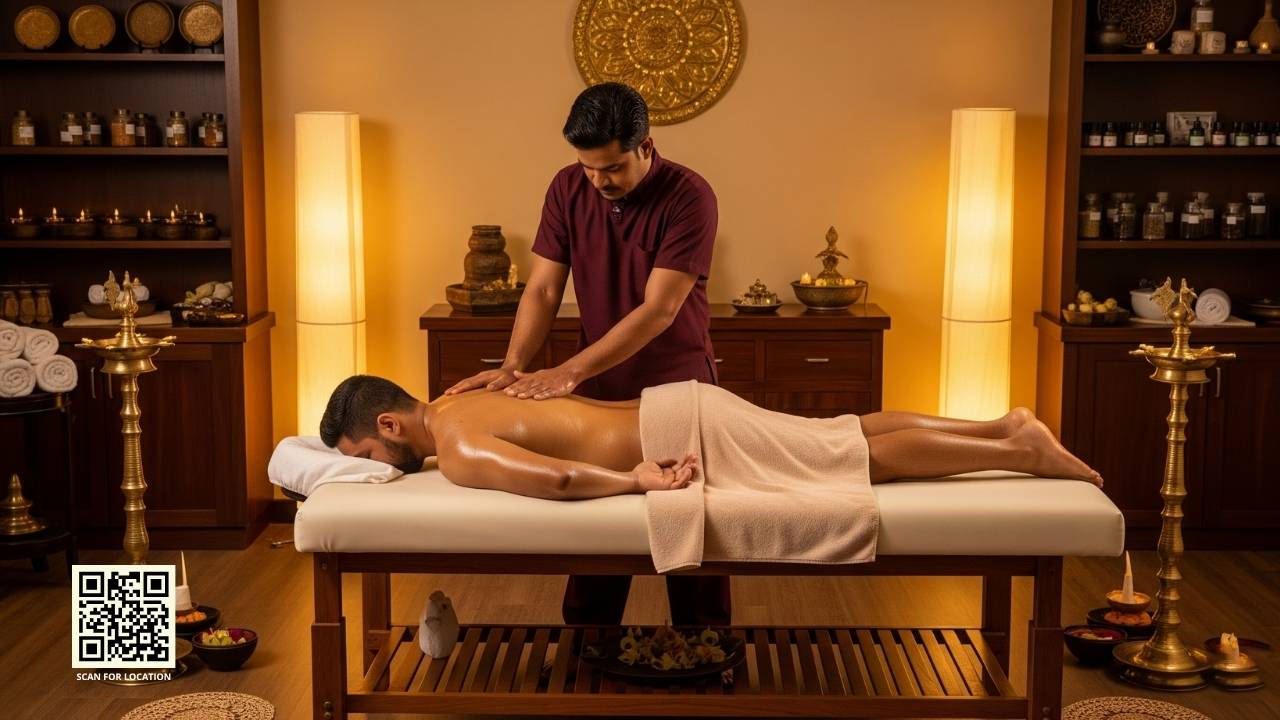
- Therapies: Abhyanga (medicated oil massage), localised treatments like Janu Basti / Kati Basti (warm medicated oil held over the joint or lower back), and Panchakarma procedures such as Basti for Vata-related conditions
- Herbal support: anti-inflammatory and Vata-pacifying formulations, prescribed by the doctor
- Anti-inflammatory diet: warm, easy-to-digest foods; reducing foods that aggravate ama
- Lifestyle & movement: gentle, joint-friendly exercise and yoga to maintain mobility
What can I do at home to ease joint pain?
Simple, safe measures that complement treatment include staying gently active (movement protects joints), keeping warm in cold weather, maintaining a healthy weight to reduce load on knees and hips, eating warm anti-inflammatory meals, and not ignoring persistent or worsening pain. These support — but don't replace — proper assessment when pain is ongoing.
When should you see a doctor?
See a doctor if joint pain is persistent, worsening, or accompanied by significant swelling, redness, warmth or fever; if morning stiffness lasts a long time; or if pain is limiting daily activities. Early assessment helps identify the type of arthritis and start the right management before more joint damage occurs.
Living with ongoing joint pain? Learn about our Ayurvedic joint pain care, or book a consultation for a personalised assessment. Online and in-person consultations are available.
Frequently asked questions
Can Ayurveda cure arthritis permanently? No. Most arthritis is a chronic condition that is managed rather than cured. Ayurvedic care aims to reduce pain and stiffness, improve mobility and slow progression, as a complementary approach alongside medical care. Results vary between individuals.
Which Ayurvedic therapies are used for joint pain? Commonly Abhyanga, localised Basti treatments like Janu Basti and Kati Basti, and Panchakarma procedures such as Basti, chosen and supervised by the doctor based on your condition.
Does diet affect arthritis? Yes. A warm, anti-inflammatory diet that supports digestion can help reduce the toxin (ama) build-up linked with joint inflammation, while poor diet can worsen symptoms.
Should I stop my current arthritis medicines? No — do not stop prescribed medication without consulting your doctor. Ayurvedic care is designed to work alongside your existing treatment; share all medicines so care is coordinated safely.
Is joint pain always arthritis? Not always — joint pain has many causes. A clinical examination is the only reliable way to know what is causing yours.
Talk to us
Sai Ayush Ayurveda Hospital — KPHB: +91 81423 28080 · Madinaguda: +91 84668 82266. Online & offline consultations available. Learn more on our Ayurvedic joint pain care page.
Medical disclaimer
This article is for general information only and is not a substitute for professional medical advice, diagnosis or treatment. Most forms of arthritis are chronic and managed rather than cured. Ayurveda is offered here as a complementary system of care; results vary between individuals. Always consult a qualified physician and do not stop prescribed medication without consulting your doctor.
Sources (verify before publishing)
- Ministry of AYUSH, Government of India — Ayurvedic management of Sandhivata / joint disorders
- World Health Organization — Musculoskeletal conditions / osteoarthritis overview

Medically Reviewed By
Dr. Chenna Abhilash, B.A.M.S, MS (Shalya), Reg No: PR653/A/2022
Updated on October 27, 2026
This article is for educational purposes only and does not constitute medical advice. Please consult a qualified healthcare professional before beginning any treatment. If you are experiencing a medical emergency, contact your nearest hospital immediately.