Ayurvedic Vitiligo / Leukoderma Treatment in Hyderabad
Ayurvedic Vitiligo / Leukoderma Treatment in Hyderabad
Stimulation: Melanin
Arrested: Patches
Focus: Autoimmune
Re-generation: Pigment
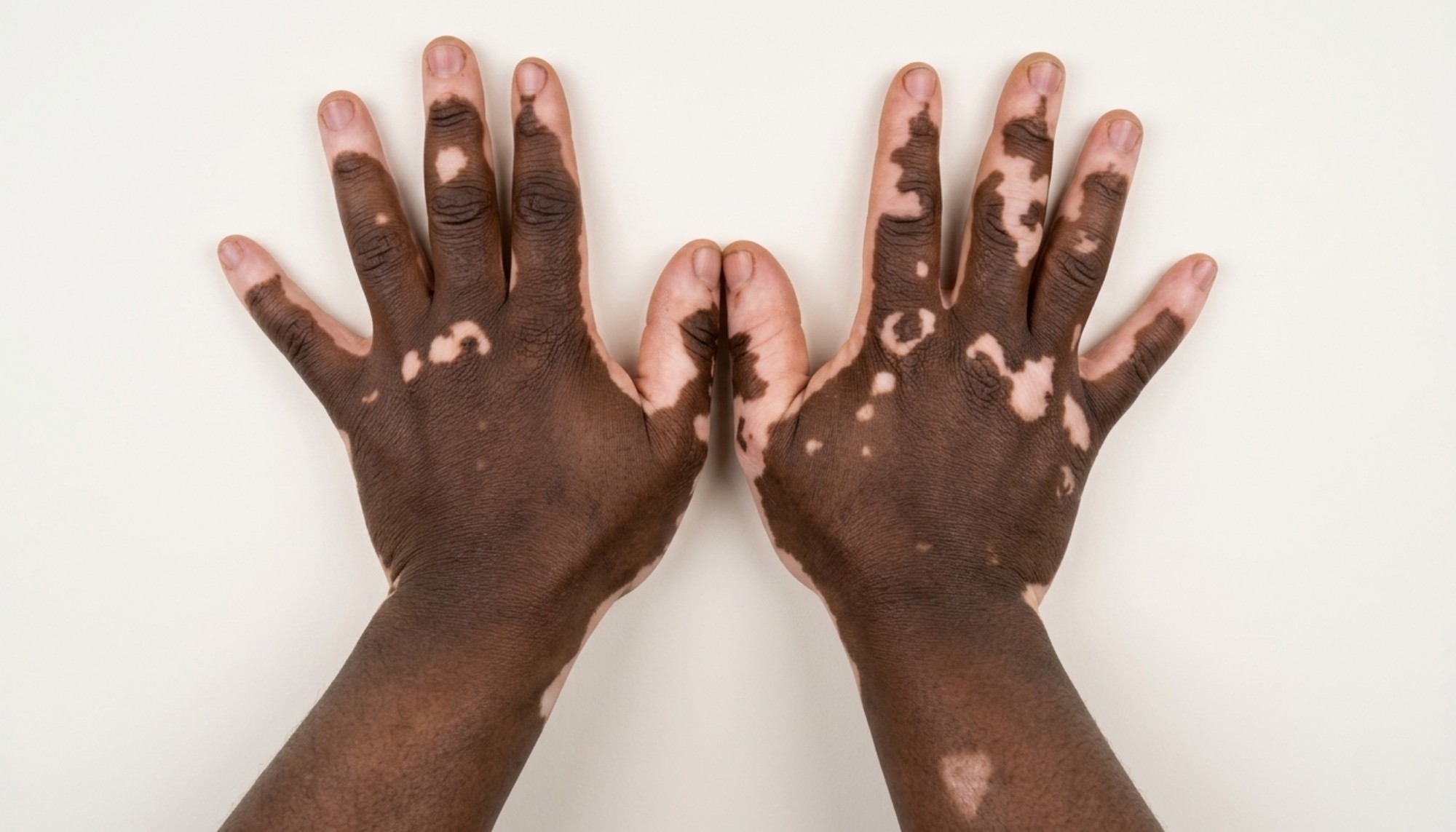
Sai Ayush Ayurveda Hospital provides authentic, physician-supervised Ayurvedic treatment for vitiligo / leukoderma in Hyderabad. This structured, clinical approach precisely targets deep-seated blood toxins (Rakta Dosha), autoimmune skin flare-ups, and follicular health using classical therapies like targeted Takradhara, Raktamokshana, and deeply healing Virechana (detoxification). Designed specifically for patients seeking safe, non-steroidal dermatological care, all interventions are conducted under strict doctor oversight, with each patient's care planned after a thorough clinical assessment. Vitiligo (Leukoderma) is a chronic autoimmune condition where the skin loses its pigment cells (melanocytes), resulting in smooth, distinct white patches. It can appear anywhere on the body, including the face, hands, or scalp. While it causes no physical pain and is entirely non-contagious, the deep social stigma surrounding white patches can cause immense psychological distress and anxiety. At Sai Ayush Ayurveda Hospital, Hyderabad, our approach to Vitiligo is focused on deeply resetting the immune system and supporting pigment regeneration. We understand that this is a highly stubborn condition. Our Ayurvedic doctors carefully evaluate your digestion, immune history, and psychological stress before initiating care. Our goal is to systematically halt the spread of new patches through deep internal blood purification (Panchakarma), stimulate dormant melanocytes using specific photo-sensitizing Ayurvedic herbs and safe sun exposure, and provide compassionate, realistic guidance for long-term management.
- Condition focus: Spreading white patches, loss of skin pigment, autoimmune leukoderma, skin depigmentation.
- Key therapies: Virechana, Bakuchi Lepam, Surya Chikitsa (Sun Therapy), Rakta Shodhana.
Quick Reference Matrix
| PARAMETER | CLINICAL DIRECTION |
|---|---|
| Who it may suit | Patients with actively spreading white patches looking for a holistic, non-surgical method to halt the spread and stimulate re-pigmentation. |
| Who should avoid | The patient has extensive, long-standing total body depigmentation where all follicular melanin reservoirs are completely dead. |
| Typical duration | Halting the spread occurs quickly; visible re-pigmentation requires immense patience, often 6 to 18 months. |
Clinical Care Framework
This specialized program follows our integrated ANP³ medical model for fast, sustainable healing.
- Treatment Model: ANP³ (Ayurveda, Naturopathy, Physiotherapy)
- Supervision: Senior Ayurvedic Clinical Team
- Target Conditions: Vitiligo / Leukoderma, Autoimmune Skin/Scalp Inflammation, Blood Toxicity
- Setting: Hospital Environment (KPHB OP/IP, Madinaguda OP)
- Duration: Typically 21 to 45 days
- Safety Protocol: Rigorous pre-treatment clinical evaluation required
What is Vitiligo (Leukoderma)?
Vitiligo is an autoimmune condition where the body's immune system mistakenly attacks and destroys melanocytes—the cells responsible for giving the skin its natural color. This results in patches of skin turning completely white. Vitiligo is 100% NON-CONTAGIOUS. It cannot be spread by touch, sharing food, or living together. It is not an infection. It is purely an internal immune confusion.
Common Symptoms of Vitiligo
People with vitiligo / leukoderma may experience:
- Noticeable changes in skin or hair appearance
- Associated discomfort, itching, or sensitivity
- Gradual spreading of the affected area if unmanaged
Ayurvedic Understanding of Vitiligo
In Ayurveda, Vitiligo is termed 'Shvitra' or 'Kilasa'. It is caused by the profound vitiation of all three doshas (Vata, Pitta, and Kapha), which severely pollute the Rakta (blood), Mamsa (muscle), and Meda (fat) tissues. Ayurveda places massive emphasis on 'Viruddha Ahara' (eating incompatible food combinations, like fish and milk) as a primary root cause that creates highly toxic 'Ama' in the gut. This Ama enters the blood and confuses the immune system, leading to the destruction of skin pigment.
Who Should Avoid Immediate Ayurvedic Therapy?
Certain deep-tissue and intensive systemic therapies are strictly contraindicated and must be avoided by:
- Individuals with acute medical emergencies or active systemic infections requiring ICU care
- Patients presenting with highly contagious or acutely weeping dermatological infections (for localized contact therapies)
- Individuals with severe, unmanaged cardiovascular or respiratory distress
- Pregnant women (unless specific, highly gentle OP care is explicitly advised by the senior physician)
How is the Treatment Performed?
Every treatment plan is bespoke and typically follows this clinical framework:
- Comprehensive Diagnostic Evaluation: Deep assessment of your metabolic Doshas, chronicity of the illness, and systemic health.
- Preparatory Phase (Snehana & Swedana): Internal medications and targeted external therapies to mobilize deep-seated toxins (Ama).
- Primary Intervention: Highly targeted clinical therapies (like specialized Basti, Shirodhara, or Lepanam) to aggressively heal the affected systems.
- Post-Treatment Care: Strict dietary modifications (Pathya) and lifestyle management to prevent future relapses.
How Is Treatment Performed?
- Detailed Immune & Dosha Assessment: The doctor evaluates the extent and speed of the spreading patches. Is it rapidly progressing or stable? Understanding the chronicity and identifying accumulated metabolic toxins (Ama) is critical, as Vitiligo is treated as a profound autoimmune and blood (Rakta) disorder.
- Deep Panchakarma Detoxification (Virechana): Because the immune system is mistakenly attacking the body's own pigment cells, deep detoxification is almost always mandatory. Therapies like Virechana (therapeutic purgation) systematically flush deep-seated autoimmune toxins from the liver and blood, allowing the immune system to 'reset'.
- Internal Immune-Modulating Medicines: Specific Ayurvedic herbs (like Bakuchi and Khadira) are prescribed internally to act as powerful immunomodulators and blood purifiers. These herbs aim to stop the destruction of melanocytes and create a favorable internal environment for pigment regeneration.
- Targeted External Application (Lepa): Highly specific Ayurvedic pastes (Lepa) and oils are applied directly to the white patches. These herbs are naturally photo-sensitizing, meaning they draw sunlight into the skin to stimulate the dormant melanocytes into producing melanin (pigment) again.
- Controlled Sun Exposure Therapy: After applying the herbal Lepa, the patient is guided on strict, timed exposure to morning sunlight. This critical step acts as natural phototherapy, activating the herbs to re-pigment the skin safely. (This is done strictly under doctor guidance to prevent burns).
- Dietary Guidance and Stress Management: Diet is crucial. The doctor will mandate the removal of incompatible foods (Viruddha Ahara). Because stress heavily triggers autoimmune attacks, dedicated stress management (like Shirodhara) is often integrated into the care plan.
Types of Vitiligo We Support
Sai Ayush provides Ayurvedic care for various presentations:
- Localized Vitiligo (a few patches in one area)
- Generalized Vitiligo (scattered patches across the body)
- Acrofacial Vitiligo (patches on the face, hands, and feet)
- Stable Vitiligo (patches that have not grown in months)
- Rapidly spreading Vitiligo (requiring urgent immune stabilization)
Why Choose Sai Ayush for Vitiligo Care?
Sai Ayush Ayurveda Hospital offers a root-cause, immunomodulatory approach. We focus on stopping the progression first, followed by careful pigment regeneration. Patients choose us for:
- Doctor-guided Panchakarma detox to clear autoimmune confusion
- Use of authentic, classical photo-sensitizing herbs (like Bakuchi)
- Detailed, highly specific dietary guidance (avoiding Viruddha Ahara)
- Compassionate, ethical counseling regarding realistic timelines
- Safe, supervised natural sun-exposure protocols
- Long-term supportive care
What Results Can You Expect?
Vitiligo is highly stubborn. Repigmentation is a slow process that requires immense patience. The practical goals of treatment are:
- Phase 1: Halting the spread of new white patches (Immune stabilization).
- Phase 2: Appearance of small, dark 'freckles' of pigment within the white patches.
- Phase 3: Gradual merging of these freckles to cover the patch.
Book a Vitiligo Consultation
If spreading white patches are causing you severe anxiety, consult our Ayurvedic doctors for a compassionate, deep-detoxification plan. Book your consultation at Sai Ayush Ayurveda Hospital, Hyderabad. Also Explore: • [Panchakarma Detoxification](/treatments/panchakarma/virechana) • [Ayurvedic Psoriasis Treatment](/treatments/skin-hair/psoriasis) • [Stress Management Care](/treatments/neurology/headaches)
Duration of Treatment
The duration of treatment heavily depends on the chronicity and severity of the condition. Acute flare-ups may require 7 to 14 days of targeted OP therapies. Severe, chronic systemic conditions may require comprehensive 21 to 90-day care protocols, potentially involving In-Patient (IP) admission for intensive daily monitoring and strict dietary control.
Clinical Integration
Our ANP³ care model perfectly integrates classical Ayurveda with Naturopathy and Physiotherapy. We routinely manage patients who are on parallel allopathic medications for diabetes, hypertension, hormonal therapy, or immunosuppressants. We ensure complete safety by carefully reviewing your current prescriptions to explicitly prevent any adverse herb-drug interactions.
FAQ Section
- Can Ayurveda completely cure Vitiligo fast?
No. Anyone promising a 'fast, guaranteed 100% cure' for Vitiligo is being unethical. Vitiligo is a deep autoimmune condition. Repigmentation is a very slow process taking many months or years, and success depends heavily on the age of the patches and patient compliance. - Is Bakuchi herb safe to use?
Bakuchi is highly effective for Vitiligo, but it MUST be used strictly under a doctor's guidance. It is highly photo-sensitizing. If applied incorrectly or followed by too much sun exposure, it can cause severe blisters. Never self-medicate with Bakuchi. - What foods should I strictly avoid?
In Ayurveda, incompatible foods (Viruddha Ahara) are strictly forbidden. You must never mix dairy with sour fruits, fish, or meat. Highly acidic, fermented, and deeply processed foods should also be avoided as they increase systemic toxicity. - Why do I need Panchakarma for a skin patch?
The skin patch is just the symptom; the disease is in the immune system and the blood. Applying surface creams does nothing to stop the immune system from attacking. Panchakarma (like Virechana) flushes the deep autoimmune toxins out of the body. - Will the patches on my fingers heal?
Patches on the fingertips, toes, and lips (where there is very little hair) are the hardest to treat because melanocytes often regenerate from hair follicles. Progress in these areas is generally much slower. - Can stress make Vitiligo spread?
Absolutely. Severe psychological trauma or chronic stress heavily disrupts the immune system and is one of the most common triggers for a sudden rapid spread of new patches. - Does drinking milk after eating fish cause Vitiligo?
In Ayurveda, this is the most famous example of 'Viruddha Ahara' (incompatible food). While it doesn't happen overnight, doing this chronically severely corrupts the blood and can trigger autoimmune skin responses in susceptible people. - Are the white patches of Vitiligo painful or itchy?
No. Uncomplicated Vitiligo patches are generally completely painless and do not itch. The only physical difference is the complete loss of color (melanin). - Why do Vitiligo patches sunburn so quickly?
Melanin is your skin's natural sunscreen. Because the white patches have zero melanin, they have zero protection against UV rays and will burn severely if exposed to strong midday sun. - Can severe trauma or a cut trigger a new white patch?
Yes. This is called the 'Koebner phenomenon'. In active Vitiligo, any physical trauma (like a deep scratch or surgical cut) can trigger the immune system to destroy the pigment cells exactly at the injury site.
Medically Reviewed By: Dr. Pasalapudi Visalaanjani, B.A.M.S, MD (Kayachikitsa)
Registration No: 1146/A/2016
Disclaimer: The information provided is for educational purposes and should not replace professional medical advice. Outcomes may vary.