Ayurvedic Alopecia Areata Treatment in Hyderabad
Ayurvedic Alopecia Areata Treatment in Hyderabad
Activation: Follicle
Correction: Immune
Therapy: Prachhana
Reversal: Spot
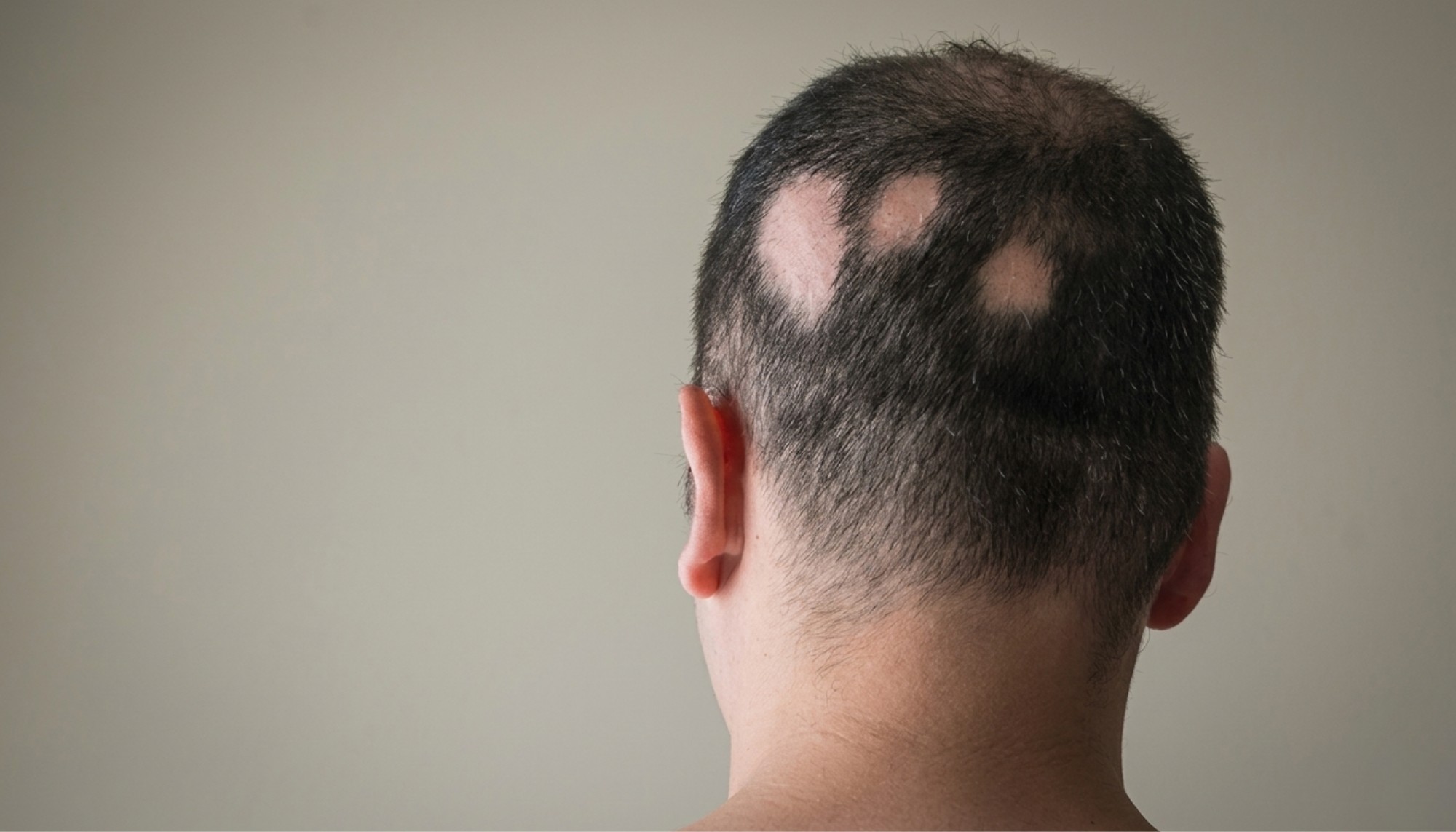
Sai Ayush Ayurveda Hospital provides authentic, physician-supervised Ayurvedic treatment for alopecia areata in Hyderabad. This structured, clinical approach precisely targets deep-seated blood toxins (Rakta Dosha), autoimmune skin flare-ups, and follicular health using classical therapies like targeted Takradhara, Raktamokshana, and deeply healing Virechana (detoxification). Designed specifically for patients seeking safe, non-steroidal dermatological care, all interventions are conducted under strict doctor oversight, with each patient's care planned after a thorough clinical assessment. Alopecia Areata is a sudden, highly unpredictable autoimmune condition where the immune system mistakenly attacks the hair follicles, causing hair to fall out in smooth, distinct, coin-sized round patches. It can happen overnight, affecting the scalp, beard, or eyebrows. While it causes no physical pain, the sudden appearance of bald patches can trigger immense anxiety and severe emotional stress. At Sai Ayush Ayurveda Hospital, Hyderabad, we approach Alopecia Areata as a deep-seated immune confusion, not just a surface scalp issue. Applying cosmetic hair serums will not stop the immune system from attacking. Our Ayurvedic doctors carefully evaluate your immune history, chronic stress levels, and systemic toxicity before planning intervention. Our goal is to systematically calm the hyper-reactive immune response, purify the blood (Rakta) using Panchakarma where necessary, and stimulate the dormant hair follicles using highly specific, localized Ayurvedic scalp therapies (Prachhana/Lepa) to encourage natural regrowth.
- Condition focus: Sudden circular bald patches on the scalp or beard, rapid hair shedding, autoimmune alopecia.
- Key therapies: Prachhana (Micro-needling), Jalauka (Leech), Lepana, Nasya.
Quick Reference Matrix
| PARAMETER | CLINICAL DIRECTION |
|---|---|
| Who it may suit | Individuals discovering sudden, smooth coin-sized bald spots on their head or beard that seem to expand rapidly. |
| Who should avoid | The patient suffers from Alopecia Universalis (total body hair loss including eyebrows and eyelashes), which has a much poorer prognosis. |
| Typical duration | Visible tiny hairs (vellus) appear in 3-5 weeks; full terminal thickness requires 3-5 months. |
Clinical Care Framework
This specialized program follows our integrated ANP³ medical model for fast, sustainable healing.
- Treatment Model: ANP³ (Ayurveda, Naturopathy, Physiotherapy)
- Supervision: Senior Ayurvedic Clinical Team
- Target Conditions: Alopecia Areata, Autoimmune Skin/Scalp Inflammation, Blood Toxicity
- Setting: Hospital Environment (KPHB OP/IP, Madinaguda OP)
- Duration: Typically 21 to 45 days
- Safety Protocol: Rigorous pre-treatment clinical evaluation required
What is Alopecia Areata?
Alopecia Areata is an autoimmune disease. Your immune system, which normally protects your body from foreign invaders like viruses, mistakenly identifies your hair follicles as a threat and attacks them. This causes the hair to fall out, usually in perfectly smooth, round, coin-sized patches. It is NOT contagious. The hair follicles are generally not permanently destroyed, meaning the hair has the potential to grow back, but the condition is highly unpredictable and can recur.
Common Symptoms of Alopecia Areata
People with alopecia areata may experience:
- Noticeable changes in skin or hair appearance
- Associated discomfort, itching, or sensitivity
- Gradual spreading of the affected area if unmanaged
Ayurvedic Understanding of Alopecia
In Ayurveda, Alopecia Areata is termed 'Indralupta'. It is primarily caused by a sudden, severe vitiation of Pitta dosha (heat) and Vata dosha, which pollutes the Rakta (blood) at the roots of the hair. The intense Pitta 'burns' the hair root, causing it to fall out, while the aggravated Kapha blocks the pore, preventing new hair from growing. This intense doshic imbalance is most frequently triggered by severe psychological stress or trauma.
Who Should Avoid Immediate Ayurvedic Therapy?
Certain deep-tissue and intensive systemic therapies are strictly contraindicated and must be avoided by:
- Individuals with acute medical emergencies or active systemic infections requiring ICU care
- Patients presenting with highly contagious or acutely weeping dermatological infections (for localized contact therapies)
- Individuals with severe, unmanaged cardiovascular or respiratory distress
- Pregnant women (unless specific, highly gentle OP care is explicitly advised by the senior physician)
How is the Treatment Performed?
Every treatment plan is bespoke and typically follows this clinical framework:
- Comprehensive Diagnostic Evaluation: Deep assessment of your metabolic Doshas, chronicity of the illness, and systemic health.
- Preparatory Phase (Snehana & Swedana): Internal medications and targeted external therapies to mobilize deep-seated toxins (Ama).
- Primary Intervention: Highly targeted clinical therapies (like specialized Basti, Shirodhara, or Lepanam) to aggressively heal the affected systems.
- Post-Treatment Care: Strict dietary modifications (Pathya) and lifestyle management to prevent future relapses.
How Is Treatment Performed?
- Detailed Immune & Stress Assessment: The doctor first evaluates the patches. Are they localized to one spot, or rapidly spreading across the entire scalp? Because Alopecia Areata is an autoimmune disorder often triggered by severe psychological trauma or stress, a deep assessment of your nervous system and digestion is mandatory.
- Internal Immune-Modulating Medicines: Specific Ayurvedic herbs (like Guduchi, Ashwagandha, and Bhringaraja) are prescribed internally to act as immunomodulators, cool the 'Pitta' (heat) in the blood, and systematically reduce the autoimmune attack on the hair follicles.
- Targeted Scalp Stimulation (Lepa & Prachhana): To 'wake up' the dormant follicles, specific Ayurvedic therapies are used on the bald patches. This may involve rubbing specialized herbal pastes (Lepa) or performing 'Prachhana' (micro-stimulation) to drastically increase localized blood flow and deliver nutrients directly to the root.
- Panchakarma Detoxification: For rapidly spreading or chronic Alopecia, deep internal cleansing is required. Virechana (purgation) or Nasya (nasal administration) are utilized to flush the deep-seated autoimmune toxins (Ama) from the head and neck region, allowing the immune system to reset.
- Shirodhara for Stress Management: Because severe emotional stress is the primary trigger for sudden alopecia flare-ups, Shirodhara (continuous pouring of warm oil over the forehead) is heavily utilized to deeply calm the central nervous system and halt stress-induced immune panic.
- Dietary Guidance and Follow-up: The doctor will mandate an anti-inflammatory diet, removing extremely spicy and fermented foods that aggravate Pitta. Regular follow-ups are required to monitor the appearance of fine white 'vellus' hairs, which indicate the follicles are regenerating.
Types of Alopecia We Support
Sai Ayush provides Ayurvedic care for:
- Alopecia Areata (single or multiple coin-sized patches on the scalp)
- Beard Alopecia (bald patches in the facial hair)
- Stress-induced sudden, rapid hair loss
- Recurrent autoimmune hair loss
Why Choose Sai Ayush for Alopecia Care?
Sai Ayush Ayurveda Hospital focuses on the root autoimmune cause, avoiding reliance on painful steroid injections into the scalp which often only provide temporary relief before the patch moves to a new spot. Patients choose us for:
- Doctor-guided immunomodulation and blood purification
- Safe, localized follicle-stimulating therapies
- Deep stress management protocols (Shirodhara)
- Panchakarma detox options for severe, stubborn cases
- Compassionate counseling regarding realistic regrowth timelines
What Results Can You Expect?
Regrowth in Alopecia Areata takes significant time and patience. The practical goals of treatment are:
- Phase 1: Halting the progression and spread of new bald patches.
- Phase 2: Appearance of fine, thin, white/blonde hairs (vellus hair) in the center of the patch.
- Phase 3: Gradual thickening and darkening of the hair to match your normal hair.
Book an Alopecia Consultation
If sudden bald patches are causing you severe anxiety, consult our Ayurvedic doctors for a deeply calming, immune-stabilizing plan. Book your consultation at Sai Ayush Ayurveda Hospital, Hyderabad. Also Explore: • [Ayurvedic Hair Fall Treatment](/treatments/skin-hair/hair-fall) • [Ayurvedic Dandruff Treatment](/treatments/skin-hair/dandruff) • [Stress Management Care](/treatments/neurology/headaches)
Duration of Treatment
The duration of treatment heavily depends on the chronicity and severity of the condition. Acute flare-ups may require 7 to 14 days of targeted OP therapies. Severe, chronic systemic conditions may require comprehensive 21 to 90-day care protocols, potentially involving In-Patient (IP) admission for intensive daily monitoring and strict dietary control.
Clinical Integration
Our ANP³ care model perfectly integrates classical Ayurveda with Naturopathy and Physiotherapy. We routinely manage patients who are on parallel allopathic medications for diabetes, hypertension, hormonal therapy, or immunosuppressants. We ensure complete safety by carefully reviewing your current prescriptions to explicitly prevent any adverse herb-drug interactions.
FAQ Section
- Can Ayurveda guarantee my hair will grow back?
No doctor can ethically 'guarantee' 100% permanent regrowth for an unpredictable autoimmune condition. However, Ayurveda is highly effective at stabilizing the immune system, managing stress, and successfully stimulating the follicles to regrow hair in a majority of mild to moderate cases. - Are the bald patches permanently damaged?
In Alopecia Areata, the hair follicles are usually only suppressed by the immune system, not permanently scarred or destroyed. This is why the hair retains the ability to grow back once the immune attack is stopped. - Will the new hair grow back white?
Yes, very often the first hairs to regrow in the patch are fine, thin, and completely white. This is normal. Over a few months, as the melanocytes (pigment cells) in the root recover, the hair usually regains its normal color. - Can severe stress cause Alopecia Areata?
Yes. Severe emotional trauma, bereavement, or chronic high stress are the most common triggers that confuse the immune system and initiate the sudden attack on the hair follicles. - What is Prachhana therapy?
Prachhana is a classical Ayurvedic micro-stimulation therapy. The doctor gently uses specialized tools to create microscopic stimulation on the bald patch, followed by the application of potent herbs. This drastically increases local blood flow and 'wakes up' the dormant follicle. - Should I stop my steroid treatments?
Do NOT suddenly stop prescribed medical treatments (like topical steroids or injections) without consulting your treating doctor. Ayurveda can be integrated safely alongside your current care plan. - Will the hair in the bald patch ever grow back?
Yes, in many cases. Because Alopecia Areata does not immediately destroy the hair follicle (it just forces it into a resting phase), Ayurvedic therapies can successfully coax the follicle to produce hair again. - Why is the bald patch completely smooth and shiny?
Unlike fungal infections which leave the scalp scaly, this autoimmune attack strictly targets the hair root below the surface, leaving the top layer of the skin completely untouched, smooth, and shiny. - Can extreme psychological shock trigger a bald patch overnight?
Yes. A sudden, massive stress event (like losing a loved one) can severely shock the immune system, causing it to violently attack the hair follicles, leading to rapid, massive hair loss. - Is rubbing raw garlic on the patch safe?
Rubbing harsh irritants can stimulate blood flow, but raw garlic is extremely sharp (Tikshna Pitta) and can severely burn the scalp, causing permanent scarring. Ayurvedic doctors use safer, calibrated herbal stimulants.
Medically Reviewed By: Dr. Pasalapudi Visalaanjani, B.A.M.S, MD (Kayachikitsa)
Registration No: 1146/A/2016
Disclaimer: The information provided is for educational purposes and should not replace professional medical advice. Outcomes may vary.