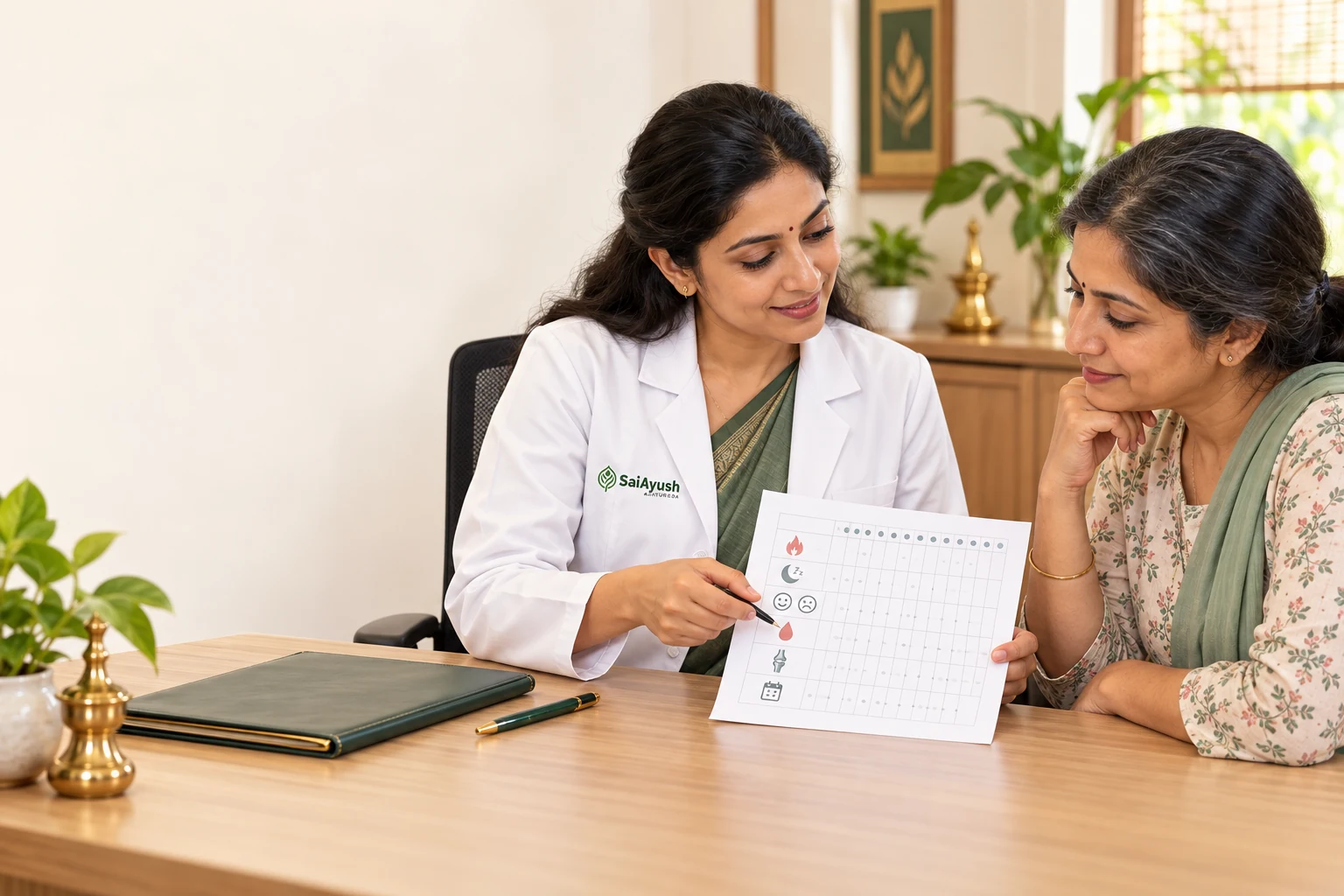



Rectal Bleeding Before a Consultation: What to Record and Ask
Seeing blood on toilet paper, in the toilet bowl or mixed with stool can be worrying. Although some causes are minor, rectal bleeding should not automatically be assumed to be piles.
Bleeding may be associated with haemorrhoids, an anal fissure, constipation, infection, inflammatory bowel disease, polyps, medicines or another condition affecting the digestive tract. Occasionally, it can indicate a more serious problem.
The colour, quantity and timing of the bleeding may provide useful clinical information, but they cannot confirm the cause without an appropriate assessment.
This guide explains what to record before a consultation, which documents and medicines to bring, what questions to ask and when urgent medical evaluation may be needed.
What does rectal bleeding mean?
Rectal bleeding generally refers to blood passing through the anus. It may appear as:
- Blood on toilet paper
- Red streaks on the outside of the stool
- Blood dripping into the toilet
- Pink or red toilet water
- Blood mixed with stool
- Blood with mucus
- Dark-red or maroon stool
- Very dark or black, tar-like stool
The appearance of blood can sometimes help the clinician decide what should be investigated. However, colour alone cannot reliably identify the source.
Food colouring, beetroot, iron tablets and some medicines may change stool colour. Do not assume that an unusual colour is harmless when bleeding is suspected.
Do not assume that every episode is piles
Piles are one possible cause of bright-red bleeding, but they are not the only explanation.
Other possible causes include:
- Anal fissure
- Constipation-related injury
- Anal fistula or infection
- Inflammatory bowel disease
- Bowel infection
- Polyps
- Diverticular disease
- Medicine-related bleeding
- Bleeding higher in the digestive tract
- Colorectal or anal disease
A symptom list cannot distinguish these conditions reliably. An examination may be required even when a person has previously been diagnosed with piles.
Recurring bleeding, a change in symptoms or bleeding that appears different from previous episodes should be discussed with a qualified clinician.
When is rectal bleeding an emergency?
Seek emergency medical care when:
- Bleeding is continuous or does not stop
- There is a large amount of blood
- The toilet water turns red
- Large blood clots are present
- The person feels faint, confused or unusually weak
- There is severe dizziness or collapse
- The skin becomes pale, cold or clammy
- There is a rapid heartbeat or shortness of breath
- Bleeding is accompanied by severe abdominal pain
- Black or tar-like stool occurs with weakness, dizziness or vomiting
- Blood is vomited or vomit resembles coffee grounds
Do not wait for a routine Ayurveda or surgical-care appointment when severe bleeding or possible blood-loss symptoms are present.
When should prompt medical assessment be arranged?
Arrange a timely medical consultation if:
- Rectal bleeding is recurring
- Blood appears mixed with the stool
- The stool is dark red, maroon or black
- Bleeding occurs with diarrhoea
- There is persistent pain during or after bowel movements
- There is a lump, swelling or discharge near the anus
- Bowel habits have changed
- Stools have become persistently narrower or looser
- Constipation has become persistent
- There is unexplained weight loss
- There is unusual tiredness or breathlessness
- Abdominal pain or a new abdominal lump is present
- There is a personal or family history of bowel disease
- The person takes anticoagulant or antiplatelet medicine
- The person has anaemia or a bleeding disorder
Children, pregnant patients, older adults and people with significant medical conditions may require additional assessment.
Keep a rectal-bleeding record
If the bleeding is not severe and an appointment has been arranged, record each episode. Do not delay urgent care just to complete a diary.
Rectal-bleeding consultation diary
| Date and time | Blood colour | Where was it seen? | Approximate amount | Stool consistency | Pain during or after stool | Mucus or discharge | Other symptoms | Medicines taken |
| Entry 1 | ||||||||
| Entry 2 | ||||||||
| Entry 3 | ||||||||
| Entry 4 | ||||||||
| Entry 5 |
The diary supports communication with the doctor. It cannot diagnose the source of bleeding.
What details should be recorded?
1. Colour of the blood
Record whether the blood appeared:
- Bright red
- Dark red
- Maroon
- Mixed with the stool
- Very dark or black
Use ordinary descriptions. There is no need to decide where the bleeding originated.
2. Where the blood appeared
Note whether it was:
- Only on toilet paper
- On the surface of the stool
- Mixed throughout the stool
- Dripping into the toilet
- Colouring the toilet water
- Passed without stool
- Accompanied by mucus or discharge
3. Approximate amount
Avoid trying to measure blood precisely. Instead, describe it as:
- A small spot
- A few streaks
- Several drops
- Enough to colour the toilet water
- Accompanied by clots
- Continuous bleeding
Heavy or continuous bleeding requires urgent evaluation.
4. Bowel pattern
Record:
- Number of bowel movements per day
- Constipation
- Hard or pellet-like stool
- Straining
- Loose stool or diarrhoea
- Urgency
- Feeling of incomplete emptying
- A persistent change in stool shape
- Alternating constipation and diarrhoea
Also record when the change began.
5. Pain and discomfort
Describe whether pain occurs:
- Before passing stool
- While passing stool
- Immediately afterwards
- For several minutes or hours afterwards
- Continuously
- While sitting
Note whether the pain feels sharp, burning, throbbing or pressure-like.
Pain with bright-red bleeding may occur with an anal fissure, but an examination may still be needed because other conditions can produce similar symptoms.
6. Lumps, swelling or prolapse
Record whether you notice:
- A lump near the anus
- Tissue coming out during a bowel movement
- A lump that returns by itself
- A lump that needs to be pushed back
- A lump that remains outside
- Swelling, itching or irritation
Do not repeatedly manipulate a painful, bleeding or swollen area.
7. Mucus, pus or discharge
Tell the doctor about:
- Clear or white mucus
- Yellow or pus-like discharge
- Foul-smelling discharge
- Continuous wetness
- A small opening near the anus
- Recurrent swelling that later drains
Bleeding associated with persistent pain, fever, swelling or pus-like discharge requires medical assessment.
8. Other symptoms
Record whether bleeding is accompanied by:
- Abdominal pain
- Bloating
- Fever
- Nausea or vomiting
- Loss of appetite
- Unexplained weight loss
- Tiredness
- Dizziness
- Shortness of breath
- Night-time bowel symptoms
- Joint symptoms
- Mouth ulcers
- Urgent or frequent diarrhoea
These details can help the clinician decide whether the problem may extend beyond the anal area.
Record your relevant medical history
Before the consultation, write down whether you have:
- Previous piles, fissure or fistula
- Inflammatory bowel disease
- Bowel polyps
- Previous gastrointestinal bleeding
- Liver disease
- A bleeding or clotting disorder
- Anaemia
- Diabetes
- Kidney disease
- Previous abdominal or anorectal surgery
- Recent childbirth
- Previous cancer
- A family history of colorectal cancer or bowel polyps
Also note previous colonoscopy, sigmoidoscopy, endoscopy or stool-test results.
Bring a complete medicine list
Some medicines may increase bleeding risk or change stool colour. Bring the name, dose and frequency of:
- Anticoagulants or blood thinners
- Antiplatelet medicines
- Aspirin
- Anti-inflammatory pain medicines
- Steroids
- Iron tablets
- Laxatives
- Prescription creams or suppositories
- Ayurvedic medicines
- Herbal products
- Nutritional supplements
Do not stop anticoagulants, aspirin or another prescribed medicine without advice from the prescribing clinician. Sudden discontinuation may create a serious health risk.
Inform the doctor if the bleeding began after a medicine was started or its dose was changed.
What documents should you bring?
Bring available copies of:
- Previous consultation notes
- Blood-test reports
- Haemoglobin reports
- Stool-test results
- Colonoscopy or endoscopy reports
- Imaging reports
- Hospital discharge summaries
- Operative notes
- Biopsy or pathology reports
- Allergy information
- Current prescriptions
Do not postpone necessary care because a previous report is unavailable.
What may happen during the consultation?
The clinician may ask about the bleeding, bowel habits, pain, medicines, diet, family history and other medical conditions.
Depending on the symptoms and the patient’s consent, assessment may include:
- Examination of the abdomen
- Inspection of the anal area
- A digital rectal examination
- Anoscopy or proctoscopy
- Blood tests
- Stool tests
- Referral for endoscopy or colonoscopy
- Referral to a gastroenterologist, colorectal surgeon or another specialist
Not every patient requires every test. The appropriate assessment depends on age, symptoms, examination findings, medical history and clinical risk.
Patients may ask for an explanation of the examination before it begins. Privacy, dignity, informed consent and an appropriate clinical chaperone should be maintained.
Questions to ask the doctor
Consider asking:
- What are the possible causes of the bleeding?
- Does the pattern require urgent investigation?
- Is an examination needed today?
- Do I need a blood test or stool test?
- Could I be anaemic?
- Is endoscopy or colonoscopy necessary?
- Could one of my medicines contribute to the bleeding?
- Should I continue my current medicines?
- What symptoms should make me seek emergency care?
- When should I return for review?
- Should I consult a gastroenterologist or colorectal surgeon?
- Is the diagnosis confirmed, or are other conditions still being considered?
If a procedure is proposed, ask:
- What is the exact diagnosis?
- What is the purpose of the procedure?
- Are non-procedural options appropriate?
- What are the expected benefits and limitations?
- What are the possible complications?
- Is anaesthesia required?
- What preparation is necessary?
- How long is recovery likely to take?
- What follow-up will be required?
- What alternatives are available?
Can photographs help?
A photograph may occasionally document the amount or appearance of bleeding, a lump or an external skin change. It is optional and should never delay urgent medical care.
If taking an image:
- Protect personal privacy
- Store it securely
- Do not share it through public or unverified channels
- Show it only to the relevant healthcare professional
A photograph cannot replace a physical examination.
What should be avoided before assessment?
Avoid:
- Assuming the problem is definitely piles
- Ignoring repeated bleeding
- Using caustic substances or internet remedies
- Inserting unprescribed products into the rectum
- Repeatedly pressing or manipulating a painful lump
- Starting a restrictive diet without medical advice
- Stopping prescribed blood-thinning medicine independently
- Delaying evaluation because the bleeding temporarily stopped
- Booking a procedure before the diagnosis is assessed
Do not self-administer Kshara preparations, herbal pastes or other corrosive substances. Anorectal procedures require an appropriate diagnosis, informed consent, hygiene and trained clinical supervision.
Where may Ayurvedic surgical care fit?
Ayurvedic Shalya Tantra includes physician-supervised approaches used for selected anorectal conditions. However, rectal bleeding is a symptom—not a diagnosis—and no procedure should be selected solely from an online description.
Before recommending an Ayurvedic medicine, Kshara-based procedure or another intervention, the clinician should consider:
- The confirmed diagnosis
- Severity of bleeding
- Examination findings
- Current medicines
- Anaemia or bleeding risk
- Previous procedures
- Other gastrointestinal symptoms
- Need for investigation or specialist referral
- The patient’s general health and preferences
Ayurvedic care should not delay emergency evaluation, cancer investigation, gastroenterology assessment or conventional surgical care when these are indicated.
Surgical-care consultation at Sai Ayush
Sai Ayush Ayurveda Hospital provides doctor-led assessment for selected anorectal and surgical-care concerns. The consultation is intended to evaluate symptoms, review medical history and determine whether examination, investigation, referral or a particular management approach may be appropriate.
Patients can review the available services on the Sai Ayush Surgical Care page.
Consultation does not guarantee that Kshara Sutra, Kshara Karma, Agnikarma, laser treatment or another procedure will be recommended. The appropriate next step depends on the diagnosis and individual clinical assessment.
Frequently asked questions
Is bright-red blood always caused by piles?
No. Piles are one possible cause, but fissures, inflammation, infection, medicines and other bowel or anal conditions may also produce bright-red bleeding.
Can rectal bleeding occur without pain?
Yes. Some causes of rectal bleeding may not produce pain. Painless bleeding still requires appropriate assessment when it is recurring, unexplained or accompanied by other concerning symptoms.
Should I stop blood-thinning medicine?
No. Contact the prescribing clinician promptly. Do not stop anticoagulants, aspirin or antiplatelet medicines independently.
Does black stool require medical attention?
Black or tar-like stool can sometimes indicate bleeding higher in the digestive tract, although medicines and foods may also change stool colour. Seek urgent advice, especially when it is new or accompanied by weakness, dizziness, pain or vomiting.
Do I need a colonoscopy?
Not everyone with rectal bleeding requires a colonoscopy. The decision depends on age, symptom pattern, examination findings, medical history, family history and other risk factors.
Can rectal bleeding be diagnosed during an online consultation?
An online discussion may help with initial triage, but it cannot always identify the source of bleeding. A physical examination or further testing may be necessary.
Is Kshara Sutra used for every cause of rectal bleeding?
No. Kshara Sutra is not a general treatment for rectal bleeding. It may be considered only for selected diagnosed conditions after an appropriate surgical assessment.
Can I wait if the bleeding has stopped?
A very small one-time episode may not always indicate a serious problem, but recurring, unexplained or substantial bleeding should be assessed. Seek urgent help if warning symptoms occur.
Key takeaway
Rectal bleeding should be treated as a symptom requiring appropriate evaluation—not automatically labelled as piles.
Before a consultation, record the colour, amount, timing and location of the blood, along with bowel changes, pain, medicines and associated symptoms. Bring relevant medical reports and a complete medicine list.
Seek emergency care for heavy or continuous bleeding, large clots, fainting, marked weakness or other signs of significant blood loss.
Medical disclaimer: This article is intended for general education and consultation preparation. It does not diagnose the cause of rectal bleeding or recommend an individual treatment or procedure. Seek prompt medical advice for new, recurring or unexplained bleeding.
Medically Reviewed By
Dr. Bhavani BAMS,MS(Shalya) P-660/A/2022
Updated on October 20, 2026