
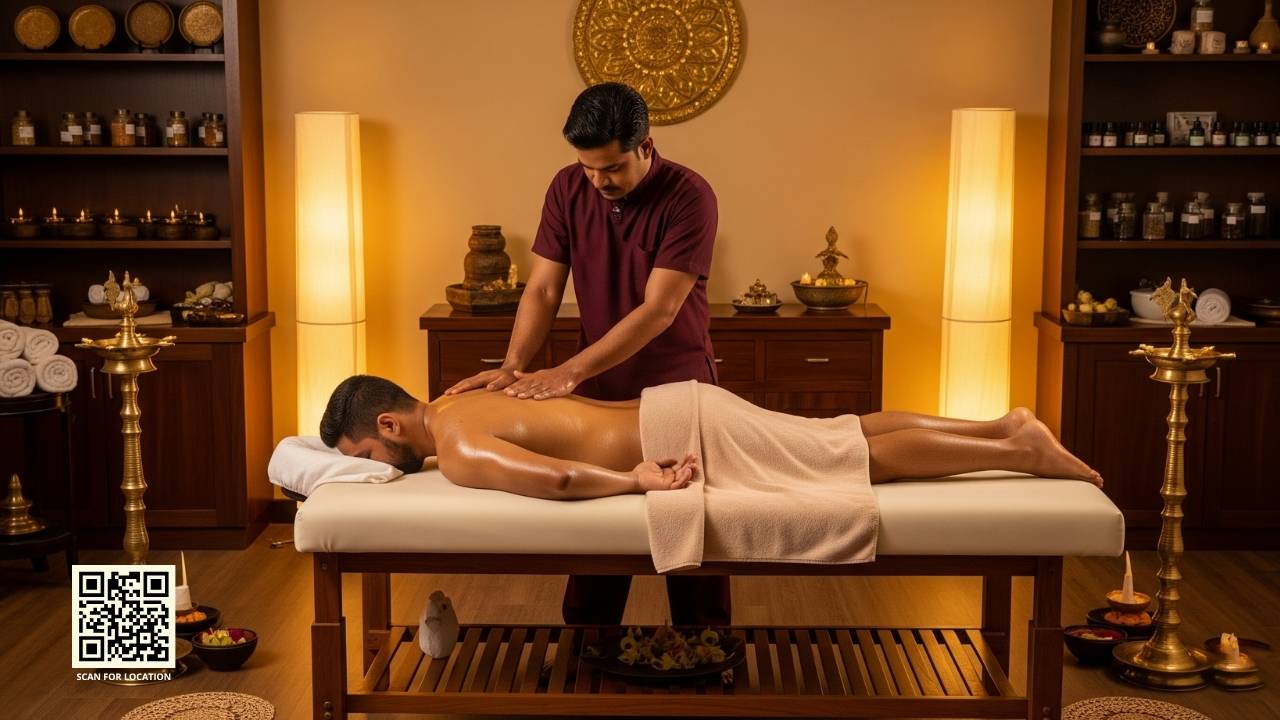
Marma therapy is a traditional Ayurvedic practice that works with specific points on the body called marma points. Ayurveda describes these points as places where muscles, veins, ligaments, bones and joints meet, and treats them with gentle pressure, usually during an oil massage. This guide explains what marma points are, how marma therapy is given, where it is used today and who should be careful with it.
What is a marma point?
The classical Ayurvedic texts, especially the Sushruta Samhita, describe 107 marma points across the body. A marma is understood as a sensitive junction where several structures meet. The early surgeons listed them so that these areas would be protected from injury, because damage at some marma points was known to be serious.
Later practice also used the same points therapeutically. In marma therapy, a trained therapist applies gentle, measured pressure or circular strokes on selected points, often with a medicated oil.
How is marma therapy done?
A typical session is calm and unhurried:
- The doctor first takes your history and examines you, to decide whether marma therapy suits you and which points to use.
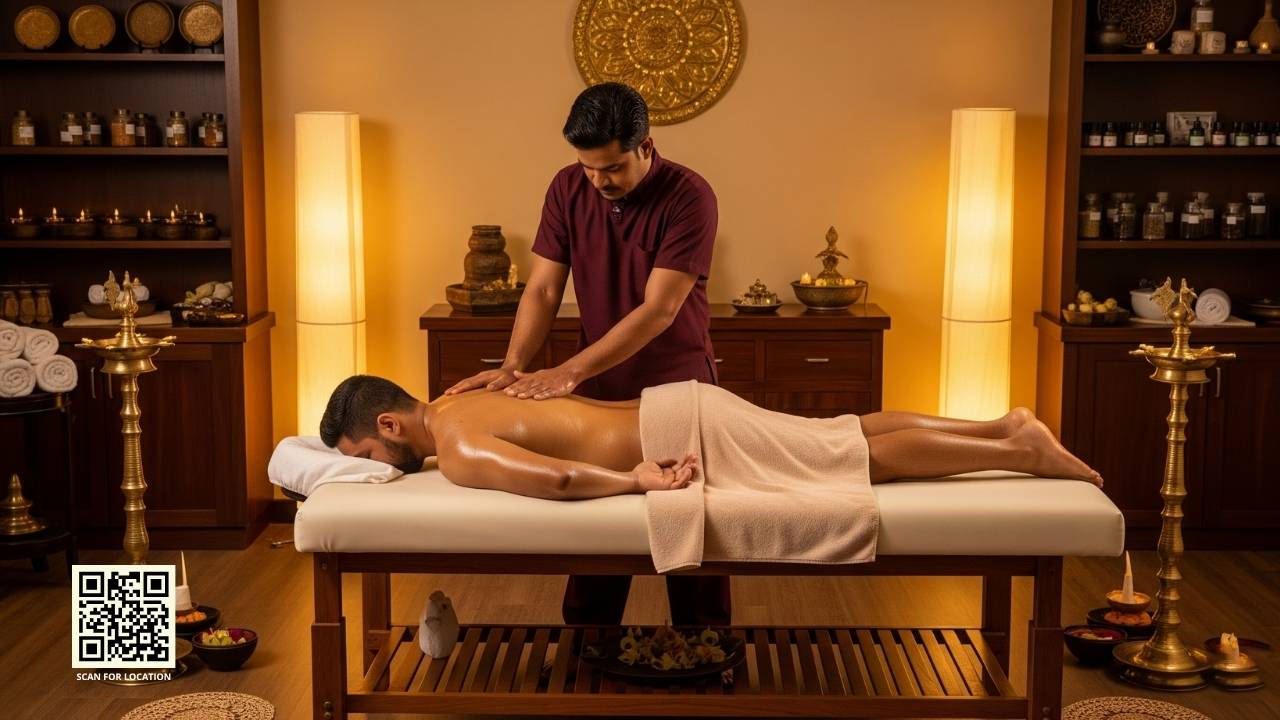
- You lie comfortably, and warm oil is usually applied, much as in Abhyanga (Ayurvedic oil massage).
- The therapist uses the thumb or fingertips on selected points with gentle, steady pressure for a short time.
- A session usually lasts 30 to 45 minutes. A few sessions may be planned, depending on the reason.
Marma therapy should feel relaxing. Deep, painful pressure is not part of it.
Where is marma therapy used?
In Ayurvedic practice today, marma therapy is commonly used as part of a wider plan for:
- Relaxation and stress
- Muscle stiffness and some long-standing aches of the neck, back and joints
- General wellbeing, alongside a daily routine of diet, sleep and movement
Research on marma therapy is limited. Small studies and clinical experience suggest it can help some people feel relaxed and less stiff, but it is not a replacement for diagnosis or for medical treatment of an injury or illness.
Marma therapy for preventive wellness
Many people use marma therapy as part of preventive care: a regular, gentle massage that helps them unwind and notice tension early. In Ayurveda, prevention means looking after daily routine (dinacharya), diet and sleep, and therapies such as massage support that routine. They do not replace exercise, a balanced diet or regular health checks.
Who should be careful?
Tell your doctor before marma therapy if you:
- Are pregnant
- Have a recent injury, fracture, surgery or a swollen, red or hot joint
- Have a skin infection, rash or open wound in the area
- Have a bleeding disorder or take blood thinners
- Have fever or feel unwell
- Have a heart condition, uncontrolled blood pressure or osteoporosis
Sudden or severe pain, numbness, weakness, or pain after a fall needs a medical assessment first, not massage.
Frequently asked questions
How many marma points are there?
The classical texts describe 107 marma points. In practice, a therapist works on a small number of points chosen for you.
Is marma therapy the same as acupressure?
They are different traditions. Both use pressure on specific points, but marma therapy comes from Ayurveda and is usually given with oil as part of an Ayurvedic massage.
Is marma therapy painful?
It should not be. The pressure is gentle and steady. Tell the therapist straight away if anything hurts.
Can I do marma therapy at home?
Gentle self-massage with oil is a common part of an Ayurvedic routine. Pressure on specific marma points is best learned from, and planned by, a trained practitioner.
Is marma therapy available at Sai Ayush?
Ask our doctors at consultation. Massage-based therapies are planned after an assessment, as part of your overall care.
Key takeaway
Marma therapy uses gentle pressure on traditional Ayurvedic points, usually during an oil massage. It is used for relaxation and some long-standing stiffness, as part of a wider plan. It should feel gentle, it is not a substitute for medical care, and a doctor should check first whether it suits you. You can consult the Sai Ayush Ayurveda doctors in Hyderabad.
Medical disclaimer: This article is for general education and does not diagnose or treat any condition. Evidence for marma therapy is limited, and suitability varies from person to person. Consult a qualified healthcare professional before starting any therapy.

Medically Reviewed By
Dr. Pasalapudi Visalaanjani, B.A.M.S, MD (Kayachikitsa), Reg No: 1146/A/2016
Updated on November 17, 2026
This article is for educational purposes only and does not constitute medical advice. Please consult a qualified healthcare professional before beginning any treatment. If you are experiencing a medical emergency, contact your nearest hospital immediately.