
Gandusha is the Ayurvedic practice of holding a liquid, such as oil or a herbal decoction, in the mouth for a few minutes and then spitting it out. Its popular form today is called oil pulling. This guide explains gandusha and the related practice kavala, how to do it safely, what research says, and what it cannot do.
Gandusha and kavala: the difference
- Gandusha: the mouth is filled completely with liquid, which is held still without moving it, until the eyes and nose begin to water slightly, and then spat out.
- Kavala: a smaller amount of liquid is swished around the mouth and then spat out.
Modern "oil pulling" is closer to kavala: a spoonful of oil is swished for several minutes.
What is used?
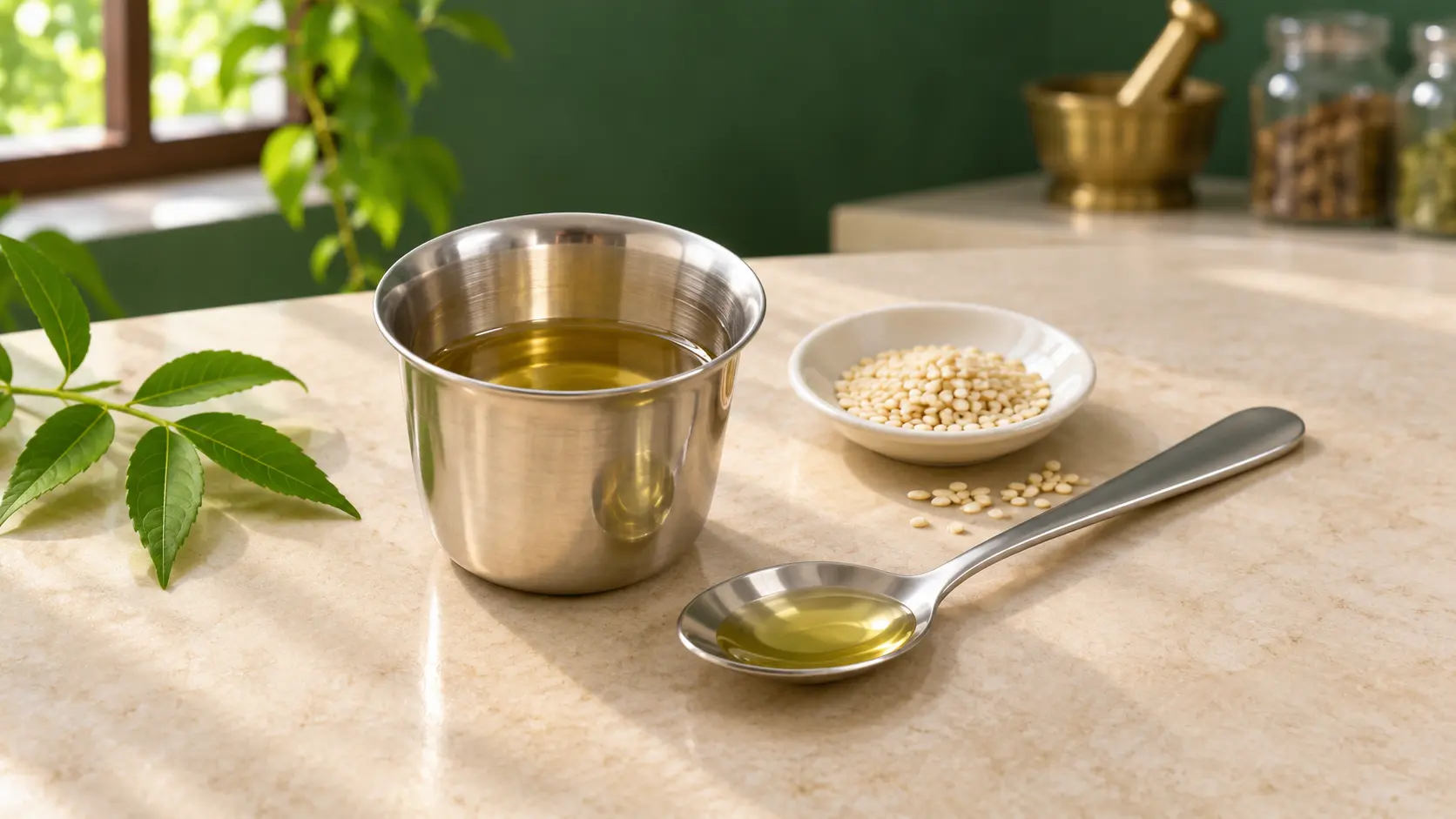
Traditionally, sesame oil is the most common choice. Coconut oil is also widely used. Ayurvedic doctors may suggest medicated oils (such as Irimedadi taila) or herbal decoctions (such as Triphala kashaya) for specific purposes.
How to do oil pulling safely
- Take about one tablespoon of oil, usually in the morning on an empty stomach.
- Swish it gently around the mouth and between the teeth for about 5 to 10 minutes. Do not swallow it.
- Spit it into a bin, not the sink, because oil can block drains.
- Rinse your mouth with warm water, then brush your teeth as usual.
Do not do oil pulling with children who may swallow or choke, or if you have difficulty swallowing, as oil going into the airway can cause a rare type of lung inflammation (lipoid pneumonia).
What does research say?
Small studies suggest that oil pulling may reduce some mouth bacteria and plaque and may help with bad breath, but the studies are small and short. Dental associations do not recommend it as a replacement for brushing, flossing or dental check-ups. It does not "detox" the body, cure diseases or whiten teeth in a lasting way.
Gandusha in Ayurvedic daily routine
The classical texts include gandusha in dinacharya, the daily routine, as a way to care for the mouth, teeth and gums. Other parts of the routine include cleaning the tongue and nasal care with oil, as explained in our guide to Anu Thailam and Nasya.
When to see a dentist
Bleeding or swollen gums, tooth pain, a loose tooth, a sore that does not heal, or bad breath that does not go away need a dental check. Oil pulling should not delay this.
Frequently asked questions
What is the difference between gandusha and oil pulling?
Gandusha means holding a full mouthful of liquid still. Oil pulling, closer to kavala, means swishing a smaller amount around the mouth.
Which oil is best for oil pulling?
Sesame oil is traditional, and coconut oil is common. Your doctor or dentist can advise if you have a specific concern.
How long should I do oil pulling?
Usually 5 to 10 minutes. Longer is not necessary.
Can oil pulling replace brushing?
No. Keep brushing twice a day, cleaning between your teeth, and seeing a dentist regularly.
Is it safe to swallow the oil?
No. Always spit it out, because it contains what was loosened from your mouth.
Key takeaway
Gandusha and kavala are traditional Ayurvedic mouth practices; modern oil pulling is similar to kavala. Done safely, it can be a pleasant addition to oral hygiene, but it does not replace brushing, flossing or dental care. You can consult the Sai Ayush Ayurveda doctors in Hyderabad.
Medical disclaimer: This article is for general education and does not diagnose or treat any condition. Consult a dentist or doctor about any mouth, tooth or gum problem.

Medically Reviewed By
Dr. Pasalapudi Visalaanjani, B.A.M.S, MD (Kayachikitsa), Reg No: 1146/A/2016
Updated on November 17, 2026
This article is for educational purposes only and does not constitute medical advice. Please consult a qualified healthcare professional before beginning any treatment. If you are experiencing a medical emergency, contact your nearest hospital immediately.