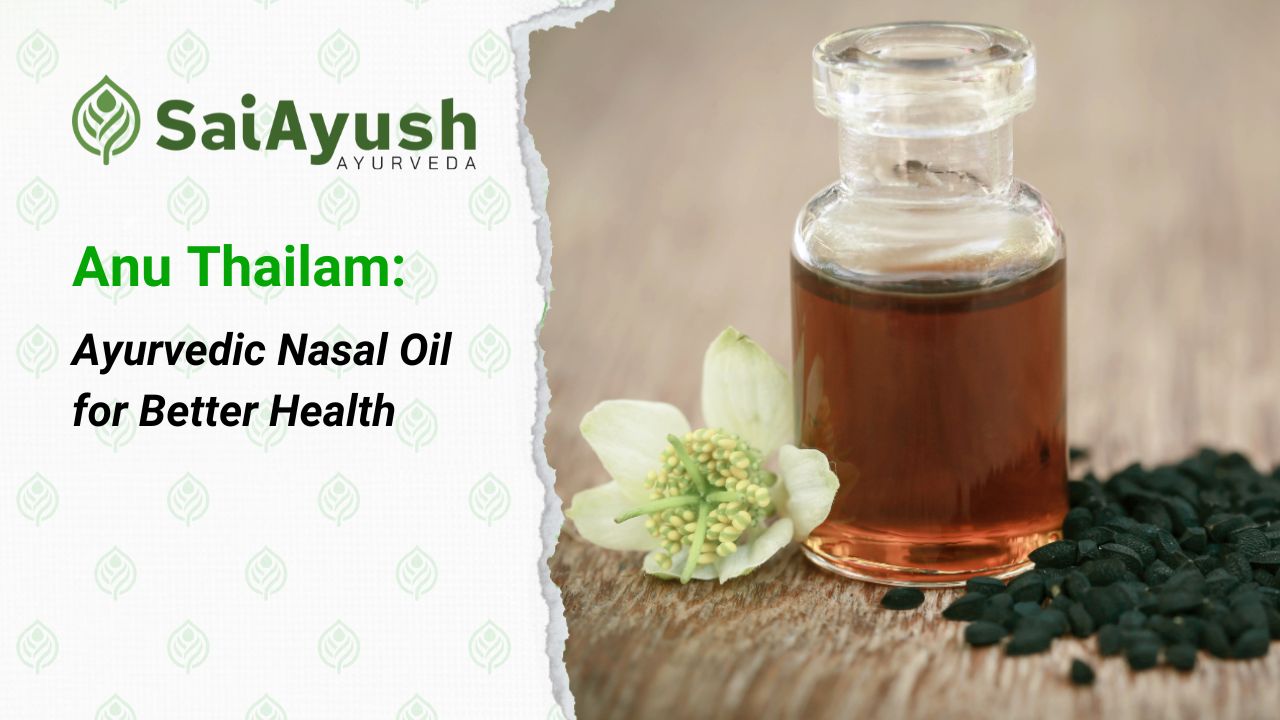
Anu Thailam: How to Use Ayurvedic Nasal Oil Safely
Anu Thailam, also written as Anu Taila, is a traditional medicated oil used in Ayurvedic nasal-care practices. The quantity, timing and method of administration should depend on the product, purpose and individual’s health. It should not automatically be used for every blocked nose, headache or sinus complaint.
This article explains the traditional context of Anu Thailam, how its use differs from a supervised Nasya procedure, important safety precautions and situations requiring conventional medical evaluation.
What is Anu Thailam?
Anu Thailam is a classical Ayurvedic oil formulation traditionally administered through the nasal route. The word “taila” means oil, while nasal administration of an Ayurvedic preparation is generally discussed under Nasya.
Anu Thailam is not the same as an ordinary moisturising nasal drop. It is a medicated formulation, and its ingredients may differ slightly between licensed manufacturers. Always check the label for the complete ingredient list, manufacturing licence, expiry date, storage directions and prescribed usage.
Do not assume that every bottle sold as “Anu Taila” has an identical concentration or administration method.
Anu Thailam and Nasya: are they the same?
No. Anu Thailam is a formulation, while Nasya is a broader Ayurvedic method of administering physician-selected medicine through the nasal passages.
| Feature | Anu Thailam | Doctor-supervised Nasya |
| What it is | A traditional medicated oil formulation | A clinical Ayurvedic nasal procedure |
| Medicine used | Anu Thailam specifically | Oil, ghee, herbal liquid or another prescribed preparation |
| Quantity | Depends on the product and physician’s instructions | Decided according to the procedure and clinical assessment |
| Preparation | May be limited for prescribed daily use | May include assessment, positioning and preparatory measures |
| Supervision | Physician guidance is advisable | Performed under professional supervision |
| Purpose | Depends on the individual and prescribed use | Selected as part of a personalised treatment plan |
People looking for information about the complete clinical procedure can read about doctor-supervised Nasya therapy.
How is Anu Thailam traditionally understood in Ayurveda?
Classical Ayurveda discusses nasal administration in relation to care of the head and structures above the shoulders. Anu Thailam has traditionally been selected within this framework.
This is a traditional Ayurvedic explanation. It should not be interpreted as scientific proof that the oil reaches the brain, crosses the blood–brain barrier or treats neurological disease.
Claims that Anu Thailam cures migraine, sinusitis, facial paralysis, memory disorders, hair loss or eye disease are not supported by sufficient high-quality clinical evidence.
Anu Thailam: how to use it safely
There is no single online instruction suitable for every person or every Anu Thailam product. Follow the directions provided by the prescribing physician and licensed manufacturer.
When a physician considers limited nasal use appropriate, the general safety process may include:
- Confirming that the correct formulation has been selected.
- Checking the ingredients, seal and expiry date.
- Washing and drying the hands.
- Using only the quantity prescribed or stated on the product label.
- Keeping the dropper clean and avoiding contact with the nostril.
- Remaining in the recommended position for the advised period.
- Reporting persistent burning, coughing, breathing difficulty or another unexpected reaction.
The Ministry of AYUSH has included Anu Taila nasal drops in some public health advisories. Such general guidance does not replace personalised assessment, especially for children, older adults, pregnant patients or people with medical conditions.
Do not copy doses from social media, videos or another patient’s prescription.
Should Anu Thailam be used on an empty stomach?
Instructions concerning meals and timing can vary according to the intended Ayurvedic application and the physician’s protocol.
Do not use the oil immediately before eating, sleeping, driving or strenuous activity unless the prescribing clinician specifically confirms that this is appropriate. If coughing, gagging or oil reaching the throat occurs, stop and seek professional advice before using it again.
Can Anu Thailam clear nasal congestion?
Nasal blockage can result from several causes, including:
- A viral respiratory infection
- Allergic or non-allergic rhinitis
- Sinus inflammation
- A deviated nasal septum
- Nasal polyps
- Medicine-related congestion
- Environmental irritation
- A foreign object, particularly in children
Anu Thailam should not be presented as a proven treatment for all these conditions. Persistent or recurrent obstruction requires diagnosis of the underlying cause.
For some sinus problems, established medical options may include saline nasal sprays, prescribed nasal corticosteroids or other cause-specific treatment. The correct option depends on clinical evaluation.
What does current research show?
The scientific evidence specifically evaluating Anu Thailam remains limited.
A published trial protocol has described planned research involving Anu Taila Nasya for allergic rhinitis. A trial protocol explains how a study is intended to be conducted; it does not prove that the treatment is effective.
Therefore, it would be inaccurate to describe Anu Thailam as:
- Scientifically proven to cure sinusitis
- A replacement for allergy treatment
- A treatment for migraine or neurological disease
- A method that directly delivers medicine to the brain
- Completely safe or free from side effects
More rigorous and independently replicated clinical research is required.
Possible side effects and risks
Depending on the person, product and administration method, possible problems may include:
- Nasal irritation or burning
- Sneezing
- Watering of the eyes
- Throat irritation or an unpleasant taste
- Coughing or gagging
- Nausea
- An allergic reaction
- Contamination from poor storage or dropper contact
Oil entering the airway is a particular concern in people with swallowing difficulties or an increased aspiration risk. Medical literature recognises aspiration of oily substances as a cause of exogenous lipoid pneumonia, although this complication is uncommon.
Stop using the product and obtain medical advice if symptoms are persistent, significant or worsening.
Who should seek medical advice before using Anu Thailam?
Professional assessment is particularly important for:
- Infants and young children
- Pregnant or breastfeeding patients
- Older adults with swallowing problems
- People with asthma or chronic respiratory disease
- Anyone with recurrent nosebleeds
- People with nasal ulcers, injuries or recent nasal surgery
- Patients with active fever or respiratory infection
- People with known allergies to oils or herbal ingredients
- Anyone taking anticoagulants or receiving ongoing ENT treatment
Do not place oil in the nose of an unconscious person or someone unable to swallow or protect their airway normally.
Do not stop prescribed nasal sprays, antihistamines, migraine medicines or other treatment unless the prescribing clinician advises it.
When should Anu Thailam not replace medical assessment?
Seek prompt medical evaluation for:
- Difficulty breathing
- Sudden facial weakness or speech difficulty
- Severe or unusual headache
- High or persistent fever
- Swelling or redness around the eyes
- Double vision or another change in vision
- Stiff neck or confusion
- Significant facial injury
- Persistent one-sided nasal blockage
- Recurrent or heavy nosebleeds
- Foul-smelling discharge from one nostril in a child
These symptoms should not be managed by repeatedly applying nasal oil.
Can Anu Thailam be used every day?
Daily use is not automatically appropriate for everyone. Suitability depends on the formulation, quantity, season, symptoms, medical history and type of nasal administration intended.
Regular use should be reviewed if the person develops irritation, cough, altered smell, worsening congestion or another new symptom.
What happens during an Ayurveda consultation?
An Ayurveda physician may ask about:
- The main symptoms and how long they have been present
- Allergies and previous sinus or respiratory conditions
- Nosebleeds, nasal surgery or structural problems
- Current medicines and nasal sprays
- Asthma, reflux or swallowing difficulties
- Previous reactions to oils or herbal products
- The exact Anu Thailam brand being considered
The physician can then determine whether limited home use, supervised Nasya, conventional medical assessment or referral to an ENT specialist is more appropriate.
At Sai Ayush Ayurveda Hospital, nasal procedures should be recommended only after assessing the patient’s symptoms, health history and suitability. A consultation does not guarantee that Anu Thailam or Nasya will be advised.
Patients who require individual guidance can consult the Sai Ayush Ayurveda doctors.
Frequently asked questions
How many drops of Anu Thailam should be used?
There is no universal quantity suitable for every person. Follow the licensed product label or the exact instructions of a qualified Ayurveda physician.
Can Anu Thailam cure sinusitis?
There is insufficient high-quality evidence to claim that it cures sinusitis. Sinus symptoms can have different causes and may require ENT evaluation or conventional treatment.
Is Anu Thailam safe for children?
Do not administer it to an infant or child without advice from a qualified clinician familiar with the child’s medical history.
Can Anu Thailam be used during a cold?
The appropriate advice may depend on the symptoms, formulation and patient. Avoid self-treatment when there is fever, active infection, breathing difficulty or significant congestion.
Can prescribed nasal sprays be used with Anu Thailam?
Ask the prescribing doctor or pharmacist. Do not mix products or change prescribed treatment without professional guidance.
Key takeaway
Anu Thailam is a traditional Ayurvedic medicated nasal oil—not a universal remedy for congestion, sinusitis, migraine or neurological conditions. Its formulation, quantity and suitability require careful consideration.
Use a licensed product, follow verified instructions and seek medical assessment for persistent, severe or unusual symptoms.
Medical disclaimer: This article is intended for general education and does not diagnose or treat any medical condition. Evidence for Anu Thailam remains limited, and individual suitability varies. Consult a qualified healthcare professional before beginning nasal-oil use.
Medically Reviewed By