Why is inpatient care often recommended for stroke and paralysis recovery?
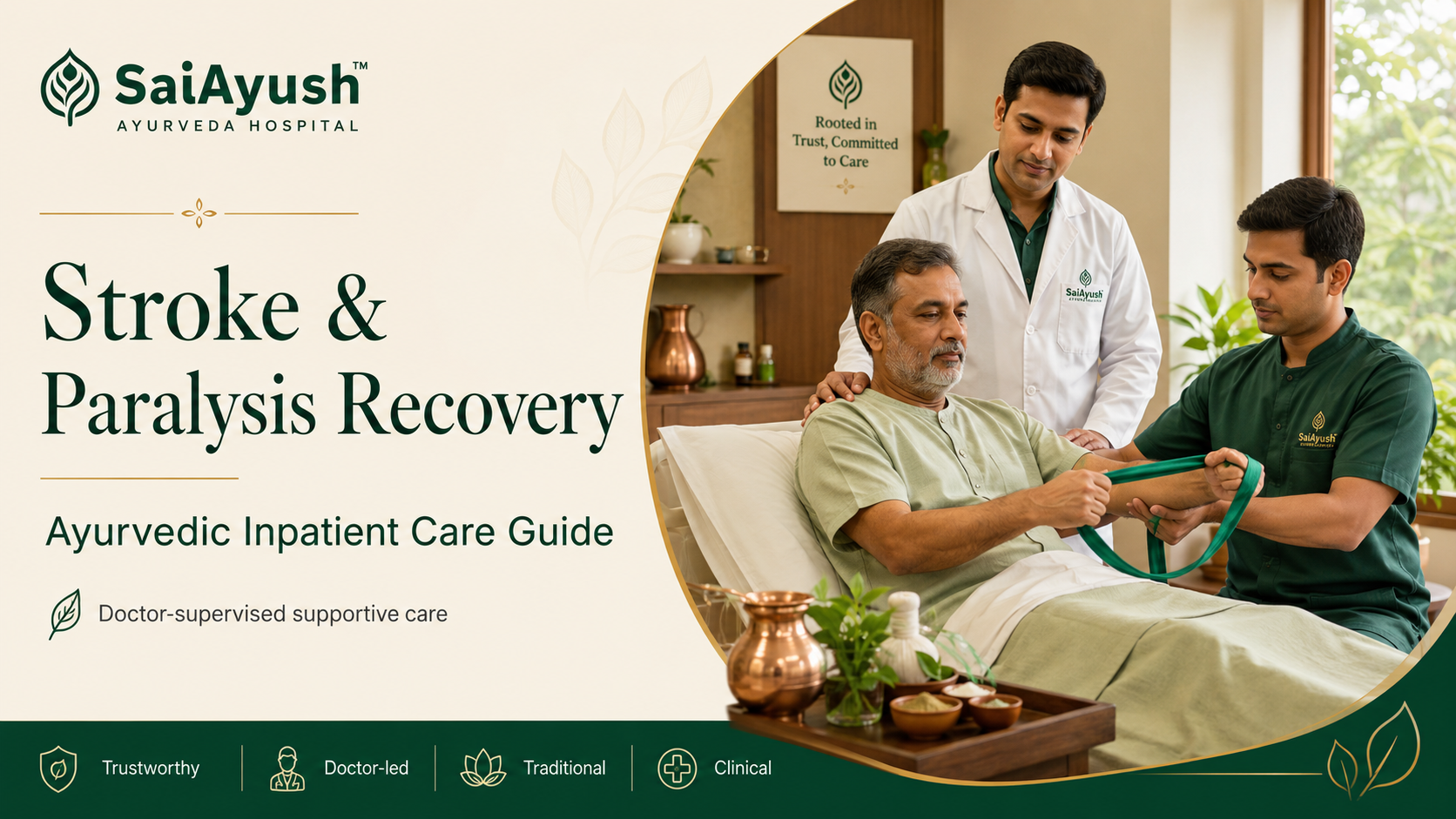
Recovery from a stroke or paralysis depends on consistent, daily, supervised therapy — and that is difficult to maintain at home. An inpatient program brings the therapies, diet, rest and monitoring together in one place so the body can focus entirely on rehabilitation. At Sai Ayush Ayurveda Hospital in Hyderabad, this is delivered through our integrated ANP³ Method™ — combining Ayurveda, Naturopathy and Physiotherapy — under doctors with a 33+ year legacy and DMHO certification. You can read more about our approach on our neurological care page.
This week-by-week guide describes a typical journey. Your actual plan and timeline will be set by your doctor after a full assessment, because recovery varies with the type and severity of the stroke or paralysis, your overall health, and how long ago it occurred.
Before admission: assessment and goal-setting
Every program begins with a detailed assessment — your medical history, current medications, mobility, and your individual constitution (Prakriti) and imbalance (Vikriti). The doctor then sets realistic, personalised goals (for example, improving limb movement, balance, speech support or daily independence) and explains the expected duration. Sharing your hospital discharge summary and current prescriptions at this stage is important for safe, coordinated care.
Week 1: Stabilisation and preparation (Purvakarma)
The first week focuses on settling in, gentle preparation and building a baseline. Typical elements include:
- Snehana (oleation) and Swedana (warm therapies) to prepare the body's tissues
- Gentle Abhyanga (therapeutic oil massage) to support circulation and stiff muscles
- Initial, gentle physiotherapy and positioning to protect joints
- A personalised, easy-to-digest diet and a settled sleep routine
The goal this week is comfort, safety and preparing the body to respond to the main therapies — not pushing for rapid change.
Week 2: Active therapy and Panchakarma procedures
As the body is ready, the main therapies begin and intensity is adjusted to tolerance. This week often includes:
- Basti (medicated enema therapy) — a central therapy in Ayurveda for neurological and Vata-related conditions, given as a supervised course
- Specialised treatments such as Shirodhara or targeted therapies as indicated
- More structured physiotherapy — assisted movement, range-of-motion work and early strengthening
- Ongoing diet adjustments and daily review by the doctor
Small, encouraging changes — slightly better movement, reduced stiffness, improved sleep — are common around this stage, though they vary widely between individuals.
Week 3: Building strength, mobility and independence
The focus shifts toward function and confidence:
- Progressive physiotherapy aimed at strength, balance and coordination
- Continued Ayurvedic therapies to consolidate gains
- Yoga, breathing and relaxation practices adapted to ability, supporting both body and mood
- Training in everyday activities to rebuild independence, with family involvement encouraged
Emotional wellbeing matters as much as physical progress in this phase, and the calm residential environment is designed to support both.
Week 4 and beyond: Consolidation and discharge planning (Paschatkarma)
The final phase focuses on locking in progress and preparing for home:
- A gradual, structured recovery diet and lifestyle plan
- A home-care routine — exercises, diet, oils and precautions — tailored for you
- Guidance for caregivers so support continues safely at home
- A follow-up schedule, with options for review consultations
Some people complete a focused program in around three to four weeks; others with more complex needs continue longer or return for repeat cycles. Your doctor will advise what is realistic for your situation.
What results can realistically be expected?
This is the most important section to be honest about. Ayurvedic rehabilitation aims to support recovery — mobility, strength, comfort and daily function — alongside conventional care. It does not cure stroke or paralysis, and outcomes depend on many factors including the severity of the original event, how soon rehabilitation begins, and individual response. A good program sets realistic goals with you and measures progress against them, rather than promising a fixed result.
Considering a residential program for a family member? Speak to our team about a pre-admission assessment, or explore our neurological care and residential wellness packages. Residential admission is at our KPHB hospital; outpatient consultations are also available at our Madinaguda clinic.
What does a typical day look like during the stay?
A typical day blends therapy, rest and gentle activity: morning therapies (such as Abhyanga and prescribed Panchakarma procedures), physiotherapy sessions, a personalised diet across the day, adapted yoga or breathing practice, rest periods, and a daily or regular review by the doctor. Family visits are generally accommodated, and both online and in-person consultations are available before and after the stay.
Frequently asked questions
Can Ayurveda cure paralysis or reverse a stroke?
No. Ayurvedic rehabilitation is a complementary approach that aims to support recovery — movement, strength and quality of life — alongside conventional medical care. It does not cure stroke or paralysis, and results vary between individuals.
When should Ayurvedic rehabilitation begin after a stroke?
After the acute, emergency phase has been managed by conventional medicine and your treating doctor confirms you are stable enough for rehabilitation. The right timing is decided case by case.
How long is a typical inpatient program?
Programs commonly run from about three to four weeks, with some people continuing longer or returning for repeat cycles depending on their needs and progress.
Can Ayurvedic care be combined with my existing medicines and physiotherapy?
Yes, it is designed to complement conventional care. Share all current medicines and reports so the team can coordinate treatment safely. Never stop prescribed medication without consulting your doctor.
Can a family member stay with the patient?
Family involvement is encouraged for support and caregiver training. Residential programs run at our KPHB hospital — please confirm the current stay-and-visit arrangements when you book.
Talk to our admissions team
Inpatient admission and residential recovery programs are at our KPHB hospital — call +91 81423 28080.
Our Madinaguda location is a consultation clinic only (outpatient consultations: +91 84668 82266).
Ask about a pre-admission assessment for a residential stroke or paralysis recovery program.
Online & offline consultations available. Book a consultation.
Medical disclaimer
This article is for general information only and is not a substitute for professional medical advice, diagnosis or treatment. A stroke is a medical emergency requiring immediate conventional care. Ayurvedic rehabilitation is offered here as a complementary approach for the recovery phase; it does not cure stroke or paralysis and results vary between individuals. Always follow your treating physician's advice and do not stop prescribed medication without consulting them.
- Ministry of AYUSH, Government of India — on Panchakarma and Ayurvedic management of neurological conditions
- World Health Organization — stroke and rehabilitation overview
Medically Reviewed By