
Ayurvedic Massage After Paralysis: Is It Safe at Home?
Families caring for someone with paralysis often ask whether Ayurvedic oil massage can be performed at home. Gentle, appropriately selected massage may support relaxation, skin care and comfort for certain patients. However, it is not a proven remedy for reversing paralysis and cannot replace neurological treatment, physiotherapy or occupational rehabilitation.
Paralysis has several possible causes, including stroke, spinal-cord injury, nerve damage, brain injury and neurological disease. The cause, stage of recovery, muscle tone, skin condition and risk of complications must be assessed before massage is attempted.
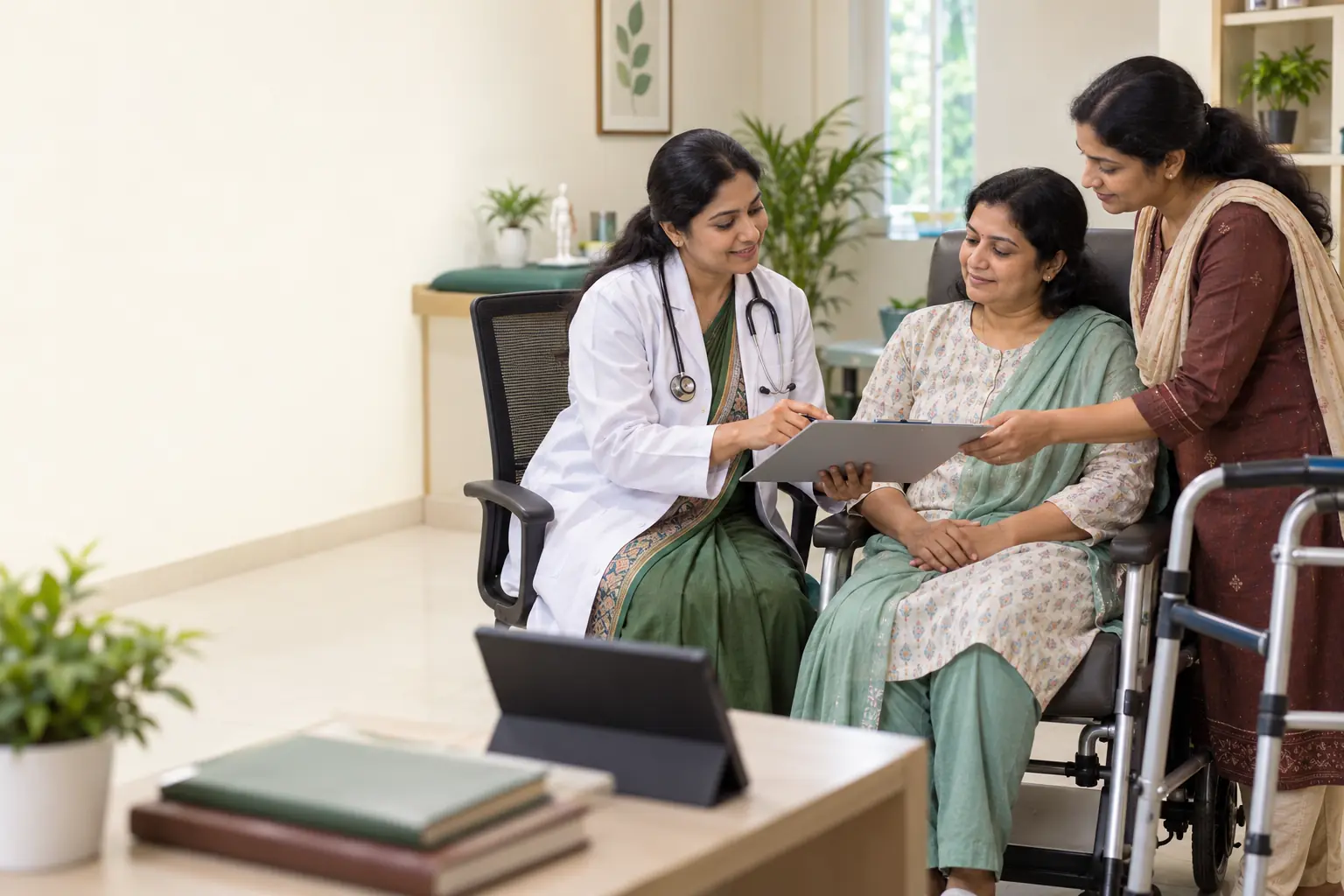
Home massage should begin only after clearance from the treating doctor and practical instruction from a qualified professional.
What does paralysis mean?
Paralysis is a partial or complete loss of voluntary muscle movement. It may affect:
- One side of the body
- Both legs
- One limb
- The face and arm
- Several areas of the body
Some people experience weakness rather than complete paralysis. Other accompanying problems may include altered sensation, stiffness, spasticity, poor balance, swallowing difficulty, communication problems or impaired bladder and bowel control.
The term “paralysis” describes a symptom, not a complete diagnosis. Safe care depends on identifying its underlying cause.
Can Ayurvedic massage cure paralysis?
No responsible healthcare provider should claim that massage cures paralysis or regenerates damaged brain, spinal-cord or peripheral nerve tissue.
Massage does not remove a blood clot, repair a brain haemorrhage or independently restore lost neurological function. Recovery following a stroke or neurological injury varies according to the cause, location and extent of damage, time to medical treatment, complications, rehabilitation and the patient’s overall health.
Ayurvedic massage may be considered as supportive care for selected medically stable patients. Its possible role is comfort-oriented and must not be confused with treatment of the underlying neurological disease.
How may massage support a person with paralysis?
When medically appropriate and performed gently, massage may help with:
- Relaxation and perceived comfort
- Awareness of the affected limb
- Skin moisturisation when a suitable oil is used
- Caregiver-supported interaction
- Temporary reduction in a feeling of muscular tightness
- Preparation for movement exercises when approved by the rehabilitation team
These are supportive goals. They do not establish that massage improves nerve repair, prevents disability or restores movement.
Evidence specifically supporting Ayurvedic massage as an effective treatment for paralysis remains limited. Rehabilitation that addresses movement, communication, self-care and daily functioning should remain central to the recovery plan. The World Health Organization describes rehabilitation as a coordinated health service rather than a single passive therapy.
How does Ayurveda view paralysis?
Ayurvedic clinical practice may discuss paralysis under conditions such as Pakshaghata when one side of the body is affected. Vata-related concepts are commonly considered when evaluating movement, sensation and neuromuscular function.
An Ayurveda physician may assess:
- The medical cause of paralysis
- Whether the condition is recent or long-standing
- Muscle weakness, stiffness or spasticity
- Sensation and communication ability
- Digestion, sleep and general strength
- Skin integrity and circulation
- Blood pressure and other illnesses
- Current medicines and rehabilitation
- The patient’s tolerance for touch and positioning
An Ayurvedic diagnosis must not replace neurological investigations. Traditional concepts such as Vata should not be presented as equivalent to a stroke, blood clot, cerebral haemorrhage or spinal injury.
Why medical clearance is essential
A paralysed limb may have reduced sensation. The patient might not reliably detect excessive heat, pressure, skin irritation or an uncomfortable position.
There may also be medical complications such as:
- Blood clots
- Fragile skin or pressure injuries
- Joint instability
- Shoulder subluxation after stroke
- Swelling
- Spasticity
- Osteoporosis
- Infection
- Uncontrolled blood pressure
- Treatment with blood-thinning medicines
These factors can make unsupervised massage harmful. The physician or physiotherapist should confirm whether massage is suitable and demonstrate how the affected limb may be handled.
When should massage not be performed?
Avoid home massage until medical advice is obtained when the patient has:
- A new or unexplained neurological symptom
- A recent stroke without clearance from the treating team
- A red, hot, swollen or painful limb
- Suspected deep-vein thrombosis
- Sudden calf swelling or tenderness
- Chest pain or breathlessness
- Fever or active infection
- Open wounds, pressure sores or skin infection
- A recent fracture, surgery or significant fall
- Severe swelling
- Uncontrolled pain
- Markedly reduced sensation
- Unstable heart or blood-pressure problems
- Severe osteoporosis
- An intravenous line, feeding tube or medical device near the proposed area
- A known allergy to the selected oil
Forceful massage must never be used over a suspected blood clot, injured joint or fragile tissue.
Stroke symptoms require emergency care—not massage
Sudden facial weakness, arm weakness, speech difficulty, loss of balance, visual disturbance or an unusually severe headache may indicate a stroke.
Do not massage the person, give food or drink, or wait for an Ayurvedic consultation. Seek emergency medical help immediately. Both stroke and transient ischaemic attack require urgent evaluation because their nature cannot be determined safely at home. This is consistent with guidance from the American Stroke Association and CDC.
A safer home-massage framework
This section is not a universal treatment protocol. Follow the instructions given by the patient’s doctor, Ayurveda physician and physiotherapist.
1. Confirm medical stability
Ask whether massage is appropriate for the patient’s diagnosis, recovery stage, circulation, skin condition and medicines.
2. Obtain professional demonstration
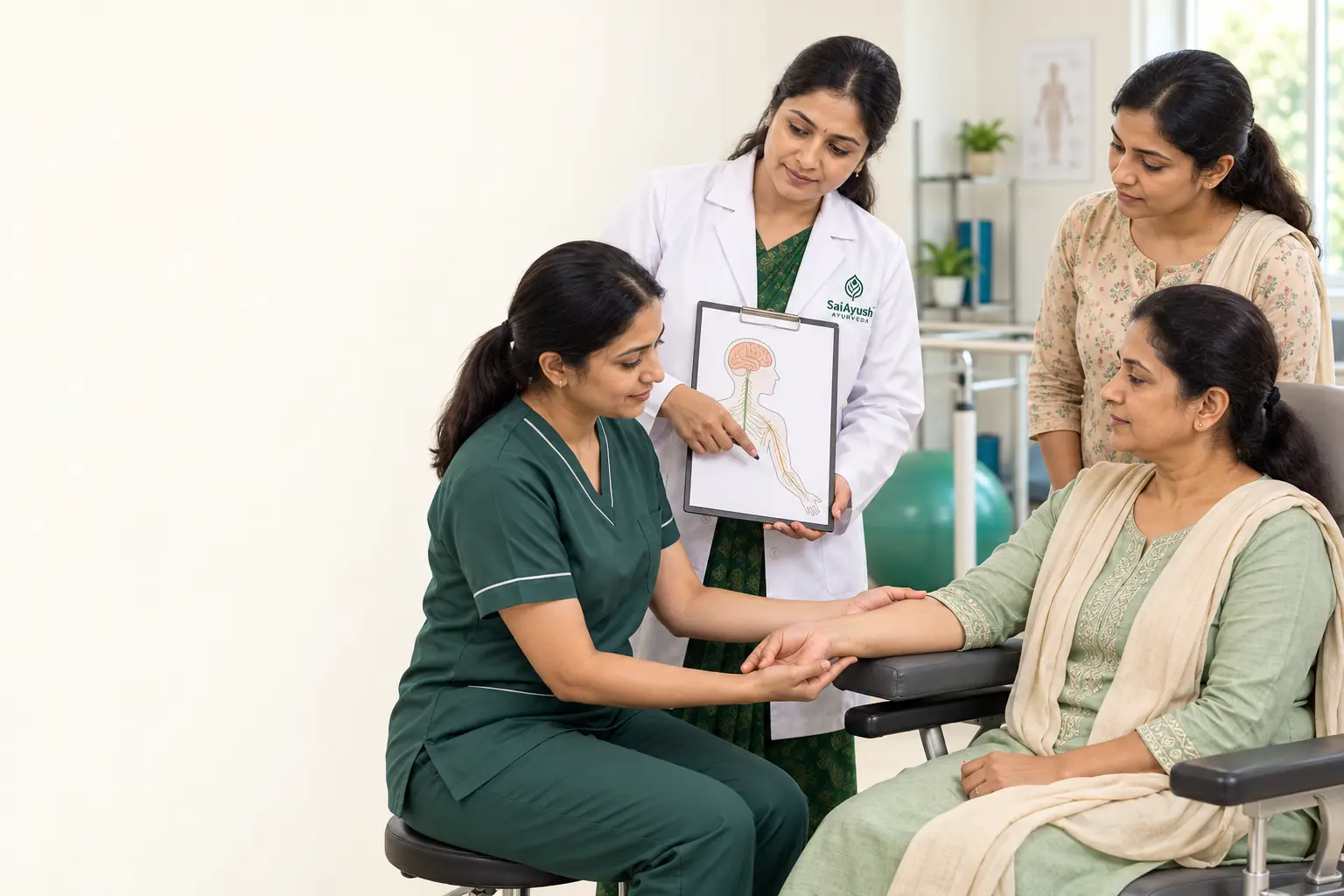
A caregiver should learn safe positioning and limb handling. Pulling a weak arm, lifting under the shoulder or forcing a stiff joint may cause injury.
3. Check the skin
Before every session, inspect the skin for redness, wounds, blisters, swelling, unusual warmth or pressure damage. Do not massage over an abnormal area.
4. Use only a prescribed or approved product
The choice of oil is not the same for everyone. Avoid internet remedies and mixtures with undisclosed ingredients.
Perform a small skin-sensitivity check if advised. Stop if itching, burning, rash or swelling develops.
5. Keep the oil comfortably warm—not hot
Reduced sensation increases the risk of burns. Test the temperature carefully and avoid direct heating on the patient’s skin.
6. Use gentle contact
The caregiver should use slow, light strokes without deep kneading, forceful pressure or sudden joint movement. Massage should not cause pain.
7. Protect weak joints
Support the affected arm or leg throughout. Never pull the patient by a weak arm, force the shoulder overhead or attempt spinal manipulation.
8. Observe the patient continuously
Stop immediately if the patient develops pain, dizziness, breathlessness, sweating, unusual sleepiness, skin changes, distress or increased stiffness.
9. Follow the rehabilitation plan
Massage should not replace prescribed mobility exercises, positioning, splints, walking practice or task-based rehabilitation.
Massage and spasticity
Spasticity is increased muscle tone caused by neurological injury. It can produce stiffness, spasms or abnormal limb positioning.
Forceful stretching or deep massage may trigger discomfort or increase resistance. Spasticity management may require positioning, physiotherapy, splints and medical treatment.
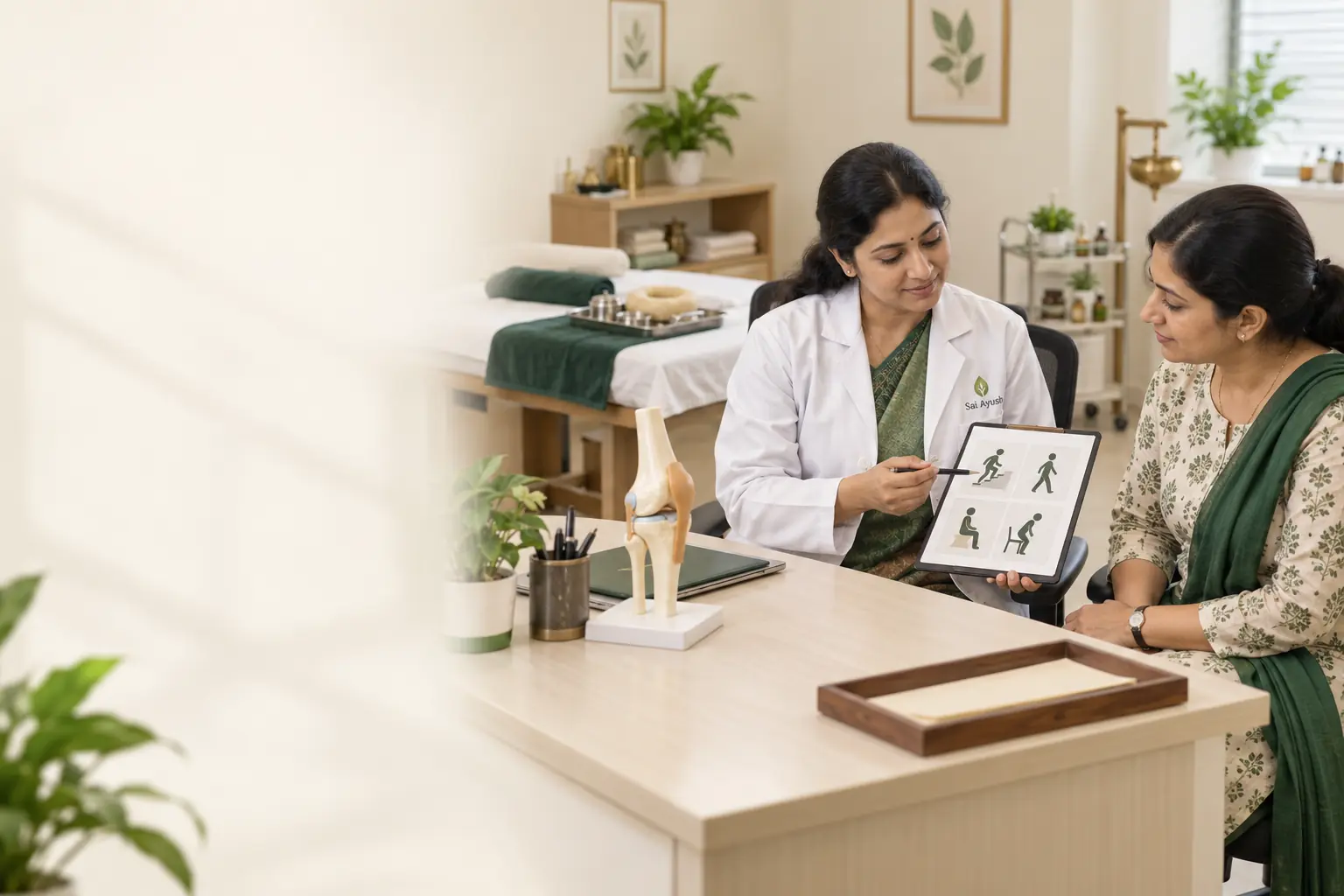
A physiotherapist should determine:
- Which muscles may be touched
- How the limb should be supported
- Whether stretching is appropriate
- The safe direction and range of movement
- When treatment should be stopped
Special care for the shoulder after stroke
A weak shoulder can be vulnerable to pain and partial displacement. Caregivers should not pull the affected arm while moving the patient or use it to lift the person from a chair or bed.
Massage should not be performed directly over a painful or unstable shoulder until it has been assessed. Proper positioning and guided movement are more important than vigorous rubbing.
Does more pressure produce better results?
No. Increased pressure does not mean better neurological recovery.
Deep or forceful massage can cause bruising, pain, skin injury or aggravation of a vulnerable joint. Risk may be higher when the patient has reduced sensation, fragile skin or takes anticoagulant or antiplatelet medication.
The appropriate pressure must be comfortable, gentle and individually demonstrated.
Which oil is best for paralysis massage?
There is no single oil suitable for every patient with paralysis.
An Ayurveda physician may consider the patient’s skin, sensitivity, strength, clinical condition, climate, medicines and traditional Ayurvedic assessment before selecting an external preparation.
Avoid choosing oil solely from online testimonials. “Natural” does not automatically mean allergy-free, uncontaminated or compatible with the patient’s medicines and skin condition.
Massage is not the same as rehabilitation
Neurological rehabilitation may involve:
- Physiotherapy
- Occupational therapy
- Speech and swallowing therapy
- Positioning and pressure-injury prevention
- Mobility and balance training
- Assistance with daily activities
- Nutrition support
- Psychological support
- Medical management of pain and spasticity
- Caregiver education
Massage is passive. Functional recovery generally requires active, goal-directed rehabilitation whenever the person is medically capable of participating.
The exact programme must be personalised, and recovery outcomes cannot be guaranteed.
Home care or inpatient rehabilitation?
Home care may be reasonable when the patient is medically stable, has adequate caregiver support and can safely follow an outpatient rehabilitation plan.
Closer supervision may be considered when the person has:
- Significant mobility dependence
- High risk of falls or pressure injuries
- Complex medical needs
- Severe stiffness or spasticity
- Swallowing or communication difficulties
- Multiple daily rehabilitation requirements
- Caregiver limitations
- Difficulty attending regular outpatient sessions
The appropriate setting should be decided after clinical assessment. This article intentionally addresses home-massage safety rather than duplicating Sai Ayush’s separate guide to stroke and paralysis inpatient rehabilitation.
Doctor-guided neurological support at Sai Ayush
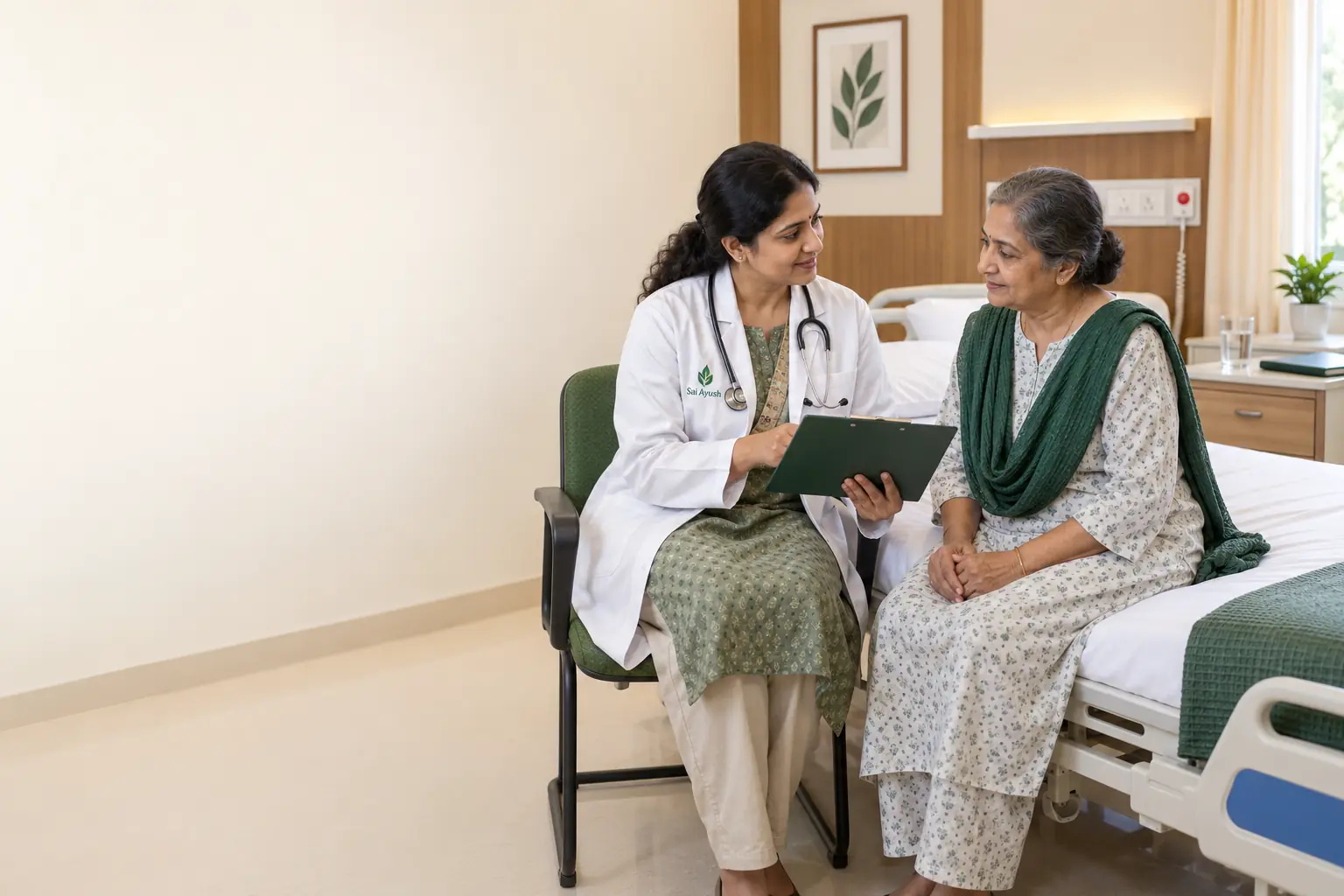
At Sai Ayush Ayurveda Hospital, neurological support begins with a review of the diagnosis, medical records, current medicines, movement limitations, skin condition and rehabilitation needs.
When appropriate, the care plan may coordinate Ayurveda, physiotherapy, positioning, movement support, diet and caregiver education. Individual procedures and their frequency are decided only after assessment.
Neurological inpatient care is available at the Sai Ayush KPHB hospital. Madinaguda is an outpatient clinic and should not be presented as an inpatient rehabilitation facility.
Patients may also meet the Sai Ayush Ayurvedic doctors for an individual consultation. Evaluation does not guarantee that massage, Panchakarma or inpatient admission will be recommended.
Frequently asked questions
Can daily massage restore movement after paralysis?
There is insufficient evidence to claim that daily massage restores movement. Recovery depends on the cause and severity of paralysis and the person’s response to structured rehabilitation.
Can a family member perform the massage?
Only after the treating team confirms it is safe and teaches the caregiver appropriate positioning, pressure and precautions.
Can massage replace physiotherapy?
No. Massage does not replace active, goal-directed physiotherapy or other neurological rehabilitation.
Should a paralysed limb be massaged when it is swollen?
Not until the cause has been medically assessed. Sudden one-sided swelling, warmth or tenderness may indicate a blood clot or another condition requiring urgent care.
Can massage be performed immediately after a stroke?
Do not begin massage during the acute stage unless the hospital team specifically permits it. Emergency treatment and medical stabilisation take priority.
Should prescribed medicines be stopped during Ayurvedic care?
No. Do not stop or modify blood-pressure medicines, blood thinners, antiplatelet medicines, cholesterol medicines or other prescribed treatment without the prescribing doctor’s instructions.
Key takeaway
Ayurvedic massage at home is not a proven cure for paralysis. For a medically stable and appropriately assessed patient, gentle massage may have a limited supportive role in comfort, relaxation and skin care.
It should be introduced only with medical clearance, correct caregiver training and coordination with physiotherapy. New stroke symptoms, sudden limb swelling, breathing difficulty, skin wounds or unexplained deterioration require prompt medical attention—not massage.
Medical disclaimer: This article provides general educational information and is not a home-treatment prescription. Paralysis requires diagnosis and individual rehabilitation planning. Consult the treating neurologist, rehabilitation professional and qualified Ayurveda physician before starting massage or changing established care.