
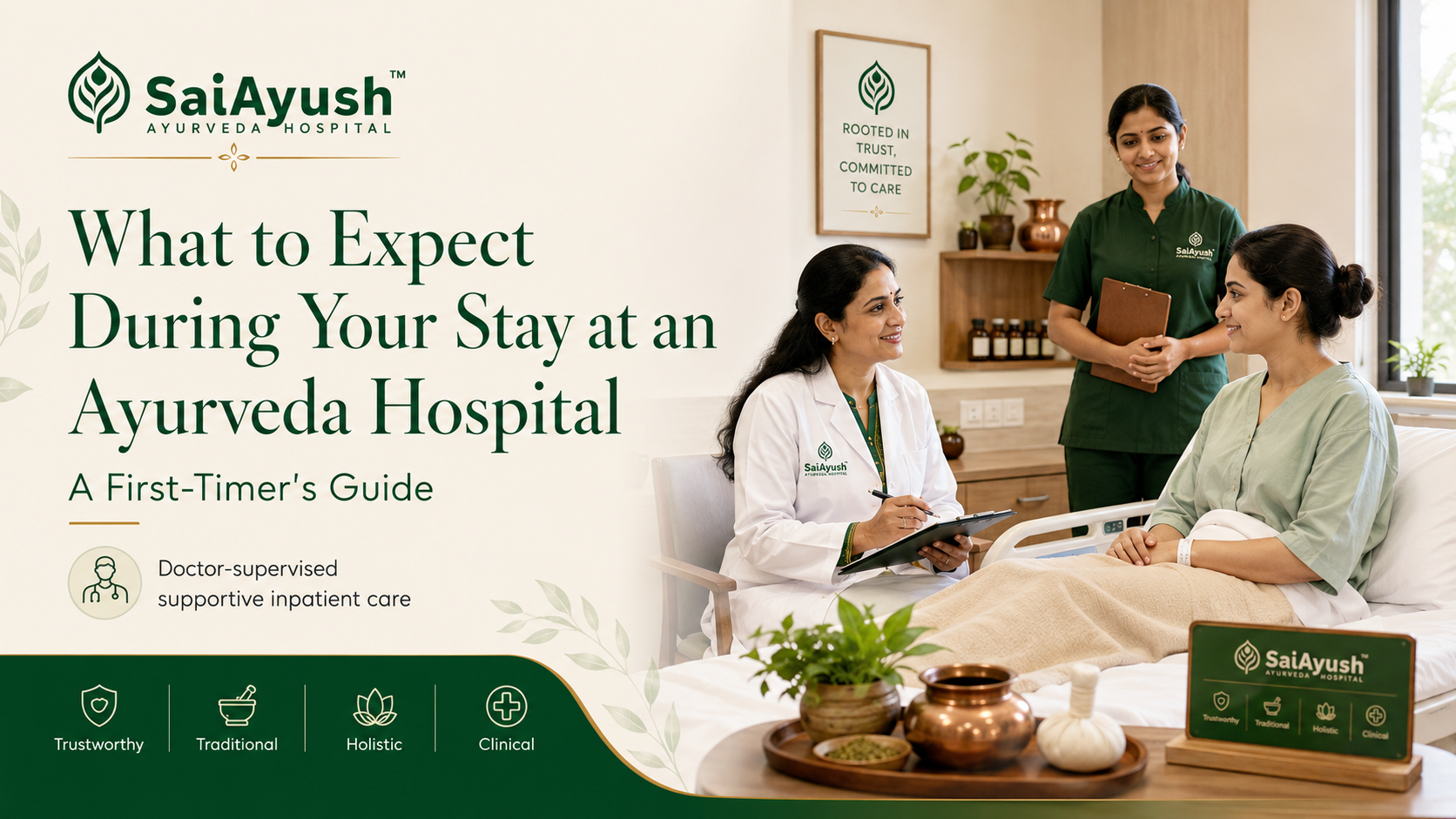
What to Expect During Your Stay at an Ayurveda Hospital: A First-Timer's Guide
An inpatient Ayurveda stay is a structured residential program — typically 7 to 21 days — where you live at the hospital, follow a doctor-designed daily routine of therapies, diet, yoga, and rest, and are monitored throughout. At Sai Ayush Ayurveda Hospital, KPHB (Hyderabad), admissions begin with a detailed physician assessment, and every day follows a personalised treatment plan.
If you've been considering admission but keep hesitating over practical questions — how long, what to bring, whether it's comfortable, whether family can visit — this guide answers all of them honestly, based on how residential care actually works at our KPHB hospital.
What happens on admission day?
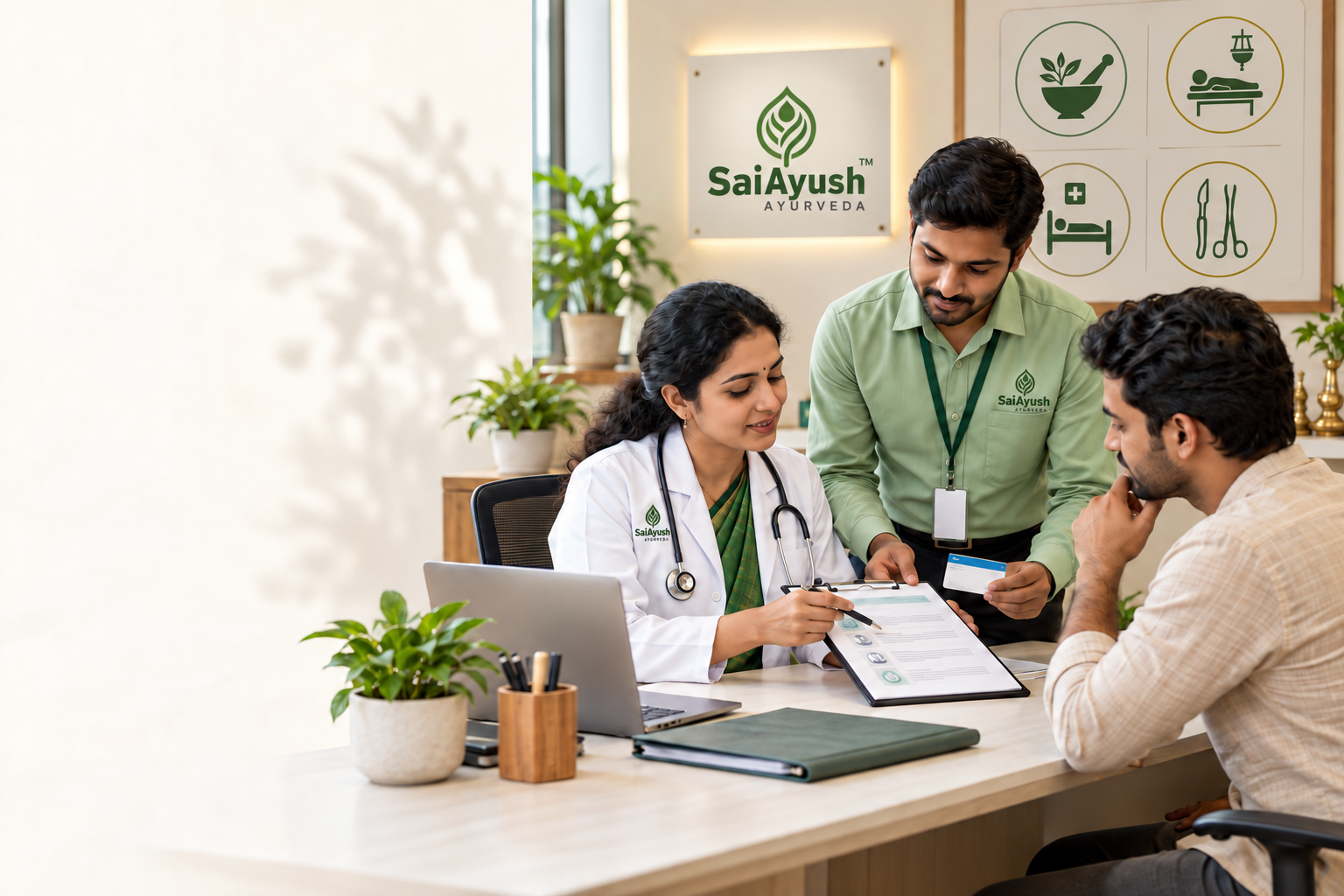
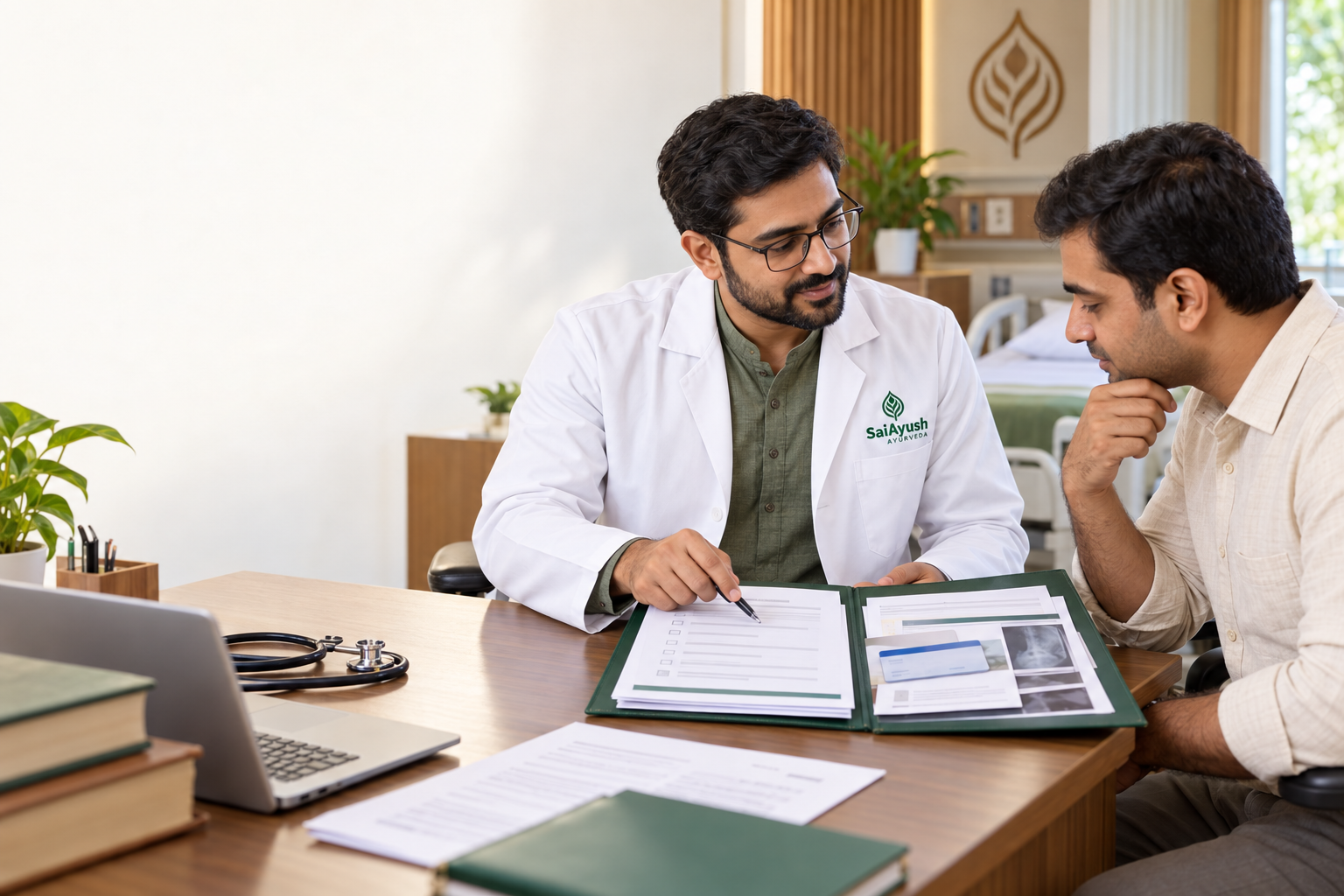
Admission day is mostly assessment, orientation, and settling in — active therapies usually begin from day two. When you arrive at Sai Ayush Ayurveda Hospital KPHB, a senior Ayurvedic physician conducts a detailed consultation: your medical history, current reports, medications, Prakriti (constitution) assessment, and pulse examination. Based on this, your doctor finalises your treatment plan under our integrated ANP³ Method™, which combines Ayurveda, Naturopathy, and Panchakarma in one coordinated protocol.
You'll then be shown to your room, briefed on the daily schedule and meal plan, and given time to rest. If you've already had an outpatient consultation at our Madinaguda clinic, your case notes travel with you, so admission at KPHB is faster.
How long does an inpatient Ayurveda stay last?
Most residential programs run 7, 14, or 21 days, and your doctor decides the duration based on your condition — not a fixed menu. Short 7-day stays suit stress recovery, digestive resets, and milder complaints. Chronic conditions such as long-standing joint pain, neurological issues, or lifestyle disorders often need 14–21 days, because classical Panchakarma works in phases: preparation (Purvakarma), the main cleansing therapies, and recovery. Cutting the recovery phase short reduces the benefit, which is why we recommend committing to the full advised duration where possible.
What does a typical day look like?
Your day is fully scheduled but unhurried — therapies in the morning, rest and lighter activity later. A representative day at KPHB looks like this (your plan is individualised, so timings and therapies vary):
| Time. | |
| 6:30 am | Wake-up, herbal water, morning hygiene routine |
| 7:00 am | Yoga, pranayama, or guided meditation (*Video will be provided) |
| 8:00 am | Doctor's rounds — daily review of your progress |
| 8:30 am | Ayurvedic breakfast as per your diet plan |
| 9:30 am – 12:30 pm | Main therapy session(s) — e.g., Abhyanga, Kati Basti, Shirodhara, or Panchakarma procedures |
| 1:00 pm | Lunch (freshly prepared, dosha-appropriate) |
| 2:00 – 4:00 pm | Mandatory rest |
| 4:30 pm | Second session — naturopathy, physiotherapy, or supportive therapy |
| 6:00 pm | Evening walk, meditation, or health education as per Required |
| 7:30 pm | Light early dinner |
| 9:30 pm | Lights out — early sleep is part of the treatment |
Mobile use isn't banned, but you'll be encouraged to reduce screen time, especially around therapies and sleep.
What should I pack?
Pack light — the hospital provides most of what treatment requires. A sensible list:
- Loose, comfortable cotton clothing (older sets are ideal; therapy oils can stain)
- Personal toiletries, slippers or easy footwear
- All current medical reports, prescriptions, and medicines you take
- ID proof and any insurance documents
- A book, journal, or light reading — you'll have genuine downtime
- A shawl or light sweater (rooms are kept comfortable; post-therapy you're advised to stay warm)
Leave behind: heavy work commitments, junk food, and — as far as possible — the expectation of a "hotel holiday." This is a hospital stay designed around healing, with comfort built in but discipline at its core.
Is the stay comfortable? What are the rooms and food like?
Yes — rooms at KPHB are clean, private or semi-private, and designed for rest, with attached facilities and housekeeping. Comfort here means quiet, cleanliness, and care rather than luxury resort trimmings. Food is a core part of treatment: every meal is freshly prepared to your prescribed diet — typically warm, light, easily digestible, and adjusted to your dosha and therapy phase. Outside food is discouraged during the program because diet directly affects how well therapies work.
Can my family visit or stay with me?
Yes, family can visit during designated visiting hours, and an attendant can usually stay with patients who need support — for example, elderly patients or those with limited mobility. Attendant arrangements depend on room category and availability, so confirm this at booking. [verify current visiting hours and attendant policy with KPHB front desk]
One important clarity for first-timers: all admissions, inpatient care, and residential programs are at our KPHB hospital only. Our Madinaguda branch is a consultation clinic — you can begin your journey there with an outpatient consultation, but stays happen at KPHB.
What therapies will I receive?
Your doctor selects therapies for your condition — you don't pick from a menu. Depending on your plan, a stay may include Abhyanga (therapeutic oil massage), Swedana (herbal steam), Shirodhara, Kati Basti for back complaints, Nasya, medicated Basti, and other classical Panchakarma procedures, alongside naturopathy, diet therapy, and yoga under the ANP³ Method™. For a deeper explanation of the cleansing process itself, read our guide to what Panchakarma involves.
How much does an inpatient stay cost?
Costs depend on three things: duration (7/14/21 days), room category, and the therapies your plan requires — so the honest answer is a personalised quote after consultation. Program pricing is published and explained transparently on our Ayurveda inpatient packages in Hyderabad page, and typically includes accommodation, meals as per your diet plan, daily therapies, and physician monitoring. [verify current package inclusions and price bands before publishing] Some patients have successfully used health insurance for inpatient AYUSH treatment; our team assists with documentation — check your policy's AYUSH coverage.
Is inpatient Ayurveda treatment safe?
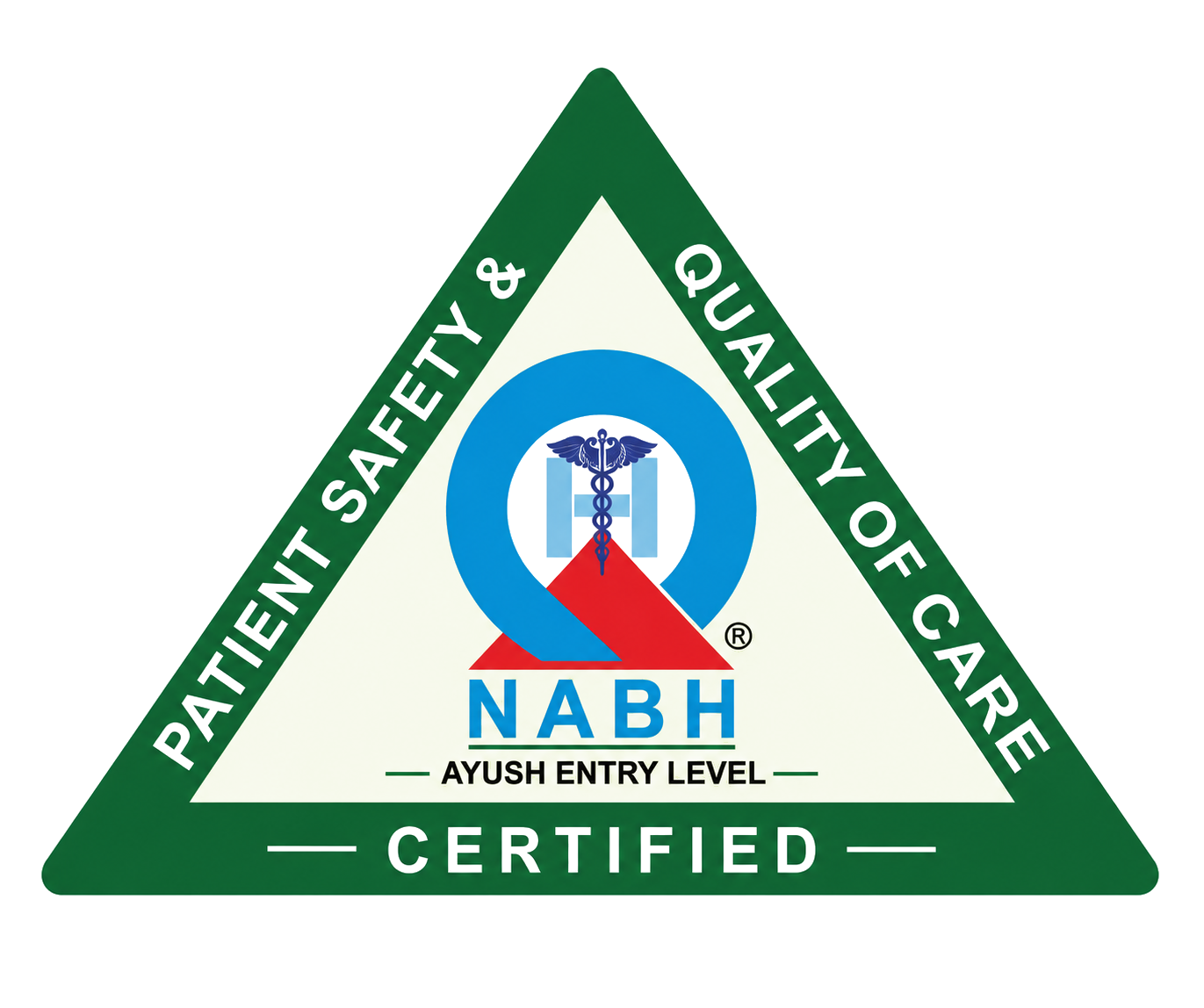
Yes, when conducted by qualified physicians in a certified facility — supervision is exactly what an inpatient setting provides. Sai Ayush Ayurveda Hospital is NABH certified and DMHO Telangana registered, staffed by senior Ayurveda doctors, and was recognised as a Best Ayurveda Hospital in 2025. Every therapy is prescribed and monitored by a physician, with daily rounds to adjust your plan. The Ministry of AYUSH, Government of India, regulates and standardises Panchakarma practice in India [verify source: ayush.gov.in guidelines], and published clinical literature describes Panchakarma as a supervised, protocol-based detoxification and rejuvenation approach [verify source: peer-reviewed review, e.g., Journal of Ayurveda and Integrative Medicine / NCBI].
Ayurvedic care works best as a complement to, not a replacement for, necessary conventional treatment. Always disclose your full medical history and continue prescribed medications unless your doctors advise otherwise.
How do I prepare and book an admission?
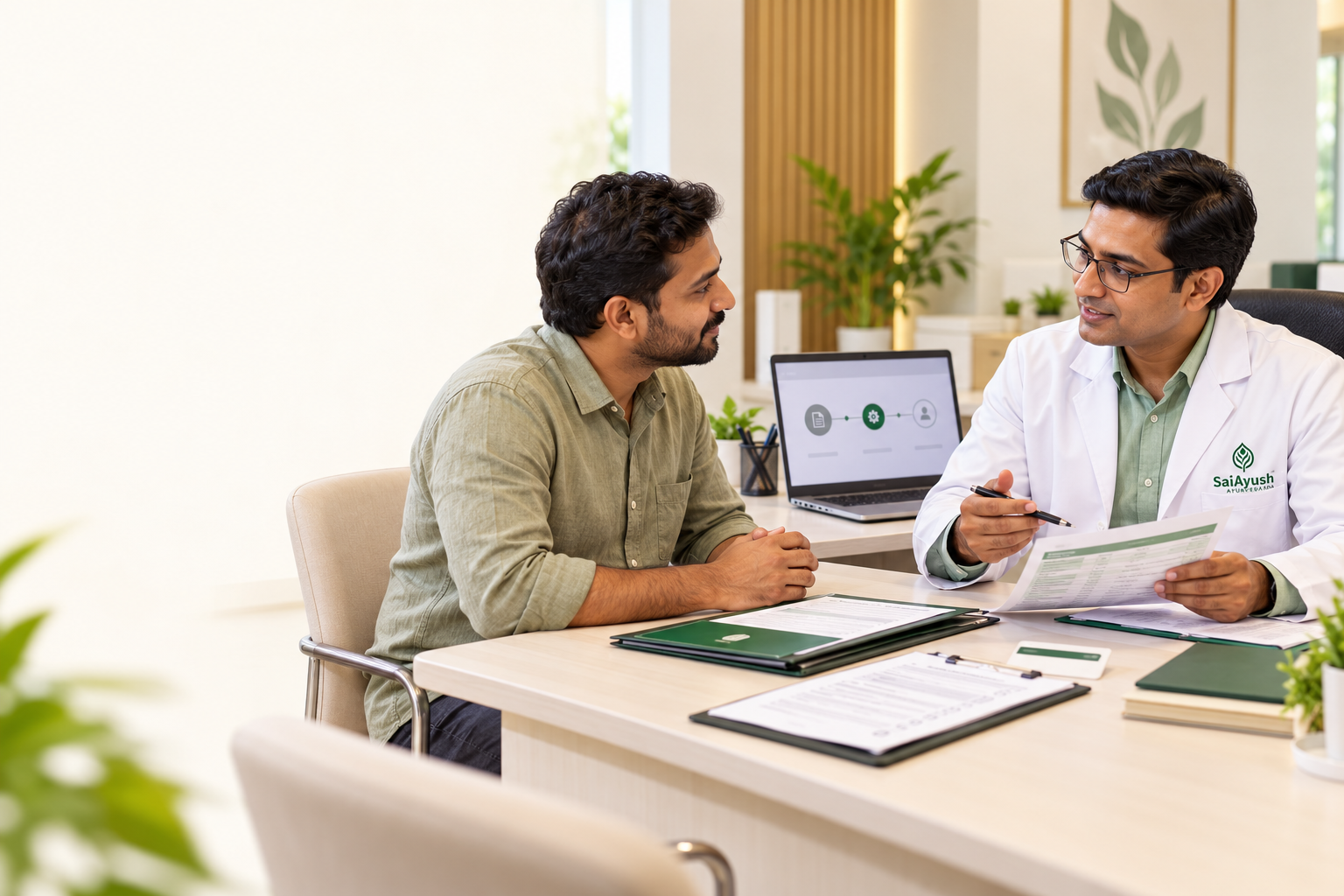
Start with a consultation — online or offline — so a doctor can confirm you're a good candidate and recommend a duration. You can consult at Sai Ayush Ayurveda Hospital KPHB (☎ +91 81423 28080) or take an outpatient consultation at our Madinaguda clinic (☎ +91 84668 82266); admission itself is arranged at KPHB. We serve patients from across Hyderabad, including Miyapur, Kukatpally, Hitech City, and Gachibowli. Before admission, your doctor may advise light eating, adequate hydration, and pausing certain habits for a few days.
Ready to take the next step? Explore our Ayurveda inpatient packages in Hyderabad or call KPHB at +91 81423 28080 to schedule your pre-admission consultation — online and offline consultations available, Mon–Sun, 7 am–10 pm.
Frequently Asked Questions
How many days should a first-timer stay at an Ayurveda hospital? Most first-time inpatients start with a 7-day program, which allows a meaningful reset without a long commitment. Chronic conditions usually need 14–21 days; your doctor will recommend the right duration after assessment.
Can I use my phone and laptop during the stay? Yes, devices aren't banned, but limited use is encouraged, especially during therapy hours and before sleep. Reduced screen time is part of what makes the stay restorative.
Will I be hungry on the Ayurvedic diet? No — meals are light but complete and served at regular times. The diet is designed to strengthen digestion, and most patients report feeling lighter and more energetic, not deprived.
Can I be admitted at the Madinaguda branch? No. Madinaguda is an outpatient consultation clinic only. All admissions and residential programs take place at the KPHB hospital, and our Madinaguda doctors can refer you there seamlessly.
Do I need a referral or prior tests before admission? No referral is needed, but bring any recent medical reports you have. The admitting physician will review them and may advise basic tests if required for safe treatment planning.
Is inpatient Ayurveda treatment covered by insurance? Many Indian health policies now include AYUSH inpatient coverage, but terms vary by insurer. Check your policy and our team will assist with the required documentation.
What happens after discharge? You'll leave with a written diet and lifestyle plan, any prescribed medicines, and scheduled follow-up consultations — in person or online — to help the benefits last.
Disclaimer: This article is for general information only and is not a substitute for professional medical advice. Ayurvedic treatment outcomes vary by individual. Please consult a qualified physician before starting any treatment program.
Reviewed by Dr. Pasalapudi Visalaanjani, B.A.M.S, MD (Kayachikitsa), Reg. No: 1146/A/2016 Dr. Visalaanjani is a senior Ayurvedic physician at Sai Ayush Ayurveda Hospital, Hyderabad, specialising in Kayachikitsa (internal medicine) and classical Panchakarma. She oversees inpatient treatment planning at the KPHB hospital, guiding patients through residential programs under the ANP³ Method™.
Sources:
- Ministry of AYUSH — Panchakarma standards/guidelines → https://ayush.gov.in [verify exact guideline URL]
- Peer-reviewed overview of Panchakarma, Journal of Ayurveda and Integrative Medicine (via NCBI/PubMed)
- WHO Traditional Medicine Strategy → https://www.who.int [verify exact page]
Medically Reviewed By
Dr. Pasalapudi Visalaanjani, B.A.M.S, MD (Kayachikitsa), Reg No: 1146/A/2016
Updated on september 10, 2026