Residential Ayurveda Support for Weight and Lifestyle Management
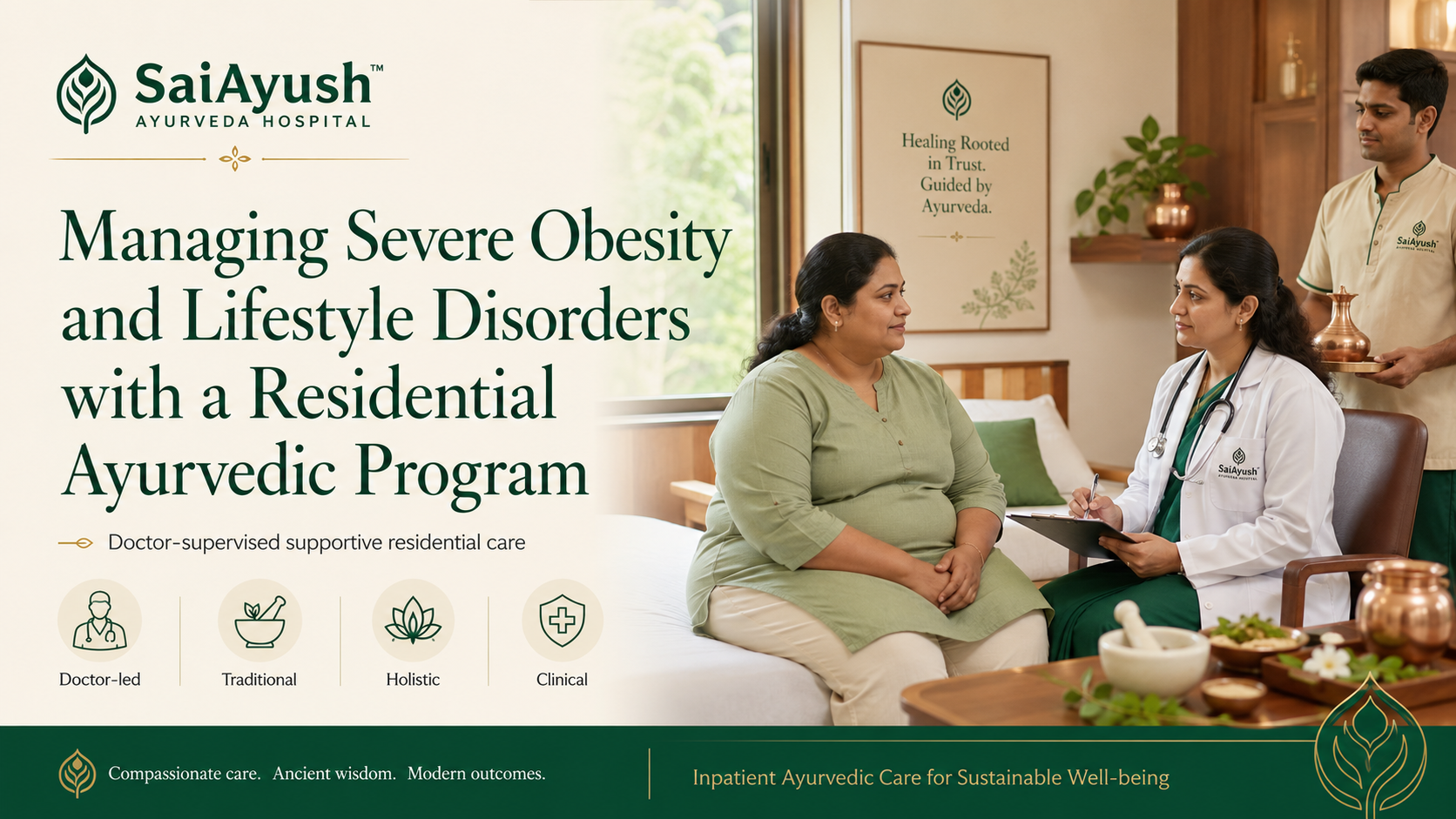
A residential Ayurvedic program manages severe obesity and lifestyle disorders through a supervised 2–3 week inpatient stay combining classical therapies like Udvartana and Virechana, a physician-controlled diet, structured yoga, and daily monitoring. At Sai Ayush Ayurveda Hospital, KPHB (Hyderabad), these programs follow the integrated ANP³ Method™ — Ayurveda, Naturopathy, and Panchakarma in one coordinated protocol.
If you've tried diets, gym memberships, and scattered clinic visits without lasting change — and especially if obesity now travels with diabetes, high blood pressure, or fatty liver — this guide explains honestly what a residential reset involves, why the inpatient format matters, and what results you can realistically expect.
Why do outpatient visits often fail for severe obesity?
Because obesity and metabolic disorders are 24-hour conditions, and outpatient care can only influence one hour a week. Between appointments, the patient returns to the same food environment, the same sleep debt, the same stress — the very inputs driving the condition. The World Health Organization classifies obesity as a chronic, complex disease requiring sustained, multi-component management, not one-off interventions [verify source: WHO obesity fact sheet, who.int]. India's metabolic burden makes this urgent: the ICMR-INDIAB study estimated over 100 million Indians living with diabetes and an even larger number with prediabetes and hypertension [verify source: ICMR-INDIAB, The Lancet Diabetes & Endocrinology, 2023].
A residential program removes that gap. For 14–21 days, every meal, therapy, movement session, and sleep cycle is part of the treatment — which is exactly what chronic metabolic disease responds to.
What is a residential Ayurvedic obesity program?
It is a doctor-designed inpatient protocol where you live at the hospital while your metabolism is systematically reset through therapy, diet, and routine. In Ayurvedic terms, obesity (Sthaulya) is understood as aggravated Kapha with impaired digestive fire (Agni) and accumulated Ama (metabolic residue) blocking the body's channels. The residential program works on all three simultaneously rather than chasing weight alone.
At Sai Ayush KPHB, the program is built under the ANP³ Method™ and typically includes:
- Udvartana — invigorating herbal powder massage that supports circulation and Kapha reduction, a signature therapy in classical weight management
- Virechana — supervised therapeutic purgation, one of the five classical Panchakarma cleanses, prescribed only after proper preparation
- Lekhana Basti — medicated enema therapy traditionally used in metabolic and obesity protocols
- Swedana — herbal steam therapy supporting the action of massage therapies
- A physician-controlled Kapha-pacifying diet — freshly prepared, portioned, and timed; no willpower battles with a fridge
- Daily yoga, pranayama, and naturopathy sessions graded to your fitness level
- Daily physician rounds with monitoring of weight, blood pressure, and blood sugar as relevant
Every element is prescribed individually after assessment — patients don't pick therapies from a menu. Read more about the underlying cleansing procedures on our Virechana page.
Who is this program for?
It is designed for adults with significant weight concerns and related lifestyle disorders — particularly where obesity coexists with type 2 diabetes, hypertension, fatty liver, PCOD, joint strain, or chronic fatigue. It suits people who have plateaued with outpatient efforts and can commit 2–3 weeks to an immersive reset. Working professionals from across Hyderabad — Miyapur, Kukatpally, Hitech City, and Gachibowli — increasingly choose this format precisely because it removes the daily-life friction that defeats outpatient plans.
An honest boundary: for very severe obesity with serious complications, Ayurvedic residential care works best as part of a broader medical plan. Our physicians assess every candidate first and will tell you plainly if you need parallel conventional care — including continuing your existing diabetes or BP medications under supervision.
How is a residential program different from outpatient treatment?
The difference is control of variables, therapy depth, and monitoring density. A comparison:
| Factor | Outpatient visits | Residential program (KPHB) |
| Duration of influence | 1–2 hours per visit | 24 hours a day, 14–21 days |
| Diet | Advice sheet, self-managed | Every meal prepared and portioned by the hospital |
| Therapies possible | Single sessions (e.g., massage) | Full Panchakarma sequences requiring preparation, procedure, and recovery phases |
| Monitoring | Weekly at best | Daily physician rounds; weight, BP, sugar tracked |
| Routine & sleep | Unchanged home habits | Structured 6:30 am–9:30 pm therapeutic routine |
| Medication adjustments | Delayed between visits | Reviewed daily as parameters change |
Therapies like Virechana genuinely cannot be done as walk-in sessions — they require days of internal preparation (Snehana, Swedana) and a controlled recovery diet (Samsarjana Krama). Only an inpatient setting delivers them safely and fully.
What does a typical treatment arc look like?
A 21-day program moves through three phases: preparation, main therapies, and stabilisation.
- Days 1–2 — Assessment and settling in. Detailed consultation, Prakriti evaluation, review of reports and medications, baseline measurements, program finalisation.
- Days 3–7 — Purvakarma (preparation). Udvartana, Swedana, internal oleation as prescribed; diet transitions to the therapeutic plan; yoga begins gently.
- Days 8–14 — Main cleansing phase. Virechana and/or Basti courses as suited to your constitution, with close monitoring and mandated rest.
- Days 15–21 — Rasayana and stabilisation. Rejuvenative support, graded activity increases, diet broadens carefully, and you're coached on the home routine that protects your results.
Shorter 14-day programs compress this arc for suitable candidates; your doctor decides. For the practical side of any stay — what to pack, rooms, food, visiting hours — see our first-timer's guide to an Ayurveda hospital stay.
What results can I realistically expect?
Expect meaningful, measurable change — not miracles. Most patients see gradual weight reduction during the program itself, but the more clinically important shifts are often in the accompanying disorders: steadier blood sugar readings, improved blood pressure trends, better sleep, lighter digestion, reduced joint load, and restored energy. Individual outcomes vary with starting condition, adherence, and duration, and no ethical hospital will promise a specific number of kilograms.
The honest value of the residential format is the trajectory change: you leave with a recalibrated appetite, a demonstrated routine, a written diet-and-lifestyle plan, and scheduled follow-ups — the infrastructure for the months after discharge, which is where lasting results are actually built. Patients managing diabetes or hypertension continue with structured Ayurvedic support for diabetes and follow-up consultations after discharge.
Is a residential Ayurvedic program safe for someone with diabetes or high BP?
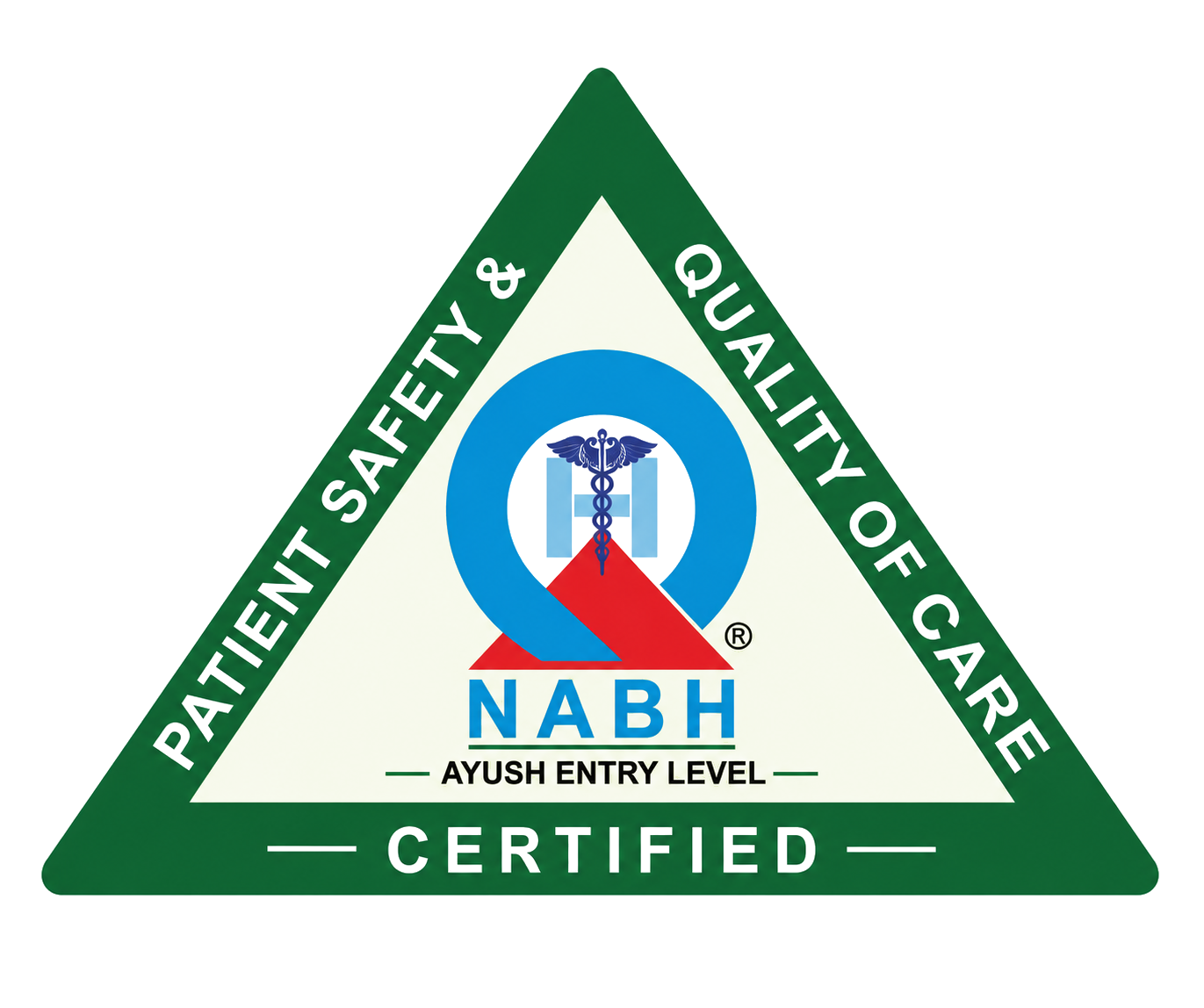
Yes — with supervision, which is precisely what the inpatient format provides. Sai Ayush Ayurveda Hospital is NABH certified and DMHO Telangana registered, staffed by senior Ayurveda doctors, and was recognised as a Best Ayurveda Hospital in 2025. Patients with diabetes or hypertension are monitored daily; existing medications are never stopped abruptly, and any adjustment happens gradually, based on measured parameters, in coordination with your treating physicians. Cleansing therapies are prescribed conservatively for metabolic patients and skipped where contraindicated. The Ministry of AYUSH regulates Panchakarma standards in India and published literature describes Ayurvedic multi-modal programs for obesity and metabolic syndrome as supervised, protocol-based interventions.
Where does the program happen, and how do I start?
All residential programs run at our KPHB hospital only — it is our inpatient facility with rooms, therapy suites, and the hospital kitchen. Our Madinaguda branch is an outpatient consultation clinic: you can begin there with a consultation (Madinaguda clinic, ☎ +91 84668 82266), and if a residential program is advised, admission is arranged at KPHB (☎ +91 81423 28080).
Starting is simple: book a consultation — online or offline — so a physician can assess whether you're a candidate and recommend a duration. Explore our Ayurvedic obesity treatment in Hyderabad page for the clinical program details, or view current residential Panchakarma packages for durations and inclusions.
Ready for a genuine reset? Book an appointment or call KPHB at +91 81423 28080 — consultations available online and offline, Mon–Sun, 7 am–10 pm.
Frequently Asked Questions
How long is the residential obesity program? Typically 14 or 21 days, decided by the physician after assessment. Severe or long-standing metabolic conditions generally benefit from the full 21-day arc because classical cleansing therapies need preparation and recovery phases.
How much weight will I lose? It varies by individual, and we deliberately don't promise numbers. Patients typically see gradual weight reduction plus improvements in blood sugar, blood pressure, digestion, and energy — with a structured plan to continue progress after discharge.
Can I join if I'm on diabetes or blood pressure medication? Yes. Bring all current prescriptions; medications continue under daily monitoring and are never stopped abruptly. Any adjustment is gradual and based on measured readings.
Is this a spa or a hospital program? A hospital program. Therapies are medically prescribed, the diet is treatment, and physicians round daily. It is comfortable and restorative, but its purpose is clinical.
Can the program be done at the Madinaguda branch? No. Madinaguda is an outpatient consultation clinic only. All residential programs, admissions, and stays take place at the KPHB hospital, and Madinaguda doctors can refer you there seamlessly.
Is Virechana compulsory in the program? No. Every therapy is prescribed individually. If a cleansing procedure isn't suitable for your constitution or condition, the physician substitutes gentler therapies within the same program.
What happens after I go home? You leave with a written diet and lifestyle plan, any prescribed herbal medicines, and scheduled follow-up consultations — in person at KPHB or Madinaguda, or online — to consolidate and extend your results.
Disclaimer: This article is for general information only and is not a substitute for professional medical advice. Obesity, diabetes, and hypertension are serious medical conditions; individual outcomes from Ayurvedic treatment vary. Please consult a qualified physician before starting, changing, or stopping any treatment or medication.
4. AUTHOR / REVIEW BYLINE
Reviewed by Dr. Pasalapudi Visalaanjani, B.A.M.S, MD (Kayachikitsa), Reg. No: 1146/A/2016 Dr. Visalaanjani is a senior Ayurvedic physician at Sai Ayush Ayurveda Hospital, Hyderabad, specialising in Kayachikitsa (internal medicine) with a focus on metabolic and lifestyle disorders. She designs and supervises residential treatment protocols at the KPHB hospital under the ANP³ Method™.
Last reviewed: July 2026
Medically Reviewed By
Dr. Pasalapudi Visalaanjani, B.A.M.S, MD (Kayachikitsa), Reg No: 1146/A/2016
Updated on september 09,2026