

Why does neck pain come back again and again?
Neck pain is one of those health problems that many people try to ignore in the beginning. A little stiffness after sitting for long hours at a desk, pain after looking at a phone, discomfort upon waking up, or a pulling sensation after travel may look small at first. But when neck pain keeps returning every few weeks or months, it usually means the cervical spine, muscles, nerves, posture, or lifestyle pattern needs proper attention.
For some people, neck pain is mainly muscular. For others, it may be linked with cervical spondylosis, disc bulge, pinched nerves, arthritis, stress, poor sleep, or long hours in front of screens. The correct approach depends on the cause, severity, age, work routine, medical history, and whether pain is spreading down the arms.
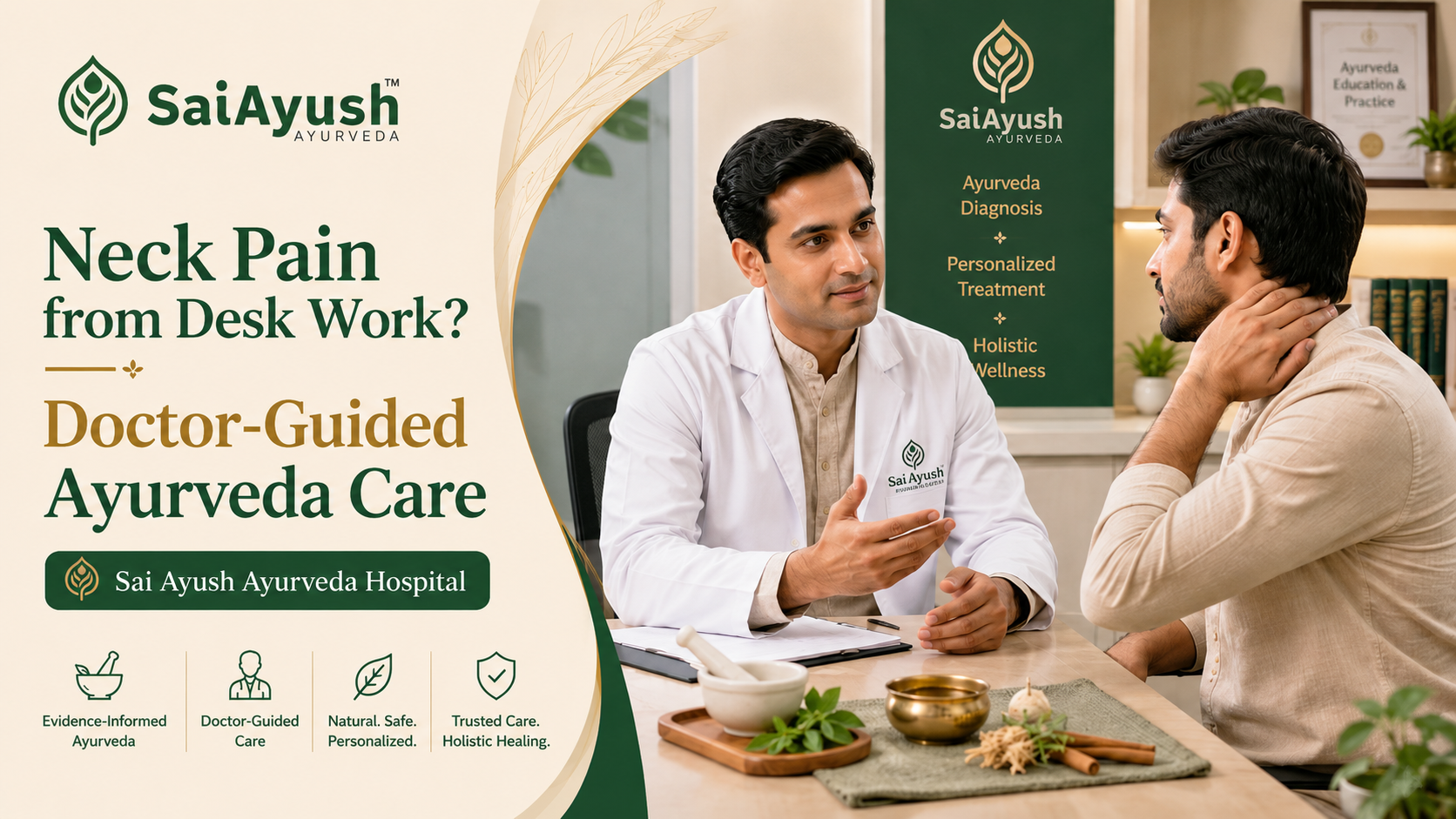
At Sai Ayush Ayurveda Hospital, Hyderabad, neck pain care is planned after physician assessment. Instead of using the same therapy for everyone, the focus is on understanding the pattern of pain and giving doctor-guided Ayurvedic care where suitable. You can also read our detailed treatment page here: Ayurvedic Neck Pain Treatment in Hyderabad.
Common reasons your neck pain may be recurring
Recurring neck pain is not always due to one single reason. In many people, two or three factors combine and slowly increase pain.
1. Tech neck and poor posture
People working in offices, using laptops on beds, or looking down at smartphones often keep the cervical spine in a strained position. Bending the neck forward for long periods can tighten the neck and upper back muscles. Over time, this may increase pressure on the cervical discs.
Simple correction like raising screen height, taking short breaks, and avoiding looking down for long continuous periods can reduce daily strain.
2. Weak neck and shoulder muscles
The cervical spine needs support from the surrounding neck and shoulder muscles. When these muscles are weak or tense, the neck takes extra load. This is one reason pain may reduce temporarily and then return after work pressure, carrying heavy bags, or poor sleeping positions.
A doctor or physiotherapist may advise safe strengthening exercises depending on the condition. Exercises should not be started blindly if there is severe pain, arm numbness, recent injury, or diagnosed disc compression.
3. Disc-related pain
Cervical disc bulge or herniation may irritate nearby nerves and cause neck pain with arm pain, tingling, numbness, or weakness in the hands. Some people feel more pain while turning the head, coughing, or looking up.
If your MRI mentions a cervical disc bulge, you may also read: Ayurvedic Treatment for Disc Bulge.
4. Cervical Radiculopathy (Radiating pain)
When pain travels from the neck to the shoulder, arm, or fingers, it may be related to cervical nerve root irritation. This type of pain should be evaluated properly, especially if it is associated with weakness, dropping objects, or loss of sensation in the fingers.
5. Age-related spine changes (Cervical Spondylosis)
Degenerative changes like cervical spondylosis can cause stiffness, morning pain, grinding sounds when turning the head, or discomfort after standing or reading. These changes are common with age, but the pain level varies from person to person.
Read more here: Ayurvedic Treatment for Cervical Spondylosis.
6. Stress, sleep, and lifestyle strain
Neck pain is heavily influenced by stress and tension. Mental stress often causes people to unconsciously tighten their neck and shoulder muscles. Poor sleep, using thick pillows, and irregular habits may worsen pain sensitivity and recovery. Many chronic pain patients feel more pain during stressful periods or after disturbed sleep.
This is why a long-term plan should include stress management, ergonomic guidance, and proper sleeping postures along with therapy.
When should neck pain not be ignored?
Most neck pain is not an emergency, but some symptoms need immediate medical attention. Do not delay medical care if you have:
-
Neck pain after a fall, accident, or injury
-
Weakness, numbness, or loss of sensation in the arms or hands
-
Pain with high fever, severe headache, or stiff neck that prevents bending forward
-
Difficulty walking or loss of balance
-
Severe pain that does not reduce with rest or prescribed care
-
Pain radiating down both arms simultaneously
These signs may need urgent conventional medical evaluation. Ayurveda can be supportive in suitable cases, but emergency warning signs should never be managed only with home remedies or massage.
Ayurvedic view of neck pain
In Ayurveda, many neck pain patterns (Manyastambha) are understood through Vata and Kapha imbalance, stiffness, dryness, restricted movement, and tissue weakness. However, every patient is different. One person may have muscular stiffness due to stress, another may have nerve irritation, and another may have degenerative spine changes.
That is why doctor evaluation is important before starting therapies. The physician may assess pain location, duration, movement restriction, lifestyle, digestion, sleep, and whether there are signs of nerve involvement.
At Sai Ayush Ayurveda Hospital, neck pain care may include physician-guided therapies such as Greeva Basti, Abhyanga, Swedana, Patra Pinda Sweda, and Nasya where clinically suitable. The exact plan depends on the patient’s condition and response.
How Ayurvedic therapies may support neck pain care
Greeva Basti
Greeva Basti is a local Ayurvedic therapy where warm medicated oil is retained over the back of the neck for a specific time. It is commonly used in Ayurveda practice for cervical stiffness, muscular tightness, and Vata-related pain patterns. It should be performed under trained supervision, especially in chronic or disc-related cases.
Abhyanga and Swedana
Therapeutic oil application and controlled fomentation may help relax tight shoulder and neck muscles, improve comfort, and prepare the body for further treatment. The oil, pressure, duration, and heat level should be selected carefully based on age, strength, inflammation, and pain severity.
Nasya
Nasya involves the administration of medicated oils or powders through the nasal passages. In Ayurveda, it is highly recommended for diseases above the collarbone (Urdhvajatrugata Roga) and is often used to relieve stiffness, headaches, and nerve-related issues in the cervical region.
Patra Pinda Sweda
This therapy uses herbal boluses with warmth and is often considered in stiffness-dominant musculoskeletal pain patterns. It helps reduce inflammation and improves mobility.
Why doctor-guided care matters
Neck pain patients often make three mistakes:
First, they take painkillers repeatedly without checking the cause.
Second, they go for random massage without knowing whether the pain is muscular, disc-related, nerve-related, or inflammatory.
Third, they stop care as soon as pain reduces, without correcting posture, muscle weakness, stress, or work habits.
A doctor-guided plan is safer because it helps identify whether the patient needs rest, therapy, physiotherapy, imaging review, lifestyle correction, Panchakarma, or referral for urgent care.
For broader spine-related services, visit: Pain & Spine Treatments in Hyderabad.
Practical daily tips to reduce neck strain
These tips are general and do not replace medical advice:
-
Keep your phone or book at eye level to avoid bending the neck forward.
-
Take frequent micro-breaks if you work on a computer. Do gentle neck stretches.
-
Use a supportive pillow that keeps your neck aligned with your spine. Avoid sleeping on your stomach.
-
Do not cradle the phone between your ear and shoulder. Use a headset or speakerphone.
-
Maintain good posture while sitting and walking. Roll your shoulders back and down.
-
Start exercise only after proper advice if you have disc bulge, nerve pain, severe pain, or recent injury.
-
Do not depend only on temporary pain relief. Correct the reason behind recurring pain.
Can Ayurveda help avoid surgery?
This question should be answered carefully. Not every neck pain case needs surgery. Many mild to moderate neck pain cases are managed with conservative care, movement correction, physiotherapy, lifestyle changes, and doctor-guided treatment. However, some severe cases with progressive neurological weakness, severe nerve compression, fracture, infection, tumor, or emergency signs may need urgent specialist care.
Ayurveda may support pain management, stiffness reduction, mobility, and long-term cervical spine care in suitable patients. But no ethical healthcare provider should promise guaranteed cure or guaranteed surgery avoidance without proper assessment.
Who may consider Ayurvedic neck pain consultation?
You may consider consultation if you have:
-
Repeated neck pain or stiffness
-
Pain radiating to the shoulders or arms
-
Chronic neck pain lasting more than a few weeks
-
Cervical spondylosis-related stiffness and discomfort
-
Mild to moderate disc-related pain without emergency signs
-
Stress-related muscle tension in the neck and upper back
-
Neck pain that keeps returning despite temporary relief
At Sai Ayush Ayurveda Hospital, KPHB and Madinaguda, the doctors evaluate the condition and suggest whether outpatient care, inpatient care, Panchakarma, physiotherapy support, or further medical evaluation is suitable.
To meet our physicians, visit: Ayurvedic Doctors in Hyderabad.
To book an appointment, visit: Contact Sai Ayush Ayurveda Hospital.
Final thoughts
Neck pain should not be treated casually when it keeps coming back. Temporary relief may help for a few days, but long-term comfort needs the right diagnosis, posture correction, muscle support, lifestyle improvement, and doctor-guided care.
Ayurveda offers a personalised approach for suitable neck pain patients, especially when therapies are selected after proper assessment. If your neck pain is recurring, radiating to the arm, causing headaches, or limiting your daily work, consult a qualified physician instead of depending on random home remedies.
For detailed treatment information, visit: Ayurvedic Neck Pain Treatment in Hyderabad.
FAQs
1. What is the most common reason for recurring neck pain?
Recurring neck pain may happen due to poor posture (like tech neck), weak muscles, disc issues, lifestyle strain, stress, or degenerative spine changes like cervical spondylosis. A doctor’s assessment helps identify the likely cause.
2. Is massage safe for neck pain?
Gentle massage may relax tight muscles, but it is not suitable for every neck pain case. If pain is due to disc compression, nerve involvement, injury, or severe inflammation, deep or random massage may worsen symptoms. Always take professional advice.
3. When should I see a doctor for neck pain?
You should consult a doctor if pain lasts more than a few days, keeps returning, spreads to the arm, causes numbness, affects balance, or is associated with fever, injury, or severe headache.
4. What is Greeva Basti used for?
Greeva Basti is an Ayurvedic local therapy commonly used for cervical stiffness and neck pain patterns. Warm medicated oil is retained over the neck to nourish tissues and relieve tension. It should be done under trained supervision after physician assessment.
5. Can neck pain be managed without surgery?
Many neck pain cases can be managed conservatively, depending on the cause and severity. However, emergency symptoms, severe nerve compression, progressive weakness, fracture, infection, or tumor-related pain may need urgent specialist care.
6. Does Sai Ayush offer inpatient care for neck pain?
Sai Ayush Ayurveda Hospital provides doctor-guided outpatient and inpatient care options depending on the patient’s condition, severity, and treatment plan. The doctor decides suitability after evaluation.