Utsadana Ayurveda Therapy: Procedure, Uses and Safety
Ayurveda describes different external therapies using medicinal oils, powders and herbal pastes. Utsadana is one such procedure. It generally involves applying and massaging a physician-selected herbal paste mixed with an appropriate oil or other prescribed liquid medium.
Utsadana is not simply a spa massage or cosmetic body scrub. The ingredients, consistency, direction of massage, pressure and duration should be selected after an Ayurvedic consultation. The available scientific evidence for its specific health effects remains limited, so it should not be promoted as a proven cure for disease.
What is Utsadana in Ayurveda?
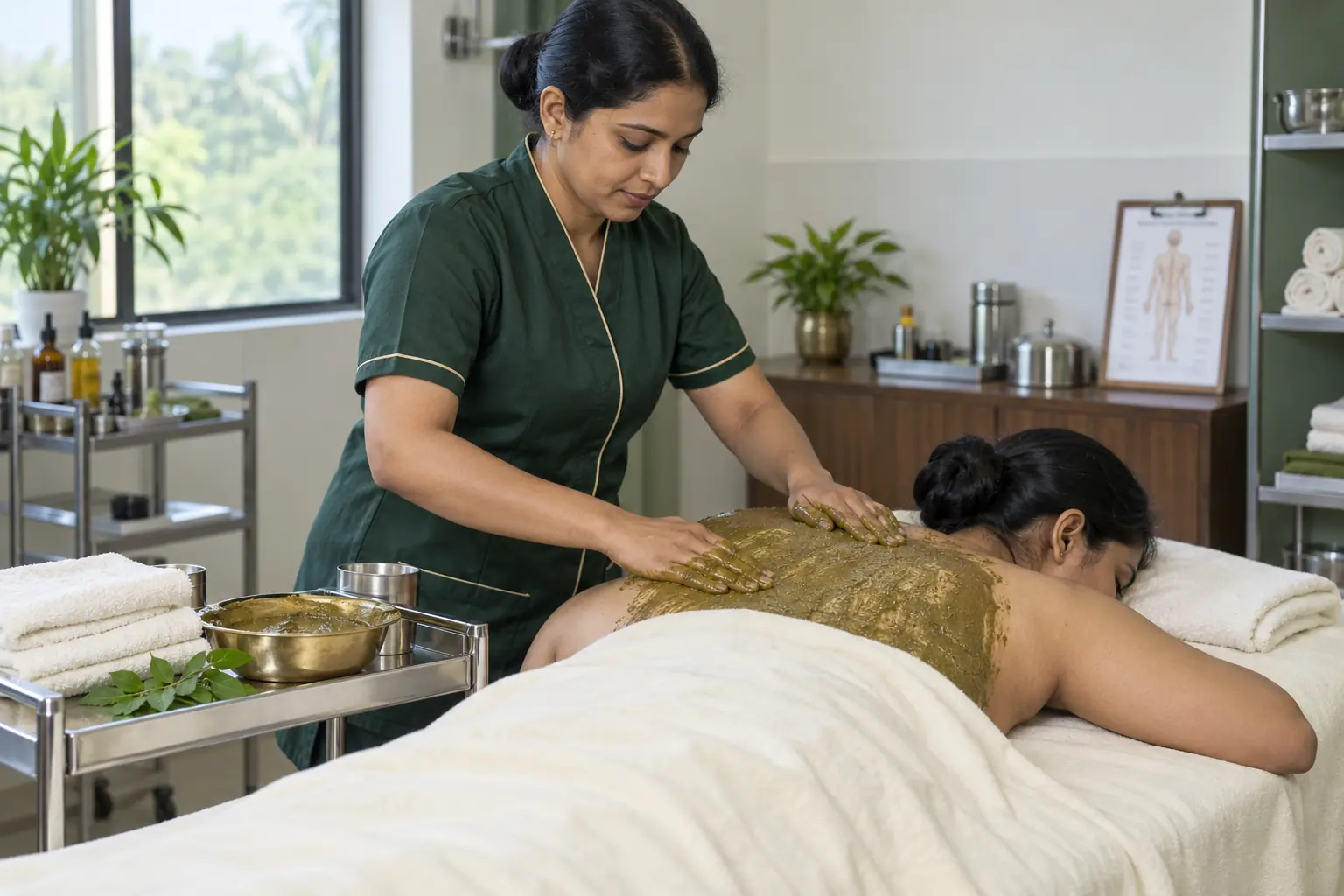
In the context of external body therapy, Utsadana is commonly described as massage using a soft herbal paste prepared with an unctuous substance such as medicated oil.
The word may also appear in Ayurvedic wound-care literature with a different meaning connected to the development of healthy granulation tissue. That specialised application is not the same as the general body therapy discussed here and must only be undertaken by appropriately qualified clinicians.
This article uses Utsadana to mean the non-invasive, external herbal-paste massage.
Is Utsadana the same as Udvartana?
The therapies are related, but they should not automatically be treated as identical.
Udwarthanam or Udvartana commonly uses dry or relatively dry herbal powders. Utsadana uses a softer paste in which herbs are combined with oil or another physician-selected medium.
The practical differences may include:
| FeatureUtsadanaUdvartana | ||
| Primary material | Herbal paste with oil or prescribed liquid | Usually dry or minimally lubricated herbal powder |
| Texture | Soft and unctuous | Dry or comparatively coarse |
| Pressure | Usually gentle to moderate | May involve more friction |
| Selection | Based on skin, constitution and clinical assessment | Based on the purpose and physician’s assessment |
Terminology and technique can vary between Ayurvedic traditions. Patients should ask the treating physician to explain exactly what will be used and why.
Why may an Ayurveda physician recommend Utsadana?
In traditional practice, a physician may consider Utsadana as part of an individualised external-care plan when an oil-based herbal paste is considered more suitable than a dry powder application.
Traditional objectives may include:
- Supporting skin comfort and softness
- Providing a gentle external oleation effect
- Reducing the excessive dryness caused by dry powder rubbing
- Supporting relaxation and general physical comfort
- Preparing or supporting another prescribed Ayurvedic procedure
These are traditional uses and treatment intentions. They should not be interpreted as proof that Utsadana detoxifies the body, causes weight loss, treats obesity or cures a medical condition.
How is Utsadana performed?
The exact procedure depends on the physician’s prescription and the hospital’s clinical protocol. A supervised session may include the following stages.
1. Medical assessment
Before recommending the therapy, the Ayurveda physician may review:
- The patient’s main health concern
- Skin type and current skin condition
- Allergies and sensitivities
- Existing wounds, infections or inflammation
- Current medicines and medical treatment
- Pregnancy or recent surgical history
- The patient’s ability to tolerate massage and warmth
The therapy should not be selected solely from a person’s body type or an online dosha questionnaire.
2. Selection of the herbal paste
The physician selects the ingredients and mixing medium. Herbal powders may be combined with an appropriate medicated oil or another prescribed liquid to produce a smooth paste.
There is no universal Utsadana formula suitable for everyone. Ingredients should not be chosen merely because they are described as natural.
3. Preparation of the patient
The patient is positioned comfortably in a private, hygienic therapy room. Appropriate draping should be maintained throughout the session.
At Sai Ayush, therapy should be provided by a trained same-gender therapist according to the physician’s written instructions.
4. Application and massage
The prepared paste is applied to the prescribed body area. Massage strokes, pressure and direction are adjusted according to the patient’s condition and tolerance.
The therapist should avoid excessive friction, injured skin, inflamed areas and other locations excluded by the physician.
5. Removal and aftercare
After the prescribed duration, the paste is removed gently. A warm bath or another follow-up procedure may be advised where clinically appropriate.
The patient should report persistent itching, burning, pain, dizziness or any unexpected reaction.
How does Utsadana differ from Abhyanga?
Abhyanga primarily involves the application and massage of a physician-selected oil. Utsadana uses a thicker herbal paste containing powdered ingredients and an unctuous medium.
Because the texture and level of friction differ, one therapy should not be substituted for the other without medical advice.
Can Utsadana help with weight loss?
Utsadana should not be advertised as a stand-alone weight-loss treatment or “fat-burning massage.”
Temporary changes in skin feel, sweating or body measurements after a massage do not establish loss of body fat. Sustainable weight management generally requires appropriate nutrition, physical activity, sleep, behavioural support and medical evaluation where necessary.
If Utsadana is included in a broader wellness plan, its purpose and limitations should be explained clearly.
Who may need to avoid Utsadana?
The therapy may be unsuitable or require additional medical clearance for people with:
- Fever or an acute illness
- Active skin infection or unexplained rash
- Open wounds, burns or recent surgical sites
- Known allergy to an ingredient
- Severe inflammation or painful swelling
- Uncontrolled medical conditions
- Bleeding disorders or medicines affecting bleeding
- Reduced skin sensation or peripheral neuropathy
- Pregnancy or the immediate postnatal period
- Recent fractures or acute musculoskeletal injuries
This is not a complete contraindication list. The treating physician must determine individual suitability.
Can Utsadana be performed at home?
Self-application using recipes found online is not recommended for treating a medical concern.
Herbal powders can irritate sensitive skin, and oils or other ingredients may trigger allergic reactions. Excessive pressure or friction can also worsen inflammation or damage the skin barrier.
A small patch test does not replace professional assessment, particularly when a person has eczema, psoriasis, neuropathy, allergies or another diagnosed condition.
Safety standards patients should expect
A professionally conducted Utsadana session should include:
- Consultation before the first session
- Clear identification of the ingredients
- Screening for allergies and contraindications
- Clean preparation vessels and therapy surfaces
- Appropriate privacy and draping
- A trained same-gender therapist
- Pressure adjusted to the patient’s comfort
- Immediate discontinuation if an adverse reaction occurs
- Documentation of the procedure and patient response
Avoid centres that guarantee weight loss, disease reversal, detoxification or permanent results from a fixed package.
Doctor-guided Utsadana care at Sai Ayush
At Sai Ayush Ayurveda Hospital, external Ayurvedic therapies are considered only after an assessment by a qualified Ayurveda physician. The doctor determines whether Utsadana, Udvartana, Abhyanga or another procedure is appropriate.
Patients can meet our Ayurvedic doctors for personalised assessment. Consultations are available at the Sai Ayush KPHB hospital and the Sai Ayush Madinaguda outpatient clinic.
A consultation does not guarantee that Utsadana will be recommended. The treatment plan depends on the patient’s condition, safety factors and clinical requirements.
Frequently asked questions
Is Utsadana painful?
It should not cause significant pain or persistent burning. Patients should immediately report discomfort so the therapist can stop or modify the procedure.
Does Utsadana use dry herbal powder?
Utsadana generally uses an oil-moistened herbal paste. A predominantly dry powder procedure is more commonly described as Udvartana or Udgarshana, although terminology may vary.
How long does a session take?
There is no single duration suitable for everyone. The physician determines the treated area, duration and number of sessions.
Can people with sensitive skin receive Utsadana?
Only after professional assessment. The physician may modify the ingredients or advise against the procedure when irritation or allergy risk is present.
Is Utsadana part of Panchakarma?
Utsadana is better described as an external Ayurvedic therapy. It may be used within a broader physician-directed treatment programme, but it is not one of the five principal Panchakarma procedures.
Key takeaway
Utsadana is an external Ayurvedic procedure that commonly uses a herbal paste mixed with oil or another prescribed medium. It differs from dry-powder Udvartana and oil-dominant Abhyanga.
Its ingredients and technique should be selected by an Ayurveda physician and administered by a trained therapist. Utsadana should be presented as individualised supportive care—not as a guaranteed method for detoxification, weight loss or disease treatment.
Medical disclaimer: This article is for general education and does not provide diagnosis or individual treatment advice. Suitability and outcomes vary. Consult a qualified healthcare professional before undergoing any Ayurvedic procedure.
Medically Reviewed By