
Know About Ayurvedic Padabhyanga Benefits (Foot Massage)
Padabhyanga is a traditional Ayurvedic practice in which oil is applied to the feet using controlled massage movements. It may be included in an individual care plan for relaxation, foot comfort or routine Ayurvedic wellbeing, but its suitability depends on the condition of the feet and the person’s medical history.
Padabhyanga should not be promoted as a treatment for insomnia, diabetic neuropathy, eye disease or another diagnosed medical condition. Evidence specifically evaluating Padabhyanga remains limited.
Contents
- What is Padabhyanga?
- Ayurvedic understanding of Padabhyanga
- How the procedure is performed
- Traditionally described benefits
- What scientific evidence can establish
- Who should avoid the procedure
- Possible side effects and precautions
- When medical assessment is necessary
- Frequently asked questions
What is Padabhyanga?
Padabhyanga combines two Sanskrit terms: pada, meaning foot, and abhyanga, referring to oil application with massage.
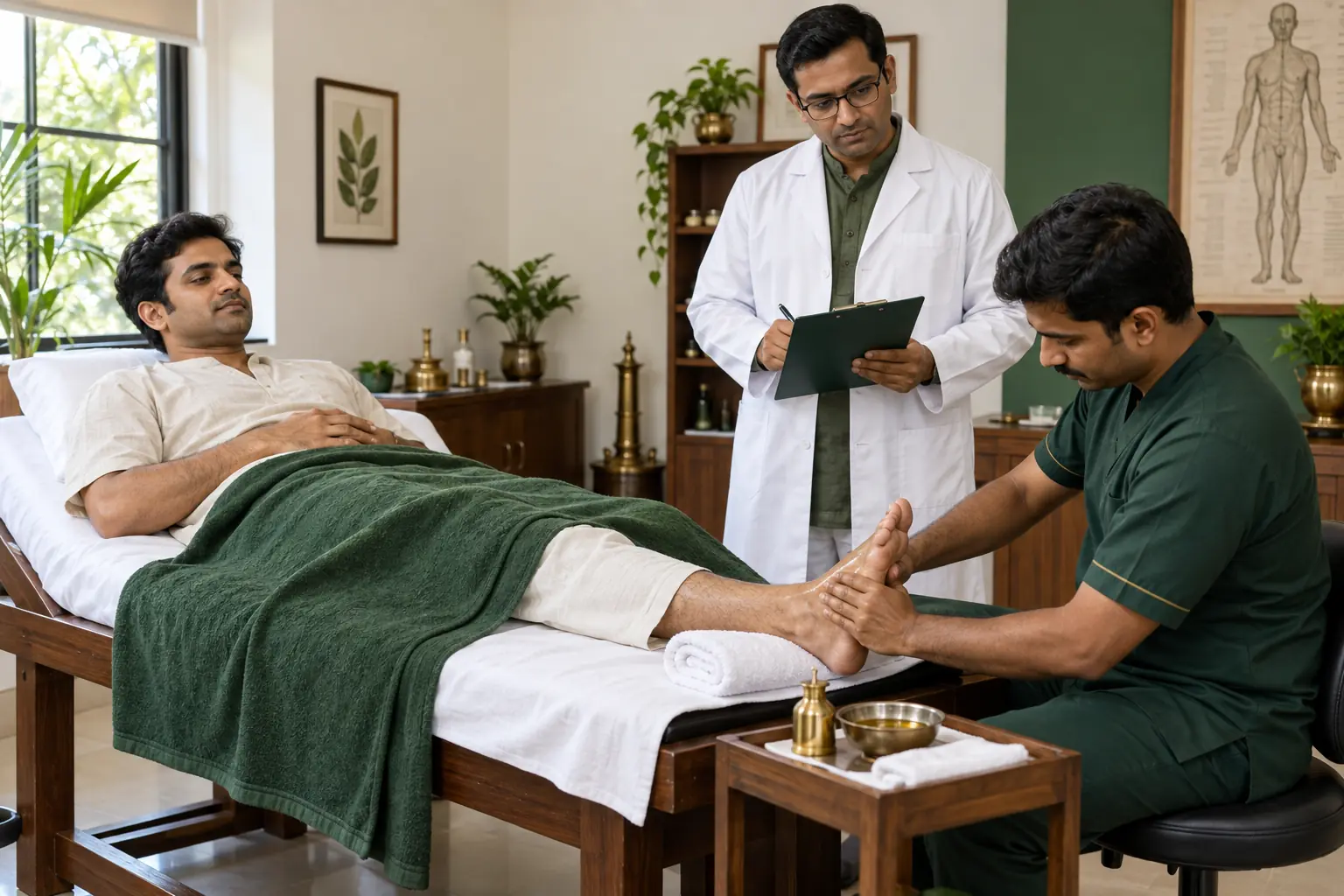
During the procedure, a selected oil is applied to the soles, heels, toes and, where appropriate, the ankles. The oil, pressure, movements and session duration should be selected according to the person’s skin condition, sensitivity, circulation, medical history and treatment plan.
Padabhyanga differs from a general spa foot massage because Ayurvedic clinical practice may consider the person’s constitution, symptoms and suitability before recommending it.
The traditional Ayurvedic perspective
Classical Ayurvedic practice includes oil application to the feet as part of external oleation and daily-care traditions. It is traditionally associated with comfort, reduced dryness and a sense of calm.
These are traditional explanations. They should not be presented as proof that Padabhyanga changes nerve function, improves eyesight, prevents diabetic complications or cures sleep disorders.
How is Padabhyanga performed?
The exact method varies. A supervised procedure may include the following stages.
1. Assessment
The physician or therapist reviews relevant concerns such as:
- Foot pain, numbness or altered sensation
- Diabetes or circulation problems
- Skin allergies
- Cracks, wounds or infection
- Recent injuries or surgery
- Current medicines and medical treatment
2. Preparation
The feet are inspected and cleaned. The patient is positioned comfortably with adequate support.
The oil must not be applied over open wounds, infected skin or areas where massage has been medically restricted.
3. Oil application and massage
A physician-selected oil may be warmed to a comfortable—not excessively hot—temperature. It is applied using gentle, controlled movements.
Pressure should be adjusted to the patient’s comfort and health condition. Vigorous pressure is not appropriate for every person.
4. Cleaning and observation
Excess oil is removed carefully. The patient should avoid walking on slippery floors immediately after the procedure.
Any persistent pain, burning, itching, dizziness or skin reaction should be reported.
What are the traditionally described Padabhyanga benefits?
Ayurvedic practice traditionally considers Padabhyanga for:
- Supporting relaxation
- Relieving a temporary feeling of tired feet
- Softening dry skin when an appropriate oil is used
- Providing comfort after routine standing or walking
- Supporting a calming bedtime routine for selected people
These are not guaranteed outcomes. Persistent foot discomfort may be caused by injury, arthritis, nerve problems, vascular disease, infection, diabetes or unsuitable footwear and requires appropriate evaluation.
What does current evidence show?
Research on massage suggests that it may provide short-term relaxation or symptom relief in some settings. However, results vary considerably according to the massage method, condition studied and quality of the research.
There is insufficient high-quality evidence to conclude that Padabhyanga specifically:
- Treats insomnia
- Improves eyesight
- Repairs damaged nerves
- Prevents diabetic foot ulcers
- Permanently heals cracked heels
- Treats vascular or neurological disease
The US National Center for Complementary and Integrative Health advises that massage should not be used to postpone medical care and that people with health conditions should discuss safety with a healthcare professional. NCCIH massage guidance
Who may not be suitable for Padabhyanga?
Avoid the procedure or obtain medical clearance if you have:
- Open wounds, ulcers or bleeding
- A suspected fungal or bacterial infection
- New redness, heat or swelling
- A recent fracture, sprain or foot surgery
- Severe unexplained pain
- Loss of sensation or diabetic neuropathy
- Peripheral arterial or significant vascular disease
- Suspected deep-vein thrombosis
- An allergy to the proposed oil
- A medical instruction to avoid massage
People with diabetes should not assume that foot massage is automatically safe. Reduced sensation may make it difficult to recognise excessive heat, pressure or skin injury.
Possible side effects and precautions
Possible problems include:
- Skin irritation or allergic reaction
- Discomfort from excessive pressure
- Burns from overheated oil
- Slipping due to residual oil
- Aggravation of an existing injury
- Cross-contamination when hygiene is inadequate
The therapist should use hygienic materials, test the oil temperature and adjust pressure throughout the session.
Do not stop prescribed medicines or replace podiatric, vascular, neurological or orthopaedic treatment with Padabhyanga.
When should you seek medical assessment?
Obtain prompt medical advice for:
- Sudden swelling in one foot or leg
- A hot, red or markedly painful foot
- An open wound, ulcer, pus or spreading redness
- A cold, pale, blue or numb foot
- New weakness or loss of sensation
- Foot symptoms following a significant injury
- Foot pain accompanied by chest pain or breathlessness
Unexplained one-sided swelling can require urgent assessment. NHS guidance on swollen feet and legs
What to expect during a Sai Ayush consultation
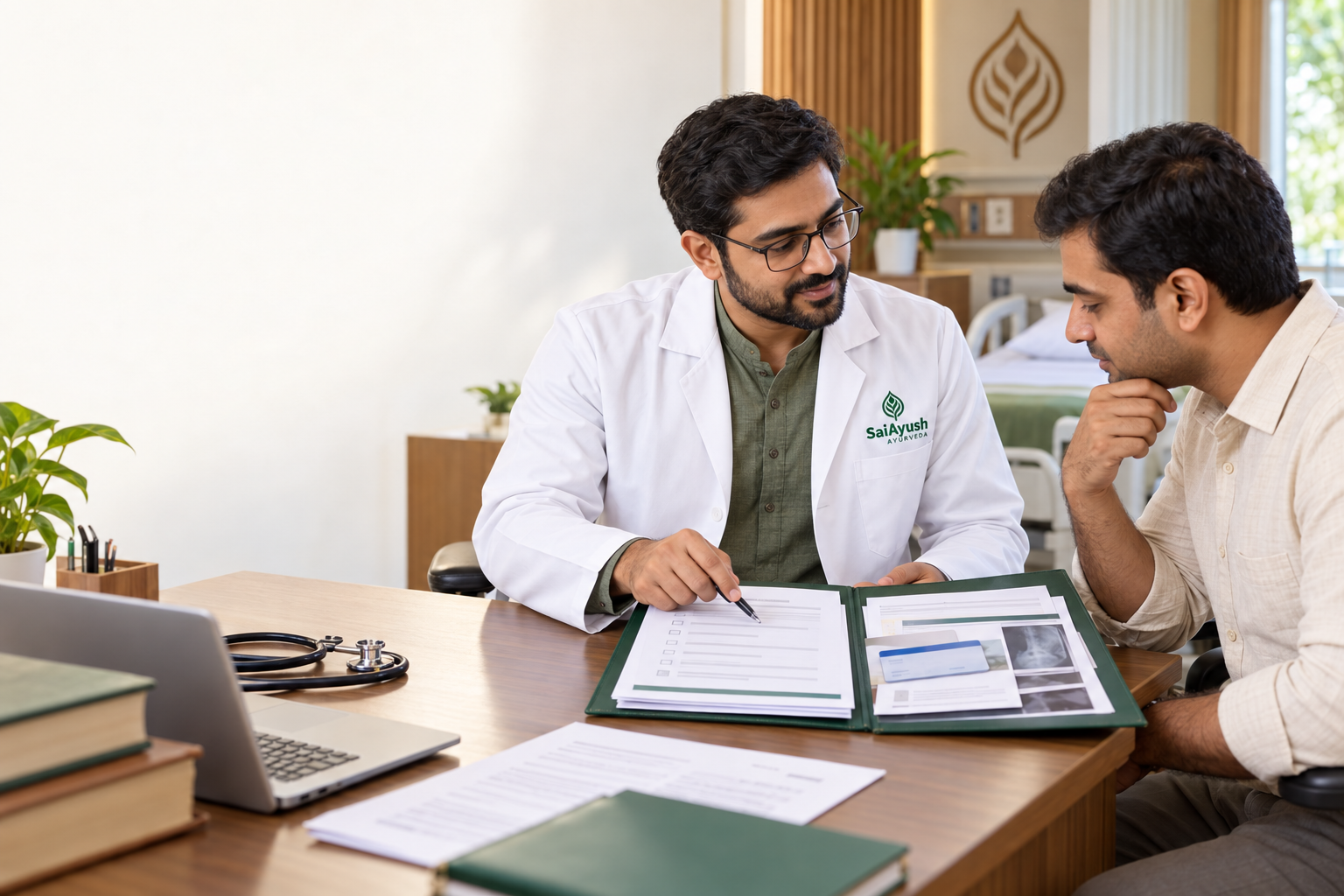
Before recommending Padabhyanga, an Ayurveda physician should review the patient’s symptoms, medical history, medicines, skin condition and treatment goals.
If the procedure is suitable, the physician determines the oil, pressure, duration and number of sessions. Padabhyanga may be performed as an individual external procedure or as one part of a broader physician-guided plan.
A consultation does not guarantee that the therapy will be recommended. Referral for conventional medical evaluation may be advised when symptoms suggest an underlying foot, nerve or circulation problem.
Frequently asked questions
Is Padabhyanga the same as a normal foot massage?
Not exactly. Padabhyanga is described within Ayurvedic practice and may involve a physician-selected oil and an individualised method. A general foot massage may be offered purely for comfort without an Ayurvedic assessment.
Can Padabhyanga improve sleep?
Some people may find massage relaxing, but Padabhyanga has not been established as a treatment for insomnia. Persistent sleep problems should be medically assessed.
Is Padabhyanga safe for diabetes?
Not automatically. Diabetes may cause reduced sensation, poor circulation or delayed wound healing. Medical clearance and careful foot inspection may be required.
Can I perform Padabhyanga at home?
Gentle self-application may be unsuitable when there is diabetes, numbness, injury, infection, swelling or broken skin. Do not use very hot oil or vigorous pressure, and seek professional guidance if you have an underlying condition.
Which oil is used?
There is no single oil suitable for everyone. Selection depends on the skin, allergies, symptoms and physician’s assessment. Avoid self-selecting medicated oils based only on internet advice.
Key takeaway
Padabhyanga is a traditional Ayurvedic oil application and massage for the feet. It may support relaxation or foot comfort for selected people, but its benefits should not be exaggerated.
Clinical assessment is particularly important when a person has diabetes, altered sensation, wounds, swelling, circulation problems or persistent pain.
To determine whether this procedure is appropriate, patients may review the doctor-supervised Padabhyanga service or consult a Sai Ayush Ayurveda physician.
Medical disclaimer: This article is for general education and does not diagnose or treat any condition. Suitability and outcomes vary. Seek qualified medical advice for persistent, worsening or unexplained foot symptoms.
Explore Padabhyanga foot massage therapy at Sai Ayush → Visit KPHB Hospital (IPD/OPD) Visit Madinaguda Clinic (OPD)