

Older adults and their families may consider Panchakarma for general wellbeing or as complementary support while managing long-term health concerns. However, age-related changes, multiple medical conditions, reduced physical reserve and the use of several medicines can affect whether a procedure is appropriate.
Panchakarma should therefore not be selected from an online package, symptom list or age-based recommendation. A qualified Ayurveda physician must first assess the person’s health, strength, mobility, medicines and ability to tolerate the proposed procedure.
Some older adults may be suitable for carefully modified supportive Ayurvedic care. Others may require medical clearance, a less intensive approach or avoidance of Panchakarma altogether.
This article explains the questions that should be considered before planning Panchakarma for an older adult. It does not recommend a particular procedure or replace medical assessment.
What does Panchakarma mean in older-adult care?
Panchakarma refers to a group of classical Ayurvedic procedures that may involve preparation, a physician-selected main procedure and a period of recovery.
It is not simply an oil massage or spa programme. Classical Panchakarma can place demands on hydration, digestion, mobility and general physical resilience. Procedures and preparation methods that may be tolerated by a healthy younger adult may be unsuitable for an older person with frailty or multiple medical conditions.
The decision should be based on an individual assessment rather than a standard package.
The physician must determine:
- Whether Panchakarma is appropriate at all
- Whether medical clearance is needed
- Which procedures, if any, may be considered
- Whether the procedure should be modified
- Whether outpatient or inpatient observation is more appropriate
- How hydration, nutrition, medicines and mobility will be managed
- When the procedure should be stopped or postponed
Not every older adult who requests Panchakarma will be advised to undergo it.
Is age alone the deciding factor?
No. Chronological age is important, but it is not the only factor.
Two people of the same age may have very different levels of strength, mobility, cognition and medical complexity. One may be independent and physically active, while another may have frailty, frequent falls or several uncontrolled health conditions.
A responsible assessment considers the person’s functional condition as well as age.
Factors that may influence suitability include:
- General strength and endurance
- Frailty or unexplained weight loss
- Ability to walk and transfer safely
- History of falls or dizziness
- Memory and ability to follow instructions
- Heart, kidney or liver function
- Blood-pressure stability
- Diabetes control
- Hydration and nutritional status
- Bowel and bladder function
- Current medicines and supplements
- Recent surgery, infection or hospital admission
- Availability of family or caregiver support
No procedure should be recommended only because it is described as “gentle,” “natural” or traditionally used.
Why is a medication review important?
Many older adults take medicines for more than one health condition. This may include medicines for blood pressure, diabetes, heart disease, thyroid conditions, sleep, pain, mood, blood clot prevention or neurological disorders.
Ayurvedic medicines, dietary restrictions, fasting, purgation or changes in fluid intake may interact with the person’s existing treatment plan or affect their ability to take medicines correctly.
Before recommending any programme, the Ayurveda physician should review:
- All prescribed medicines
- Non-prescription medicines
- Ayurvedic products already being used
- Vitamins and dietary supplements
- Known allergies or previous adverse reactions
- The purpose and timing of each medicine
- Recent changes made by another doctor
- Any difficulty swallowing or remembering medicines
Particular caution may be required when the person uses:
- Anticoagulant or antiplatelet medicines
- Blood-pressure medicines
- Diuretics
- Insulin or other diabetes medicines
- Sedatives or sleeping medicines
- Medicines affecting kidney or liver function
- Parkinson’s or other neurological medicines
- Immunosuppressive medicines
Do not stop, reduce, delay or reschedule prescribed medicine for Panchakarma unless the prescribing clinician provides instructions.
Being “natural” does not remove the possibility of interactions or adverse effects.
What should be assessed before Panchakarma?
A pre-procedure consultation should include more than an Ayurvedic constitutional assessment. The doctor should review the person’s complete health situation.
Medical history
The physician should ask about diagnosed conditions, previous surgeries, allergies, recent infections and hospital admissions.
Relevant medical records may include:
- Current prescriptions
- Recent blood-test reports
- Blood-pressure records
- Diabetes records
- Kidney and liver reports
- Cardiology or neurology reports
- Details of previous adverse reactions
Additional medical evaluation may be required when the existing records are incomplete or the person’s condition has changed.
Frailty and physical reserve
Frailty may affect how well an older person responds to dietary changes, fluid loss, heat exposure, prolonged positioning or an intensive procedure.
Possible signs include:
- Unintentional weight loss
- Persistent weakness or exhaustion
- Slow walking
- Reduced grip or muscle strength
- Difficulty recovering from minor illness
- Increasing dependence in daily activities
A frail person should not be placed into a demanding programme simply because a fixed package has already been selected.
Mobility and fall risk
The doctor should understand whether the person:
- Uses a walking stick, walker or wheelchair
- Needs assistance while standing or using the bathroom
- Experiences dizziness after standing
- Has fallen recently
- Has impaired vision
- Becomes confused in an unfamiliar environment
- Can safely get on and off a treatment table
Appropriate assistance and environmental safety are essential. Therapists should not attempt unsupported transfers beyond their training.
Hydration and nutrition
Older adults may be more vulnerable to dehydration, electrolyte disturbance and nutritional decline.
The physician should assess:
- Usual food and fluid intake
- Difficulty chewing or swallowing
- Poor appetite
- Recent weight loss
- Vomiting or diarrhoea
- Fluid restrictions prescribed for heart or kidney disease
- The ability to follow a recovery diet safely
A standard dietary plan should not override a diet prescribed for diabetes, kidney disease, heart disease or another medical condition.
Cognition and communication
The person should be able to understand the proposed procedure, expected discomforts, alternatives and possible risks.
Where memory or communication is impaired, the physician may need to involve a legally appropriate caregiver while still respecting the patient’s preferences and dignity.
Consent from a relative does not replace the need to involve the patient as much as possible.
When may Panchakarma require additional caution?
Panchakarma may be unsuitable, need postponement or require medical clearance when an older adult has:
- Uncontrolled blood pressure
- Unstable heart disease
- Significant kidney or liver disease
- Poorly controlled diabetes
- Acute infection or fever
- Active vomiting or diarrhoea
- Severe dehydration
- Recent surgery or hospitalisation
- Unexplained weight loss
- Severe anaemia or weakness
- Active bleeding or a bleeding disorder
- Frequent falls or severe balance impairment
- Open wounds or active skin infection
- Significant swallowing difficulty
- Severe cognitive impairment or delirium
- Inability to communicate discomfort
- A recent stroke or other acute neurological event
- A condition requiring urgent conventional treatment
This is not a complete contraindication list. The final decision must be made by the treating physician after reviewing the individual patient.
Does every older adult need a complete Panchakarma programme?
No. Panchakarma should not be presented as a routine requirement for healthy ageing or longevity.
Classical Panchakarma includes procedures of different intensity. A doctor may decide that:
- No Panchakarma procedure is appropriate
- Medical evaluation is required first
- Only a modified supportive intervention should be considered
- A shorter or less demanding plan may be safer
- Close observation is required
- The proposed intervention should be postponed
- Another form of supportive care is more appropriate
The doctor should explain why a procedure is being recommended, what alternatives exist and why certain procedures are being avoided.
Patients and families should be cautious about fixed seven-day, fourteen-day or twenty-one-day packages offered without a prior medical assessment.
Can the same protocol be used for every senior citizen?
No. The formulation, procedure, intensity, duration and frequency should be individualised.
The plan may need to consider:
- The patient’s primary medical concerns
- Physical strength and stamina
- Skin sensitivity
- Appetite and digestion
- Bowel habits
- Sleep
- Mobility and balance
- Blood-pressure stability
- Temperature tolerance
- Current medical treatment
- Caregiver availability
- Ability to attend follow-up appointments
Traditional Ayurvedic concepts may contribute to the physician’s assessment, but they should not replace the review of diagnosed illnesses, prescribed medicines and relevant medical reports.
Safety during a supervised programme
If an older adult is considered suitable, the clinical team should monitor tolerance throughout the programme.
Observation may include:
- Blood pressure where clinically relevant
- Hydration and food intake
- Dizziness or weakness
- Bowel changes
- Blood-glucose monitoring when required
- Skin irritation or allergic reactions
- Mobility and fall risk
- Sleep and alertness
- Ability to take prescribed medicines
- New or worsening symptoms
The programme should be reviewed if the patient develops excessive fatigue, reduced intake, confusion, persistent diarrhoea, vomiting, dizziness or another unexpected reaction.
“Completing the package” should never take priority over patient safety.
What symptoms require prompt medical attention?
Panchakarma should not delay conventional medical assessment.
Seek urgent medical attention for:
- Chest pain
- Difficulty breathing
- Sudden weakness or numbness
- Facial drooping or speech difficulty
- Loss of consciousness
- New severe confusion
- A serious fall or head injury
- Persistent vomiting or diarrhoea
- Inability to drink or take essential medicines
- Very low urine output
- Blood in vomit or stool
- Severe abdominal pain
- High or persistently low blood sugar
- A sudden major change in mobility or behaviour
These symptoms should not be interpreted only as “detox reactions,” “healing responses” or changes in dosha.
Questions older adults and caregivers should ask
Before agreeing to a Panchakarma programme, ask the physician:
- What is the purpose of the proposed procedure?
- Is this procedure appropriate for the patient’s age and functional health?
- Have all diagnoses and medicines been reviewed?
- Is medical clearance required?
- What are the possible risks and adverse reactions?
- Are there safer or less intensive alternatives?
- Will any dietary change interfere with an existing medical diet?
- How will hydration and blood pressure be monitored?
- What assistance is available for walking and transfers?
- Should prescribed medicines continue at their normal times?
- What symptoms mean that the procedure should be stopped?
- Who should be contacted if a problem develops after returning home?
- Is a caregiver required during or after the session?
- How will suitability be reassessed during the programme?
Patients should receive understandable answers before providing consent.
Can Panchakarma improve longevity?
There is insufficient high-quality clinical evidence to claim that Panchakarma extends lifespan, reverses ageing or prevents serious diseases.
Healthy ageing depends on several factors, including:
- Appropriate medical care
- Medication safety
- Adequate nutrition and hydration
- Suitable physical activity
- Fall prevention
- Vaccination where advised
- Sleep
- Social connection
- Mental-health support
- Management of diagnosed conditions
Ayurvedic care may be considered as one component of an individualised supportive plan, but it should not be promoted as a proven longevity treatment.
Is Panchakarma a substitute for medical treatment?
No. Panchakarma should not replace:
- Prescribed medicines
- Cardiology, neurology or other specialist follow-up
- Diabetes monitoring
- Physiotherapy
- Nutritional care
- Vaccination
- Rehabilitation
- Emergency medical treatment
Patients should tell every treating professional about all medicines, supplements and procedures they are receiving.
Coordinated care is particularly important for older adults with multiple health conditions. Guidance on multimorbidity and polypharmacy emphasises balancing potential benefits against treatment burden and medication-related risks.
Doctor-guided assessment at Sai Ayush
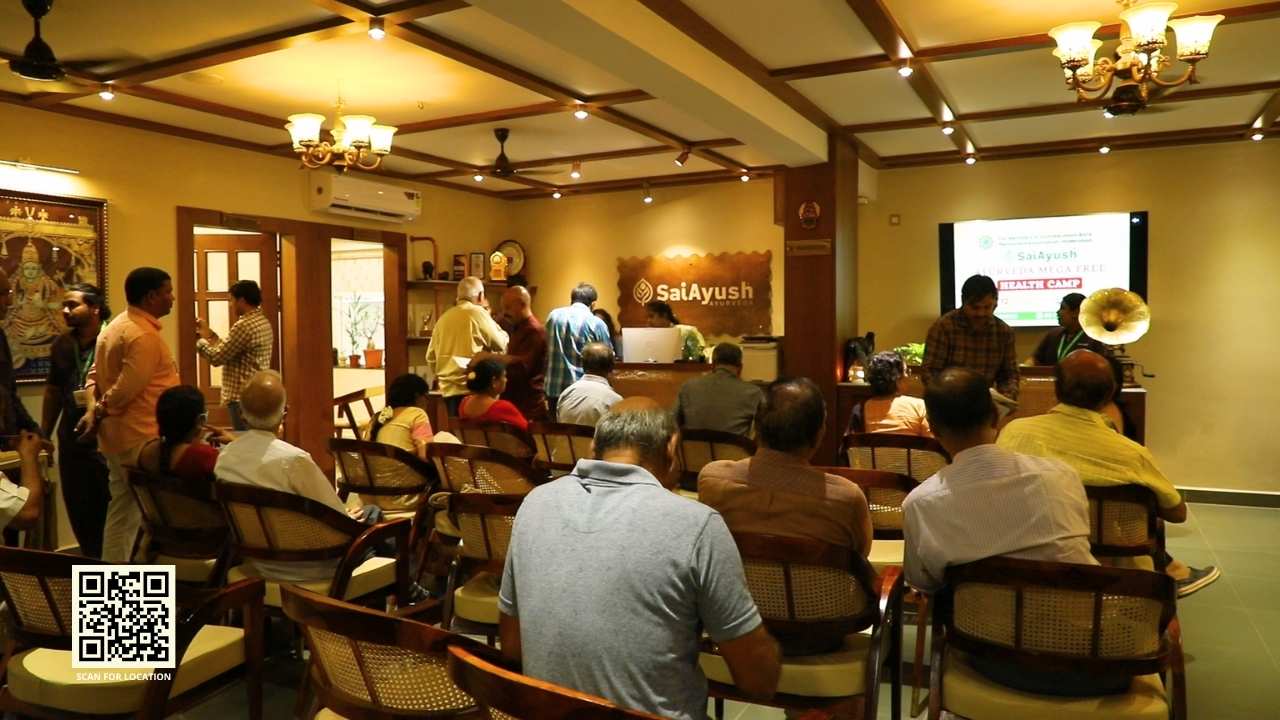
At Sai Ayush Ayurveda Hospital, older adults are assessed by a qualified Ayurveda physician before any Panchakarma procedure is considered.
The consultation includes a review of the person’s symptoms, medical history, existing diagnoses, medicines, mobility and ability to tolerate the proposed care. Medical clearance or coordination with another treating doctor may be advised when necessary.
A consultation does not guarantee that Panchakarma will be recommended. The physician may advise a modified plan, an alternative supportive approach, postponement or conventional medical evaluation.
Patients and caregivers can learn more about doctor-supervised Panchakarma in Hyderabad.
Frequently asked questions
Is Panchakarma safe for everyone over 60?
No. Age alone does not establish suitability. Health conditions, frailty, medicines, hydration, mobility and the proposed procedure must be assessed individually.
Can a senior citizen take regular medicines during Panchakarma?
Prescribed medicines should normally continue as directed. Do not stop or change them unless the prescribing clinician provides instructions. The Ayurveda physician must be given a complete medicine list.
Can a frail older adult undergo Panchakarma?
Frailty can increase risk and reduce tolerance. A detailed assessment is required, and intensive procedures may be unsuitable.
Is a caregiver required?
A caregiver may be advisable when the patient has mobility limitations, memory concerns, communication difficulties or needs help with medicines and daily activities.
Are fixed Panchakarma packages suitable for older adults?
A package should not be selected before clinical assessment. Duration and procedures must be based on individual suitability rather than age or promotional offers.
Can Panchakarma prevent age-related diseases?
There is insufficient evidence to claim that Panchakarma prevents serious age-related diseases. Older adults should continue recommended medical screening and management.
What should be brought to the consultation?
Bring an updated medication and supplement list, recent medical reports, allergy information, details of falls or hospital admissions and contact information for relevant treating doctors.
Key takeaway
Panchakarma is not automatically suitable for every older adult. Safe decision-making requires assessment of frailty, diagnosed conditions, medicines, hydration, nutrition, mobility, cognition and caregiver support.
Some people may be considered for modified doctor-supervised Ayurvedic care, while others may be advised to avoid or postpone a procedure. Patient safety, informed consent and coordination with existing medical care must come before completing a predetermined package.
Medical disclaimer: This article is intended for general education and does not diagnose any condition or recommend Panchakarma for a particular individual. Suitability, risks and alternatives must be assessed by qualified healthcare professionals. Do not stop or change prescribed medicines without guidance from the prescribing clinician. Seek urgent medical care for sudden or severe symptoms.
References
Medically Reviewed By
Dr. Pasalapudi Visalaanjani, B.A.M.S, MD (Kayachikitsa), Reg No: 1146/A/2016
Updated on september 16, 2026