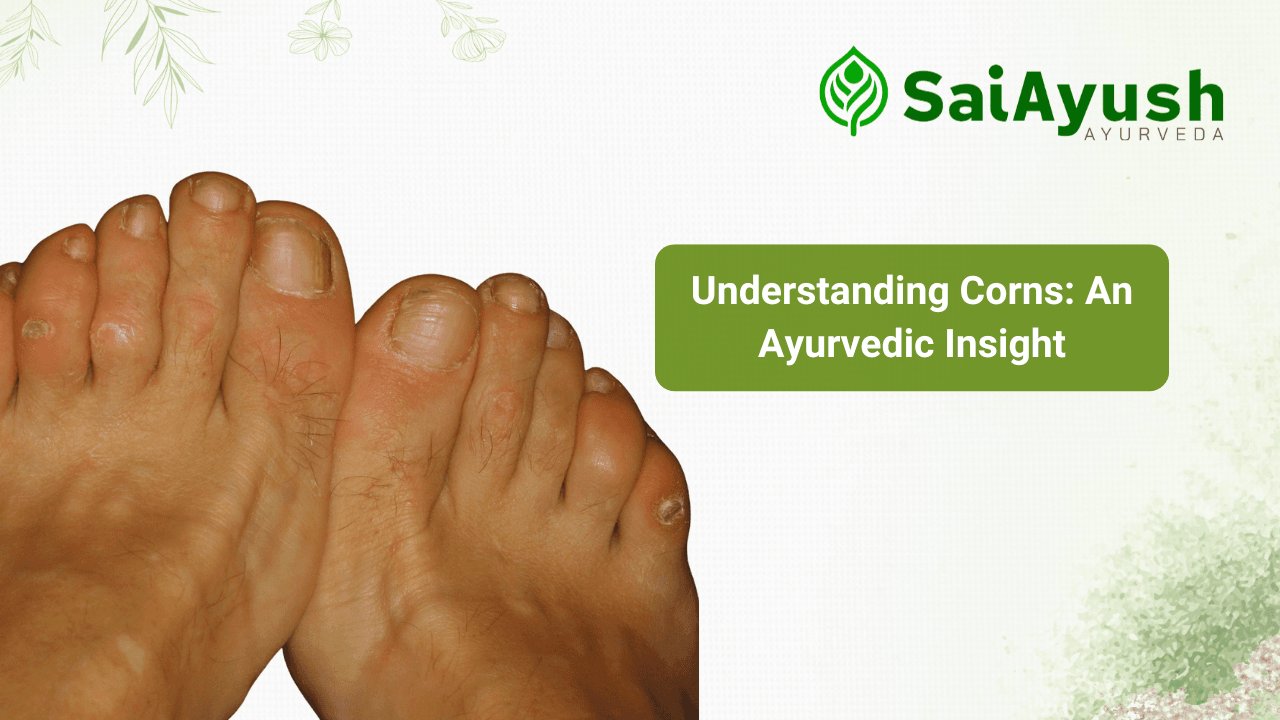
Corns, medically known as helomas, are localized areas of thickened skin that develop in response to repeated friction or pressure. They commonly occur on the feet, particularly over bony prominences such as the toes or the balls of the feet. Corns can be classified into two main types:
Corns can affect anyone, but they are more common among individuals who engage in activities that involve repetitive pressure or friction on the feet, such as wearing ill-fitting shoes or participating in high-impact sports. To prevent corns, it’s essential to:
Ayurvedic Perspective on Corns
In Ayurveda, corns are viewed as a manifestation of an imbalance in the Vata dosha, particularly in the region of the feet where Vata predominates. According to Ayurvedic principles, excessive Vata can lead to dryness, roughness, and abnormal thickening of the skin, contributing to the formation of corns.
Treatment Approaches in Ayurveda
Ayurveda offers a holistic approach to managing corns, focusing on restoring balance to the doshas and promoting overall well-being. Here are some Ayurvedic treatments and remedies for corns:
Herbal Remedies: Ayurvedic herbs such as neem (Azadirachta indica), turmeric (Curcuma longa), and aloe vera (Aloe barbadensis) possess anti-inflammatory and soothing properties that can help reduce inflammation and soften hardened skin.
External Application: Applying warm herbal oils or medicated ghee (clarified butter) to the affected area can help moisturize the skin, alleviate pain, and promote healing. Oils infused with herbs like triphala (a combination of three fruits), dashamoola (a blend of ten roots), or mahamarichyadi taila (an Ayurvedic oil formulation) are commonly used for this purpose.
Panchakarma Therapies: Panchakarma, the Ayurvedic detoxification and rejuvenation therapy, may be recommended to eliminate toxins and restore balance to the doshas. Therapies such as snehana (oleation) and swedana (sudation) can help pacify aggravated Vata and nourish the skin.
Surgical procedure (chedana ): Excision involves the surgical removal of the corn tissue using a sharp instrument such as a scalpel. To reduce discomfort, local anesthesia is usually used during this procedure.
Kshara karma : Kshara Karma involves the application of alkalis or caustic agents derived from specific plant sources. These alkaline substances have the property of penetrating deep into the tissues, thereby helping to soften and dissolve the thickened skin of corns.
Agni karma : Agni Karma, also known as thermal cauterization, involves the controlled application of heat to the affected area using a specific instrument or technique. This procedure aims to destroy the abnormal tissue of the corn while stimulating the natural healing process.
Diet and Lifestyle Modifications: Following a Vata-pacifying diet that includes warm, nourishing foods and incorporating gentle, grounding activities like yoga and meditation can help balance Vata and support overall skin health.
Conclusion: Corns may be a common foot ailment, but with the holistic approach offered by Ayurveda, relief is within reach. By addressing the underlying imbalances in the doshas, nourishing the skin with herbal remedies, and adopting healthy lifestyle practices, you can bid farewell to corns and step forward with comfort and confidence. Remember, it’s always best to consult with a qualified Ayurvedic practitioner for personalized guidance and treatment recommendations tailored to your unique constitution and health needs.
Discover the healing power of Ayurveda with our latest article at Sai Ayush Ayurveda Hospitals! Discover the age-old wisdom that can rejuvenate your body and mind. Click here to read more: