Varicose Veins: Where Ayurveda May Support Care
Varicose veins are enlarged, twisted veins that usually appear in the legs. Some people have no significant symptoms, while others experience aching, heaviness, swelling, itching or skin changes.
Ayurveda may be considered as supportive care for selected symptoms and lifestyle factors after proper medical assessment. However, it cannot be claimed to repair damaged vein valves, dissolve blood clots or replace vascular treatment.
What are varicose veins?
Healthy leg veins contain valves that help blood travel back towards the heart. When these valves do not function properly, blood may flow backwards and collect in the vein. Increased pressure can cause the vein to enlarge and become twisted or prominent.
Varicose veins are different from spider veins, which are smaller red, blue or purple vessels near the skin’s surface.
Common symptoms
Varicose veins may be associated with:
- Visible, raised or twisted leg veins
- Aching or throbbing discomfort
- A feeling of heaviness in the legs
- Swelling around the ankles or lower legs
- Itching or dry skin around affected veins
- Night-time cramps
- Symptoms that worsen after prolonged standing
- Skin discolouration around the ankle
- Hard, painful veins in some cases
These symptoms are not specific to varicose veins. Leg swelling and pain can also occur because of blood clots, infection, arterial disease, heart, liver or kidney conditions and certain medicines.
Why do varicose veins develop?
Factors associated with a higher likelihood of varicose veins include:
- Family history
- Increasing age
- Pregnancy
- Excess body weight
- Jobs involving prolonged standing or sitting
- Previous deep vein thrombosis
- Reduced mobility
Having one or more risk factors does not confirm the diagnosis. A clinician should assess persistent symptoms.
How are varicose veins medically assessed?
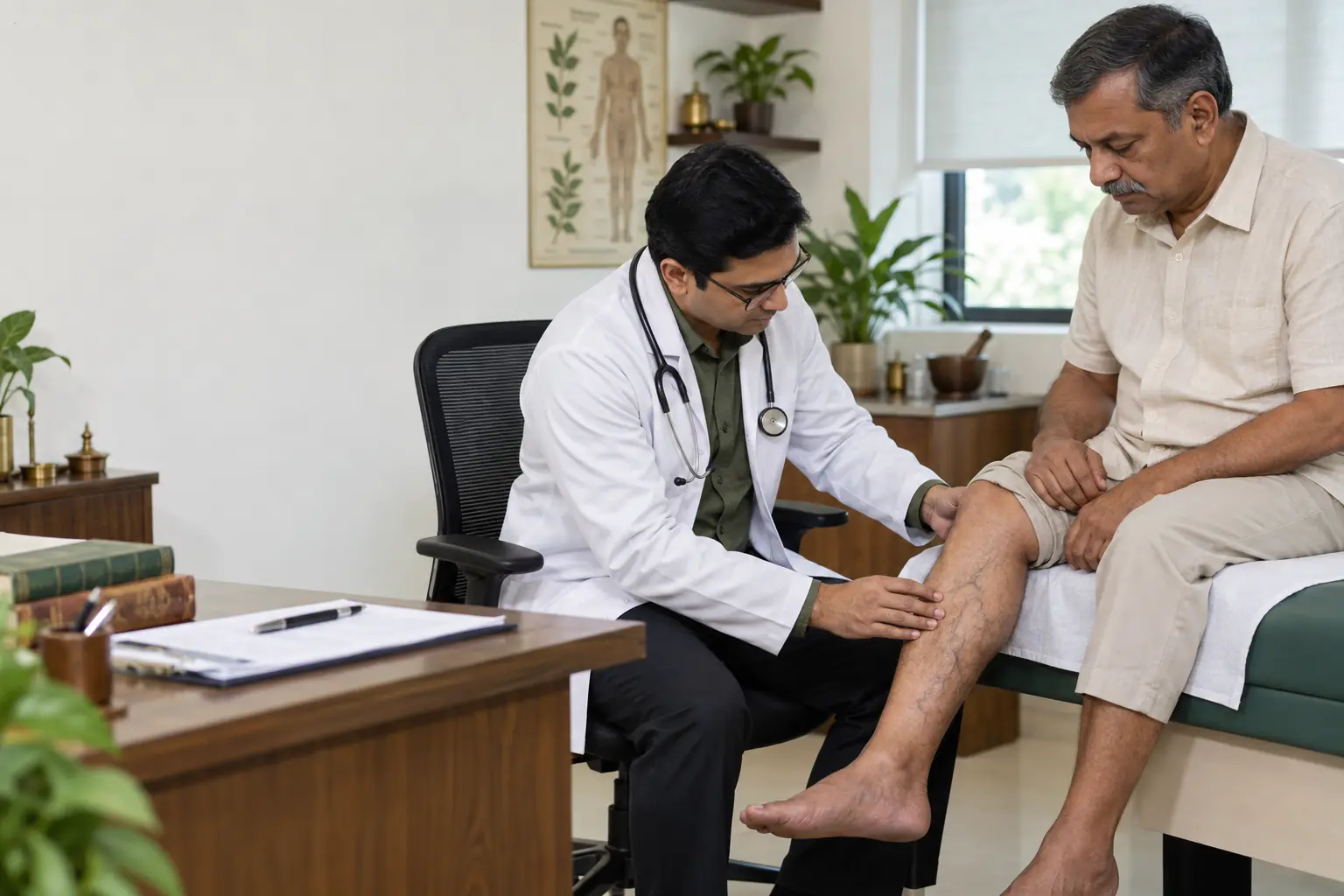
A doctor may examine the legs while the patient is standing and ask about pain, swelling, skin changes, bleeding, previous clots and family history.
When symptoms or complications require specialist evaluation, a duplex ultrasound may be used to assess blood flow, identify venous reflux and help plan treatment.
Patients should not assume that every visible vein requires a procedure. Treatment depends on symptoms, examination findings, complications and ultrasound results.
Established treatment options
Not everyone with varicose veins requires an intervention. Depending on the assessment, care may include:
- Regular physical activity
- Avoiding prolonged sitting or standing
- Weight management where appropriate
- Leg elevation for symptom relief
- Correctly selected compression stockings
- Endothermal ablation
- Ultrasound-guided foam sclerotherapy
- Surgery in selected cases
Compression stockings are not suitable for everyone, particularly some people with impaired arterial circulation. The correct size and compression level should be selected with professional advice.
Ayurvedic treatment should not delay a recommended duplex ultrasound, vascular consultation or medically indicated procedure.
The traditional Ayurvedic perspective
Ayurvedic doctor may describe prominent or enlarged veins using concepts associated with Siragranthi and may assess the involvement of Vata, Rakta and other individual factors.
A traditional assessment may consider:
- The person’s constitution and current symptoms
- Duration and progression of the complaint
- Digestion and bowel pattern
- Occupational standing or sitting
- Physical activity and body weight
- Skin changes, wounds and swelling
- Current medicines and other medical conditions
This is a traditional Ayurvedic explanatory framework. It should not be presented as equivalent to vascular anatomy, duplex-ultrasound findings or a biomedical diagnosis.
Where may Ayurveda support varicose-vein care?
After medical evaluation, an Ayurveda physician may consider an individualised supportive plan involving:
- Guidance on safe daily movement
- Advice about avoiding prolonged immobility
- Individualised diet and lifestyle recommendations
- Selected external applications
- Physician-prescribed Ayurvedic medicines
- Supervised procedures where clinically appropriate
The exact approach depends on the patient’s diagnosis, skin condition, medicines, bleeding risk and general health.
Ayurvedic care should not be advertised as capable of permanently shrinking enlarged veins, restoring damaged valves or preventing all future complications.
What does current scientific evidence establish?
There is insufficient high-quality evidence to conclude that Ayurvedic medicines or procedures reverse the underlying valve failure responsible for varicose veins.
Small and older studies have investigated medicinal leech therapy for complicated varicose veins. However, these findings do not prove that leech therapy is safe or effective for every patient, nor do they establish it as a replacement for vascular treatment.
Medicinal leech application may cause prolonged bleeding, infection, allergic reactions and anaemia. It can be particularly risky for people taking anticoagulants, those with bleeding disorders, significant anaemia, immune suppression or active infection.
Raktamokshana or leech therapy should therefore never be recommended automatically from a webpage. It requires proper diagnosis, informed consent, sterile clinical protocols and a suitably qualified practitioner.
Should the legs be massaged?
Do not apply forceful massage directly over:
- Painful or inflamed veins
- Hard, tender veins
- Open wounds
- Bleeding areas
- Infected or severely discoloured skin
- A suddenly swollen leg
Deep massage must be avoided when a blood clot is suspected. A physician should first assess unexplained pain, warmth, redness or one-sided swelling.
Do not apply unprescribed herbal oils or pastes to broken or infected skin.
Practical self-care
Depending on the person’s condition, general measures may include:
- Taking regular walking or movement breaks
- Avoiding long periods of uninterrupted standing or sitting
- Raising the legs when resting
- Maintaining a suitable body weight
- Protecting dry or fragile skin from injury
- Avoiding tobacco
- Following advice about compression stockings
- Continuing prescribed medicines
These measures may help some symptoms, but they do not necessarily remove existing varicose veins.
Do not stop blood thinners, blood-pressure medicines, diabetes treatment or other prescribed medicines before consulting the prescribing clinician.
Possible complications
Varicose veins can sometimes be associated with:
- Bleeding
- Varicose eczema or stasis dermatitis
- Skin discolouration
- Superficial vein thrombosis
- Venous leg ulcers
- Deep vein thrombosis
Skin itching, brown discolouration, persistent swelling or a wound near the ankle should be medically assessed rather than treated only with home remedies.
When should you obtain prompt medical help?
Arrange medical or vascular assessment for:
- Persistent pain, heaviness or swelling
- Significant skin colour or texture changes
- A hard, painful or inflamed vein
- An ulcer below the knee that has not healed
- A healed venous ulcer
- Recurrent varicose veins
- Unexplained one-sided leg symptoms
Seek urgent or emergency care for:
- Bleeding from a varicose vein
- Sudden swelling, warmth, redness or pain in one leg
- Chest pain, sudden breathlessness or coughing blood
- Fever with a red, swollen or painful leg
- A rapidly worsening or infected wound
- A cold, pale, blue or numb foot
Bleeding varicose veins require immediate medical attention. Apply firm direct pressure, elevate the leg if possible and seek urgent help. Chest pain or sudden breathlessness may indicate a pulmonary embolism and requires emergency care.
What to expect during an Ayurveda consultation
A responsible consultation should include review of:
- The location and duration of symptoms
- Swelling, pain and skin changes
- Previous ulcers, bleeding or blood clots
- Duplex-ultrasound reports, if available
- Current medicines, including blood thinners
- Diabetes, arterial disease and other health conditions
- Pregnancy status
- Previous vascular procedures
- Allergies and previous reactions
The physician may advise vascular assessment before planning Ayurvedic care. A consultation does not guarantee that a particular medicine, massage, Panchakarma procedure or leech therapy will be suitable.
Doctor-guided care at Sai Ayush
Sai Ayush Ayurveda Hospital follows a doctor-guided approach in which suitability should be assessed before recommending medicines or external procedures.
Patients with uncomplicated, non-emergency concerns may consult the Sai Ayush Ayurveda doctors. When symptoms suggest significant venous disease, clotting, infection, bleeding or an ulcer, appropriate vascular or conventional medical referral should not be delayed.
Frequently asked questions
Can Ayurveda cure varicose veins permanently?
There is insufficient evidence that Ayurveda can restore damaged vein valves or permanently remove established varicose veins. It may be considered for selected supportive-care objectives after assessment.
Can varicose veins disappear without treatment?
Existing enlarged veins may not disappear on their own. Symptoms can fluctuate, and varicose veins developed during pregnancy may improve after childbirth. Persistent or worsening symptoms require assessment.
Is walking helpful?
Regular walking may support calf-muscle activity and general circulation. The appropriate activity level depends on mobility, pain and other medical conditions.
Can I use compression stockings?
Only after obtaining advice about suitability, size and compression strength. Compression may be inappropriate for some people with arterial circulation problems.
Is leech therapy safe for varicose veins?
It is not risk-free and is not appropriate for everyone. Potential complications include infection, prolonged bleeding, allergy and anaemia. It should never be performed as a home treatment.
When is a duplex ultrasound needed?
A clinician or vascular specialist may recommend it for symptomatic, recurrent or complicated varicose veins and when planning an intervention.
Key takeaway
Varicose veins result from changes in venous function and may range from a cosmetic concern to a condition involving pain, swelling, skin damage, bleeding or ulcers.
Ayurveda may be considered as supportive, individualised care, but it should not replace vascular assessment or established treatment when these are required.
Medical disclaimer: This article is for general education and does not provide a diagnosis or individual treatment plan. Seek qualified medical advice for persistent symptoms and urgent care for bleeding, sudden one-sided swelling, chest pain or breathlessness.
Medically Reviewed By
Dr. Pasalapudi Visalaanjani, B.A.M.S, MD (Kayachikitsa), Reg No: 1146/A/2016
Updated on september 09,2026