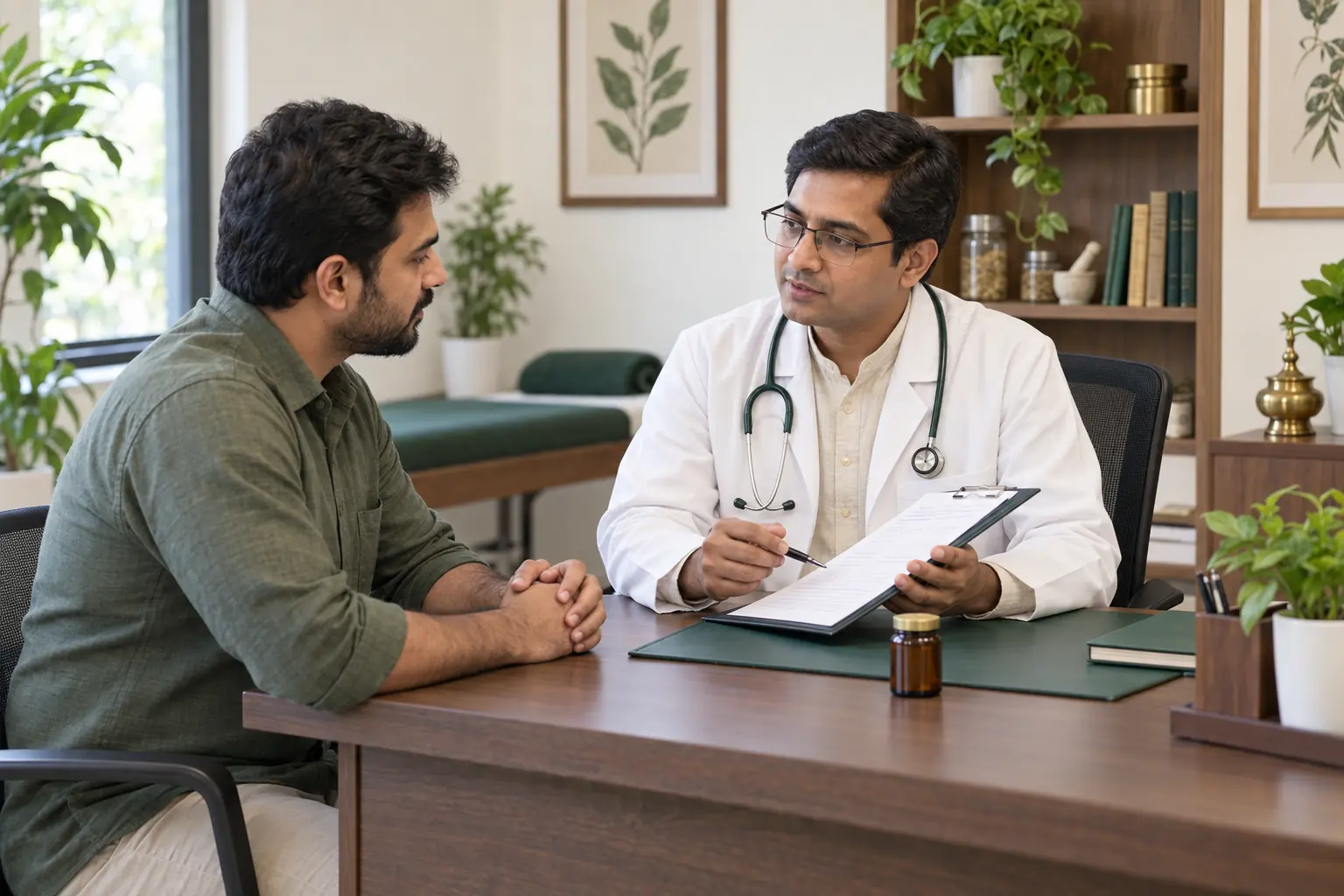
Understanding Ayurvedic Care for Piles
Piles, also called haemorrhoids, are swollen blood vessels inside or around the anus. Mild symptoms may improve when constipation and straining are addressed, but rectal bleeding, severe pain or a persistent lump should not be self-diagnosed.
Ayurvedic medicine may be considered as one part of an individualised care plan after a proper examination. It should not be presented as a guaranteed cure, a permanent solution or a substitute for necessary medical or surgical care.
Patients seeking information about available clinical care can review Sai Ayush’s doctor-supervised piles and haemorrhoids treatment.
Table of contents
- What are piles?
- Internal and external haemorrhoids
- Common symptoms
- Why piles may develop
- The Ayurvedic perspective
- How Ayurvedic medicine may be considered
- What current evidence can establish
- Diet and bowel-habit measures
- Medicine safety and possible side effects
- When a procedure may be considered
- Red-flag symptoms
- What to expect during consultation
- Frequently asked questions
What are piles?
Haemorrhoids are swollen vascular tissues in or around the anal canal. They may occur internally or externally and can produce different symptoms.
Piles are common, but not every episode of anal pain, itching or bleeding is caused by haemorrhoids. Anal fissures, fistulas, infections, inflammatory bowel disease and colorectal conditions can produce similar symptoms.
A medical examination may therefore be necessary before treatment is selected.
Internal and external haemorrhoids
Internal haemorrhoids
Internal haemorrhoids develop inside the rectum. They may cause bright-red bleeding after a bowel movement. Some can prolapse, meaning that the tissue extends through the anal opening.
Internal haemorrhoids that have not prolapsed are often not painful. Prolapsed haemorrhoids may cause discomfort, irritation or pain.
External haemorrhoids
External haemorrhoids develop beneath the skin around the anus. They may cause:
- Itching or irritation
- Tenderness
- Pain while sitting
- Swelling
- A hard or sensitive lump near the anus
Sudden severe pain and a tender lump may indicate a thrombosed external haemorrhoid and require timely medical assessment.
Common symptoms of piles
Possible symptoms include:
- Bright-red blood on toilet paper, stool or in the toilet
- Itching around the anus
- Pain or discomfort
- Mucus discharge
- A lump near the anus
- A feeling of incomplete bowel emptying
- Tissue that protrudes during or after a bowel movement
Rectal bleeding should not automatically be attributed to piles. The National Institute of Diabetes and Digestive and Kidney Diseases notes that rectal bleeding can also occur with other digestive conditions and recommends medical evaluation.
Why do piles develop?
Factors associated with haemorrhoids include:
- Straining during bowel movements
- Chronic constipation
- Recurrent diarrhoea
- Spending excessive time on the toilet
- A low-fibre diet
- Pregnancy
- Age-related weakening of supporting tissues
- Being overweight
- Regular heavy lifting
Constipation is an important contributing factor, but it is not the only possible cause.
The traditional Ayurvedic perspective
Ayurvedic literature discusses haemorrhoidal disease under the term Arsha. Traditional assessment may consider the person’s bowel habits, digestion, diet, lifestyle, symptoms and overall health.
Depending on the clinical assessment, an Ayurveda physician may consider:
- Dietary and bowel-habit guidance
- Individually selected oral formulations
- External applications
- Warm sitz-bath-style supportive care
- Management of associated constipation
- Shalya Tantra assessment when a procedure may be required
These points describe the traditional Ayurvedic approach. They do not establish that every Ayurvedic medicine or procedure is effective for every type or grade of haemorrhoid.
How may Ayurvedic medicine for piles be considered?
Ayurvedic medicine may be included in a physician-guided plan for selected patients. The objective may be to support comfortable bowel movements, manage associated digestive complaints or provide symptom-focused care.
Before prescribing treatment, the physician should assess:
- Whether the symptoms are caused by haemorrhoids
- Whether they are internal, external, thrombosed or prolapsed
- The amount and duration of bleeding
- Constipation or diarrhoea
- Pregnancy status
- Previous anorectal conditions or procedures
- Current medicines and supplements
- Diabetes, anaemia, liver disease or kidney disease
- Whether further investigation or specialist referral is required
There is no single “best Ayurvedic medicine for piles” that is suitable for everyone. Patients should not select tablets, powders, oils or suppositories solely from online recommendations.
What can current evidence establish?
There is insufficient high-quality clinical evidence to claim that Ayurvedic medicines can permanently cure haemorrhoids, reliably stop bleeding or prevent recurrence.
Some supportive measures used within holistic care—such as increasing dietary fibre, maintaining adequate fluid intake, avoiding straining and limiting time on the toilet—are also included in conventional haemorrhoid guidance.
Evidence involving one herb, formulation or procedure should not be applied to every piles patient. Formulations, doses, manufacturing standards and patient conditions can differ substantially.
Ayurvedic explanations, scientific evidence and Sai Ayush’s clinical practice should therefore be presented as separate categories rather than as equally proven claims.
Diet and bowel-habit measures
Subject to individual medical needs, clinicians commonly recommend measures that keep stools soft and reduce unnecessary pressure during bowel movements.
These may include:
- Eating fibre-rich fruits, vegetables, pulses and whole grains
- Drinking adequate fluids as advised
- Increasing fibre gradually
- Avoiding unnecessary straining
- Responding promptly to the urge to pass stool
- Limiting prolonged sitting on the toilet
- Maintaining appropriate physical activity
- Discussing constipation treatment with a healthcare professional
- Using a warm sitz bath for temporary comfort
A sudden large increase in fibre may cause bloating or abdominal discomfort. People with fluid restrictions, kidney disease, heart conditions or complex digestive disorders should seek personalised advice.
Ayurvedic medicine safety and possible side effects
“Natural” does not automatically mean safe or suitable.
Herbal and traditional medicines may cause:
- Digestive upset
- Diarrhoea
- Abdominal discomfort
- Allergic reactions
- Interaction with prescribed medicines
- Problems related to incorrect dosing
- Contamination or quality concerns in unverified products
Before using an Ayurvedic formulation, inform the physician if you have:
- Ongoing rectal bleeding
- Anaemia
- Pregnancy or breastfeeding
- Diabetes
- Kidney or liver disease
- A bleeding disorder
- Previous anorectal surgery
- Known allergies
- Prescription medicines or other supplements
Particular care is required when taking anticoagulants, antiplatelet medicines, diabetes medicines or medicines that affect bowel movements.
Do not stop or change prescribed medication unless the prescribing doctor advises you to do so.
Can Ayurvedic medicines stop bleeding piles?
No medicine should be assumed to stop rectal bleeding without determining its cause.
Bright-red bleeding can occur with haemorrhoids, but it may also be associated with fissures, bowel inflammation, polyps or colorectal disease. New, persistent or recurrent bleeding requires medical assessment.
Heavy bleeding, blood clots, dizziness, fainting or marked weakness require urgent care.
When may Kshara Sutra or another procedure be considered?
Not everyone with haemorrhoids requires a procedure. Many patients are initially managed with bowel-habit measures, dietary changes, medicines or other conservative care.
A procedural assessment may be considered when:
- Symptoms persist despite appropriate conservative care
- Bleeding recurs
- Haemorrhoidal tissue prolapses
- A painful thrombosed external haemorrhoid is suspected
- The diagnosis is uncertain
- Symptoms interfere significantly with daily activities
Kshara Sutra and Kshara Karma are specialised Ayurvedic parasurgical approaches. Suitability depends on the diagnosis, haemorrhoid grade, anatomy, symptoms, medical history and treating practitioner’s qualifications.
These procedures should not be described as:
- Completely painless
- Free from complications
- Guaranteed to prevent recurrence
- Automatically safer than conventional procedures
- Suitable for every haemorrhoid
- A guaranteed alternative to surgery
Patients should receive a clear explanation of the proposed procedure, possible risks, expected aftercare, alternatives and referral options before providing informed consent.
Who may not be suitable for immediate Ayurvedic treatment?
Additional medical assessment may be required for people with:
- Heavy or unexplained rectal bleeding
- Severe anaemia
- Fever or suspected infection
- Severe or rapidly worsening pain
- A bleeding or clotting disorder
- Significant liver or kidney disease
- Pregnancy
- Immunosuppression
- Suspected inflammatory bowel disease
- Unexplained weight loss
- A persistent change in bowel habits
- Previous colorectal disease or surgery
An Ayurveda appointment should not delay emergency assessment, gastroenterology evaluation or colorectal investigation.
When is urgent medical attention required?
Seek urgent medical care for:
- Continuous rectal bleeding
- A large amount of blood
- Large blood clots
- Dizziness, fainting or marked weakness
- Severe or rapidly worsening anal pain
- Bleeding accompanied by abdominal pain
- Fever, chills or pus-like discharge
- Black or tar-like stools
- Breathlessness or symptoms of significant anaemia
- Unexplained weight loss
- A persistent or significant change in bowel habits
The NHS advises emergency assessment when bleeding does not stop, there is a large quantity of blood or clots, or the person has severe pain.
Do not wait for an Ayurvedic appointment when emergency symptoms are present.
What to expect during a piles consultation
A proper consultation may include:
1. Symptom review
The doctor asks about bleeding, pain, itching, prolapse, discharge, constipation, diarrhoea and the duration of symptoms.
2. Medical-history review
Current medicines, previous anorectal conditions, pregnancy, digestive disease, diabetes, bleeding disorders and other health concerns should be discussed.
3. Appropriate examination
A physical or anorectal examination may be required to confirm the likely diagnosis and distinguish piles from fissures, fistulas or other conditions.
4. Further evaluation where necessary
The physician may recommend blood tests, conventional investigation or specialist referral when there is significant bleeding, suspected anaemia or an uncertain diagnosis.
5. Individual treatment planning
If Ayurvedic care is considered suitable, the physician may recommend an individual combination of medicine, diet, bowel-habit guidance, external care or a procedural assessment.
Patients may meet the Sai Ayush clinical team for an individual evaluation. A consultation does not guarantee that Ayurvedic medicine, Kshara Sutra or another procedure will be advised.
Doctor-guided anorectal care at Sai Ayush
Sai Ayush Ayurveda Hospital follows a consultation-first approach. The clinical team reviews the patient’s symptoms, medical history, current medicines and suitability before recommending treatment.
Patients with persistent symptoms can review Sai Ayush’s piles and haemorrhoids treatment service.
Hospital-based consultation and appropriate anorectal assessment are available at the Sai Ayush KPHB hospital. The exact availability of a particular procedure, doctor and appointment should be confirmed before visiting.
Madinaguda should not be promoted as an inpatient or surgical centre. It is an outpatient clinic.
Frequently asked questions
Can Ayurveda cure piles permanently?
No treatment should be advertised as a guaranteed permanent cure. Symptoms and recurrence depend on the type and grade of haemorrhoids, contributing factors, treatment selected and ongoing bowel habits.
What is the best Ayurvedic medicine for piles?
There is no single formulation suitable for every patient. The cause of symptoms, haemorrhoid type, bleeding, constipation, current medicines and general health must be assessed before prescribing treatment.
Are Ayurvedic piles medicines free from side effects?
No. Herbal and traditional formulations may cause adverse effects, allergic reactions, contamination problems or medicine interactions. Use verified products only under qualified professional supervision.
How long does Ayurvedic medicine take to work?
There is no standard treatment period applicable to everyone. Response depends on the diagnosis, symptom severity, medicine selected, bowel habits and other health conditions. No fixed recovery period should be promised.
Can bleeding piles be treated at home?
Rectal bleeding should not be self-diagnosed. Seek medical advice, particularly when bleeding is new, recurring, heavy or accompanied by pain, dizziness, fever, abdominal symptoms or a change in bowel habits.
Does every piles patient need Kshara Sutra?
No. Some patients may improve with conservative care, while others may require a procedure or conventional specialist referral. Selection depends on clinical examination.
Can prescribed medicines be stopped during Ayurvedic treatment?
No. Do not stop, reduce or replace prescribed medicines unless the prescribing doctor advises it.
Can piles return after treatment?
Recurrence is possible after conservative treatment or a procedure. Addressing constipation, straining, prolonged toilet sitting and other contributing factors may reduce risk, but recurrence cannot be guaranteed to be prevented.
Key takeaway
Ayurvedic medicine may form one part of a physician-guided care plan for selected haemorrhoid patients, particularly when constipation or bowel habits require attention. It should not be presented as a guaranteed cure or replacement for appropriate diagnosis.
Rectal bleeding, severe pain, prolapse or persistent symptoms require clinical evaluation. Treatment should be selected only after the diagnosis, haemorrhoid type, medical history and possible risks have been reviewed.
To discuss individual suitability, patients can review Sai Ayush’s doctor-guided anorectal care, consult the Sai Ayush Ayurveda doctors or arrange an assessment at the KPHB Ayurveda hospital.
Medical disclaimer: This article is intended for general education and does not diagnose or treat any condition. Individual suitability and outcomes vary. Seek qualified medical care for rectal bleeding, persistent symptoms, worsening pain or other concerning symptoms.