


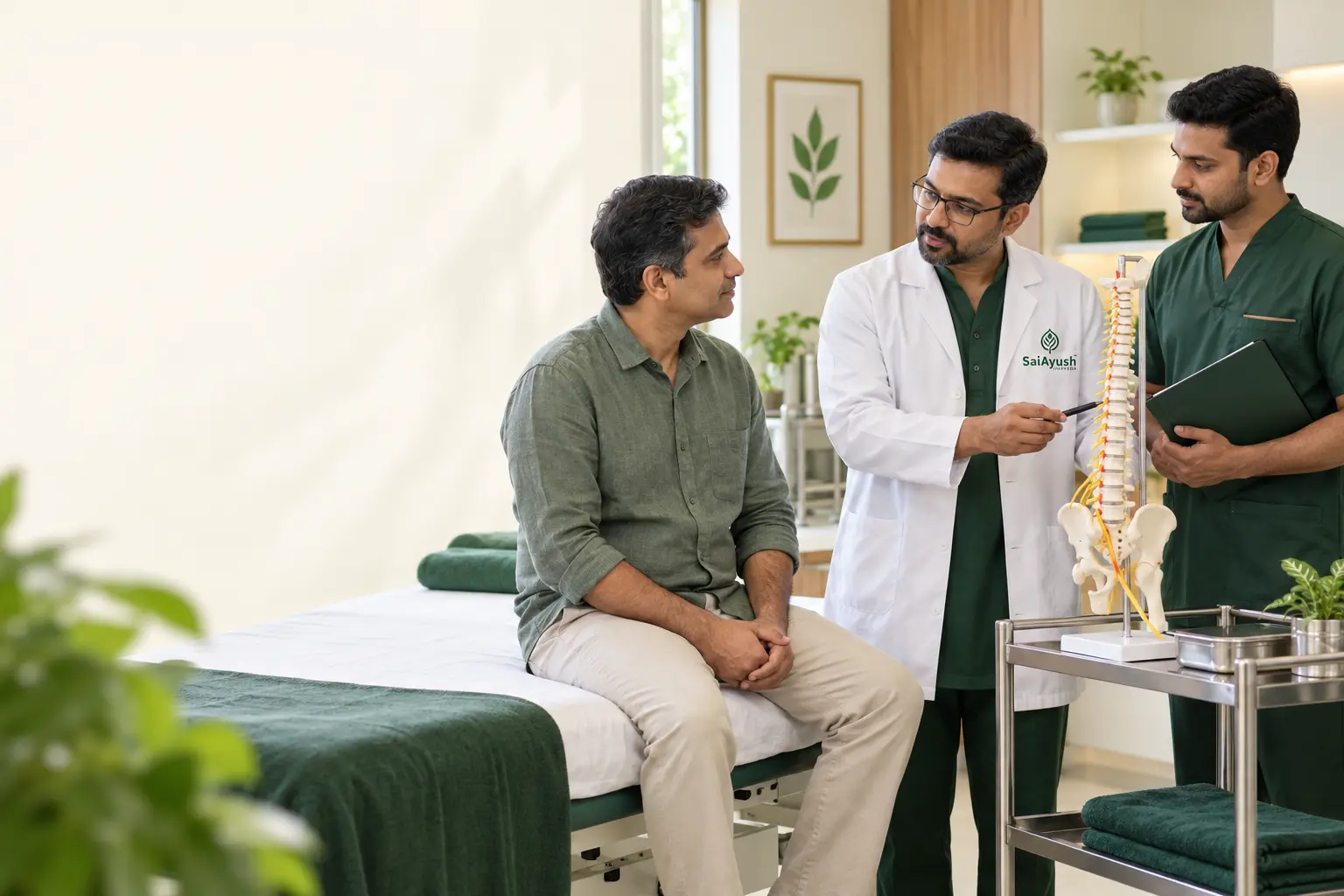
Sciatica: Symptoms, Causes, Ayurvedic Perspective and Safe Care
Sciatica commonly causes pain that travels from the lower back or buttock into one leg. Some people experience burning pain, tingling, numbness or weakness instead of—or in addition to—back pain.
Although the term “sciatica” is widely used, it describes a pattern of symptoms rather than a single disease. The underlying cause and severity must be assessed before treatment is selected.
Ayurveda traditionally discusses a condition called Gridhrasi, which shares certain features with sciatica. However, Gridhrasi and medically diagnosed sciatica should not be treated as identical conditions. Ayurvedic concepts cannot determine whether a spinal nerve is compressed or whether urgent medical treatment is required.
What is sciatica?
Sciatica occurs when a nerve root contributing to the sciatic nerve becomes irritated or compressed. The sciatic nerve travels from the lower spine through the buttock and into the leg.
Symptoms usually affect one side and may include:
- Pain extending from the lower back or buttock into the thigh, calf or foot
- Burning, shooting or electric-shock-like pain
- Tingling or pins and needles
- Numbness in part of the leg or foot
- Weakness affecting the leg, ankle or toes
- Symptoms aggravated by certain movements, coughing or sneezing
Back pain alone does not necessarily mean that a person has sciatica. A clinical assessment is needed to distinguish nerve-related symptoms from muscular pain, joint problems and other conditions.
What causes sciatica?
Common causes include:
Lumbar disc herniation
Material from an intervertebral disc may irritate or compress a nearby nerve root. The MRI appearance must be interpreted alongside the patient’s symptoms and neurological examination because disc changes can also appear in people without pain.
Lumbar spinal stenosis
Narrowing around the spinal nerves may produce leg pain, heaviness, tingling or weakness, particularly during standing or walking.
Spondylolisthesis
One vertebra may move relative to another, sometimes narrowing the space available for a nerve.
Degenerative spinal changes
Age-related changes involving discs, joints and surrounding tissues may reduce the space around a nerve root.
Injury or other medical conditions
Trauma, infection, inflammatory disease and, less commonly, a tumour can produce symptoms resembling sciatica.
Piriformis syndrome and certain hip conditions can also cause sciatic-like pain, but they do not necessarily involve compression of a spinal nerve root.
How is sciatica diagnosed?
Diagnosis usually begins with a detailed history and physical examination. The clinician may assess:
- The location and pattern of pain
- Sensation in the leg and foot
- Muscle strength
- Reflexes
- Walking and balance
- Movements that reproduce or reduce symptoms
- Bladder, bowel or saddle-area symptoms
- Previous injuries, illnesses and treatments
An MRI is not automatically required for every episode. Imaging may be considered when there are neurological deficits, concerning warning signs, persistent symptoms or a result that would change the treatment plan.
Which symptoms need urgent medical attention?
Seek emergency medical assessment for:
- New difficulty starting or controlling urination
- Loss of bowel control
- Numbness around the genitals, inner thighs or buttocks
- Severe or worsening weakness in both legs
- Sciatic symptoms affecting both sides
- Rapidly progressing leg or foot weakness
These symptoms may indicate serious compression of the nerves at the base of the spine.
Prompt medical assessment is also appropriate when back or leg pain follows significant trauma or occurs with fever, unexplained weight loss, a history of cancer, reduced immunity or persistent night pain.
Do not wait for an Ayurvedic appointment when warning signs are present.
How does Ayurveda view sciatica?
Ayurvedic literature describes Gridhrasi as a disorder involving pain and restricted movement that may extend through the buttock and leg. It is commonly interpreted through patterns involving Vata and, in some presentations, an association with Kapha.
These are traditional clinical concepts. They should not be presented as biomedical explanations for disc herniation, spinal stenosis, inflammation or nerve compression.
An Ayurveda physician may assess the person’s symptom pattern, digestion, sleep, strength, mobility, medical history and overall suitability for supportive care. This assessment should complement—not replace—an appropriate neurological or musculoskeletal evaluation.
Where may doctor-guided Ayurveda fit?
For a medically stable patient without urgent warning signs, an Ayurveda physician may consider supportive measures as one part of an individual care plan.
Depending on the examination, traditional options may include external oil applications, local procedures such as Kati Basti or selected Panchakarma procedures. These interventions are not suitable for every patient, and their formulation, intensity and duration should be prescribed individually.
Current evidence does not justify claims that Ayurvedic therapy can:
- Regenerate a damaged nerve
- Push a herniated disc back into place
- Permanently cure sciatica
- Guarantee avoidance of surgery
- Replace treatment for progressive neurological weakness
Research specifically evaluating Ayurvedic treatment for sciatica remains limited. The potential benefits, uncertainties and risks should therefore be explained honestly.
Are herbal medicines always safe?
No. “Natural” does not mean risk-free.
Ayurvedic medicines may interact with prescribed drugs or be unsuitable during pregnancy, breastfeeding, liver disease, kidney disease and other health conditions. Some improperly manufactured preparations have also been found to contain unsafe levels of heavy metals.
Patients should not purchase unverified medicines online or copy herbal combinations and doses from blogs or videos. An Ayurveda physician requires the patient’s complete medicine list and relevant medical history before prescribing anything.
Do not stop pain medicines, anticoagulants, diabetes medicines or other prescribed treatments without consulting the prescribing clinician.
Should you rest when you have sciatica?
Prolonged bed rest is generally discouraged. Many people benefit from remaining gently active within tolerable limits and gradually returning to normal activities.
The appropriate movement plan depends on the cause, irritability and neurological findings. A physiotherapist may recommend exercises to improve mobility, strength and confidence.
There is no single yoga posture or stretch that is safe for every person with sciatica. Deep forward bends, strong twists or forceful stretching may aggravate some presentations. Stop an activity and seek advice if it increases radiating pain, numbness or weakness.
Practical measures that may support recovery
After clinical assessment, a plan may include:
- Changing positions regularly
- Avoiding prolonged sitting when it aggravates symptoms
- Using safe lifting techniques
- Gradually resuming walking and normal activity
- Following individually prescribed rehabilitation exercises
- Improving sleep and workstation positioning
- Managing body weight when medically appropriate
- Avoiding smoking
- Monitoring changes in sensation and strength
Heat may feel comfortable for some people, but it should be used carefully to prevent burns—particularly when sensation is reduced.
Can sciatica be prevented?
No method can guarantee that sciatica will never return. However, recurrence risk may be reduced by maintaining regular activity, developing appropriate trunk and lower-limb strength, lifting safely, avoiding smoking and addressing workplace or movement patterns that repeatedly aggravate symptoms.
These measures should be practical and sustainable rather than based on rigid posture rules.
Doctor-guided sciatica care at Sai Ayush
At Sai Ayush Ayurveda Hospital, a recommendation is made only after evaluating the person’s symptoms, medical history, neurological findings and current treatment.
Ayurvedic care may be considered for suitable patients as part of a coordinated plan. Referral for imaging, physiotherapy, neurological assessment or spine-specialist review may be advised when clinically necessary.
Patients seeking location-specific services can read about Ayurvedic sciatica treatment in Hyderabad or meet the Sai Ayush doctors.
Consultation does not guarantee that an Ayurvedic procedure or medicine will be recommended.
Frequently asked questions
Can Ayurveda cure sciatica permanently?
There is insufficient evidence to promise a permanent cure. Outcomes depend on the underlying cause, duration, neurological involvement and overall health of the patient.
Is massage appropriate for sciatica?
Not in every case. Massage should not be started when there is progressive weakness, altered sensation, suspected fracture, infection or another warning sign. Forceful manipulation over the spine should be avoided unless appropriately assessed.
Can sciatica improve without surgery?
Many cases improve with time and non-surgical care, but individual outcomes vary. Progressive weakness, cauda equina symptoms or certain structural problems may require urgent specialist treatment.
Can I exercise during sciatica?
Gentle activity is often preferable to prolonged rest, but exercises must match the person’s condition. Stop and obtain medical advice if movement produces worsening leg pain, numbness or weakness.
Should I get an MRI immediately?
Not necessarily. A clinician decides whether imaging is required based on the examination, warning signs, symptom progression and whether the result would change management.
Key takeaway
Sciatica is a nerve-related symptom pattern that may cause leg pain, tingling, numbness or weakness. Identifying the underlying cause and checking for neurological warning signs must come before selecting any therapy.
Ayurvedic care may have a supportive role for selected, medically stable patients, but it should remain doctor-guided, evidence-aware and coordinated with appropriate conventional care.
Medical disclaimer: This article provides general educational information and does not diagnose or treat any condition. Seek individual advice from qualified healthcare professionals for persistent, worsening or neurological symptoms.
Medically Reviewed By