
Nadi Pariksha is a traditional Ayurvedic method of examining the pulse as one part of an individual health assessment. At Sai Ayush Ayurveda Hospital, Nadi Tarangini technology may be used to digitally record wrist-pulse signals and present the findings in an organised report for review by an Ayurveda physician.
The device supports clinical documentation; it does not replace the physician’s examination, medical history, laboratory investigations or conventional diagnostic tests.
What Is Nadi Tarangini?
Nadi Tarangini is a sensor-based digital pulse-recording system designed to support Ayurvedic Nadi Pariksha. Sensors placed over the radial artery record pressure variations produced by the pulse.
The recorded signals are converted into digital waveforms. The software organises selected pulse characteristics and Ayurvedic parameters into a report that the physician can review with the patient.
The manufacturer describes the system as AI-enabled. This should be understood as computer-assisted analysis—not autonomous medical diagnosis.
How Is the Assessment Performed?
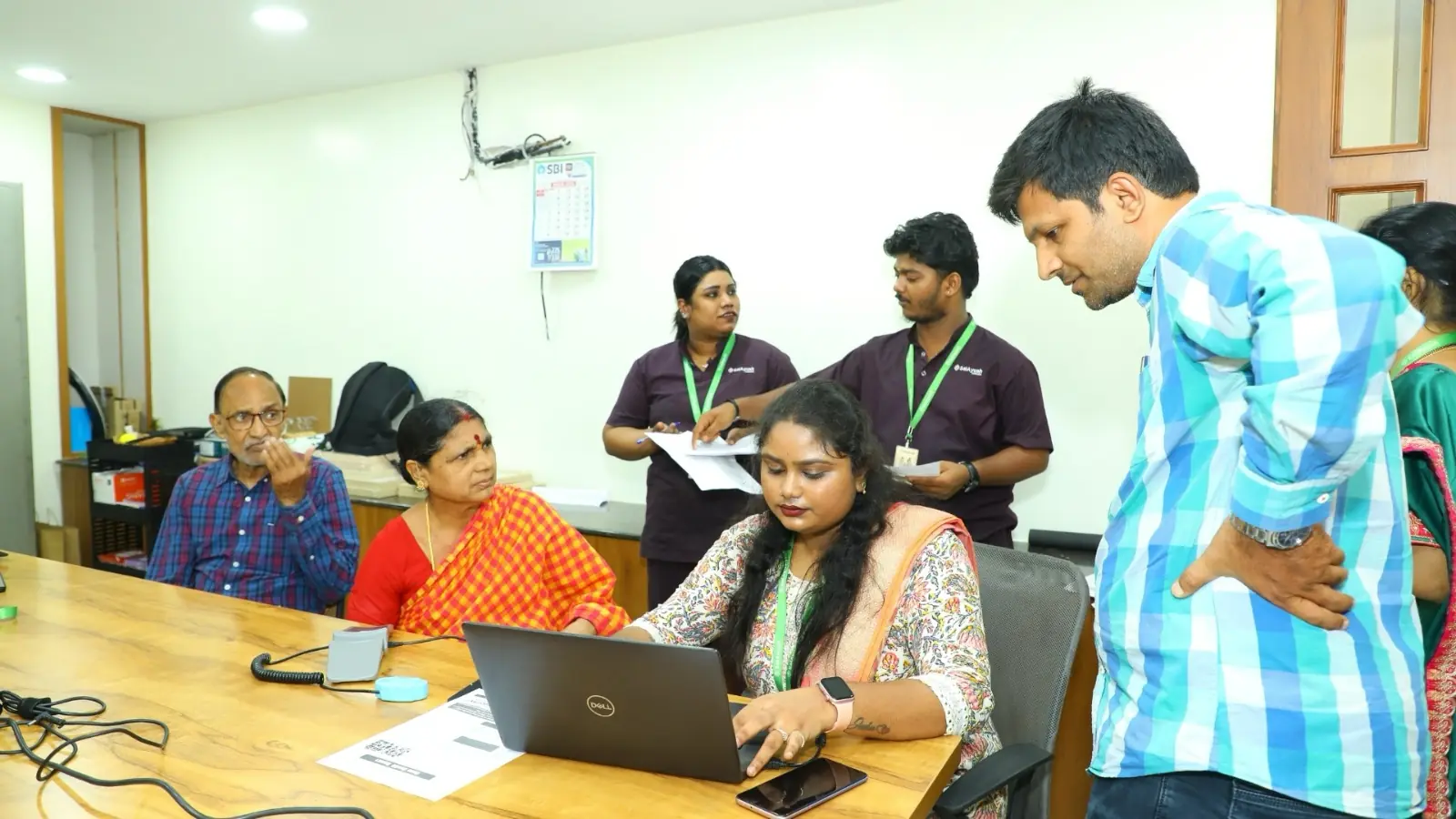
The patient sits comfortably while the trained practitioner positions the sensor over the wrist pulse. The system records the pulse signal for digital analysis.
The appointment should also include:
- Present symptoms and their duration
- Previous diagnoses and treatments
- Current medicines and supplements
- Diet, digestion, sleep and lifestyle history
- Available laboratory reports or scans
- Physical examination where required
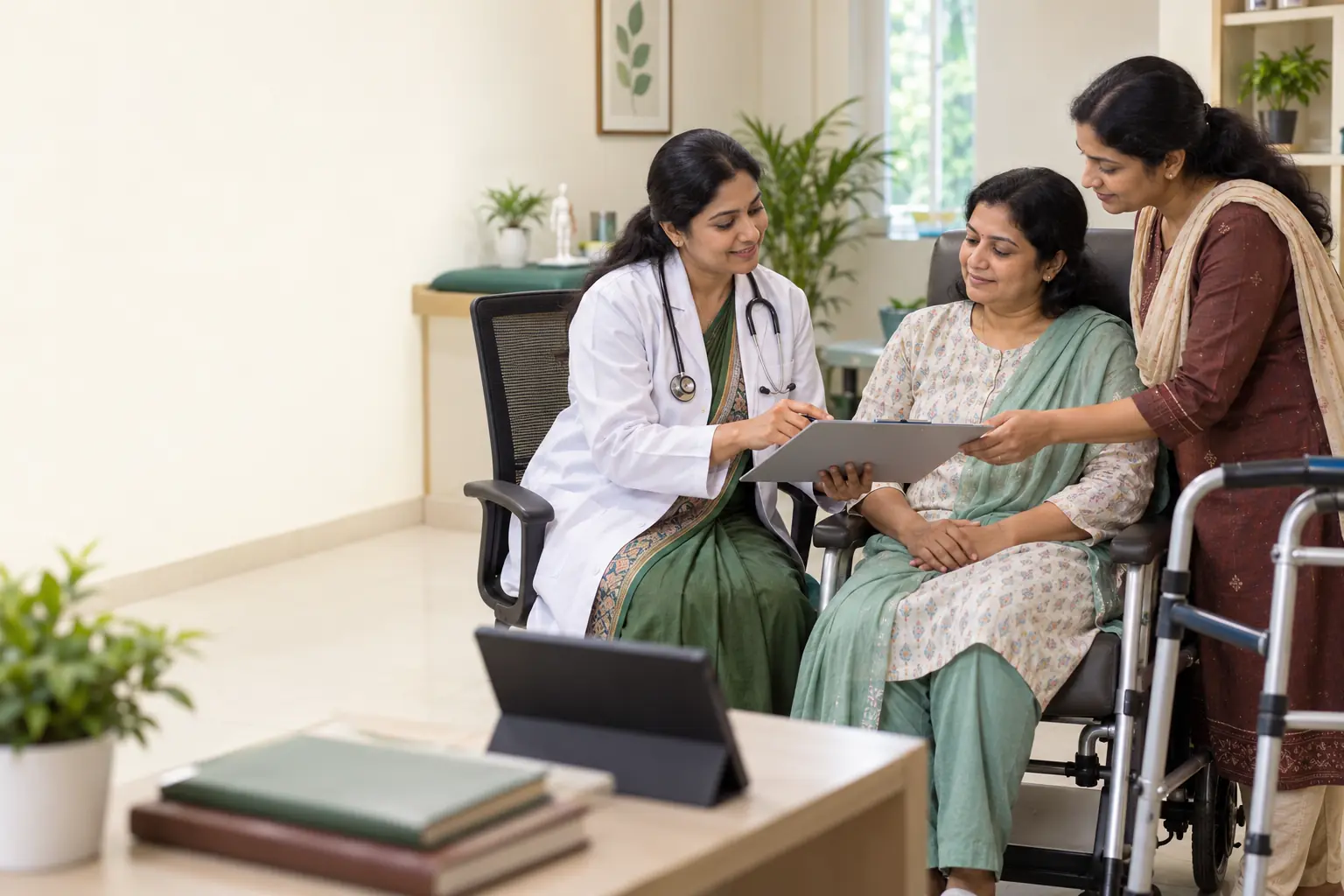
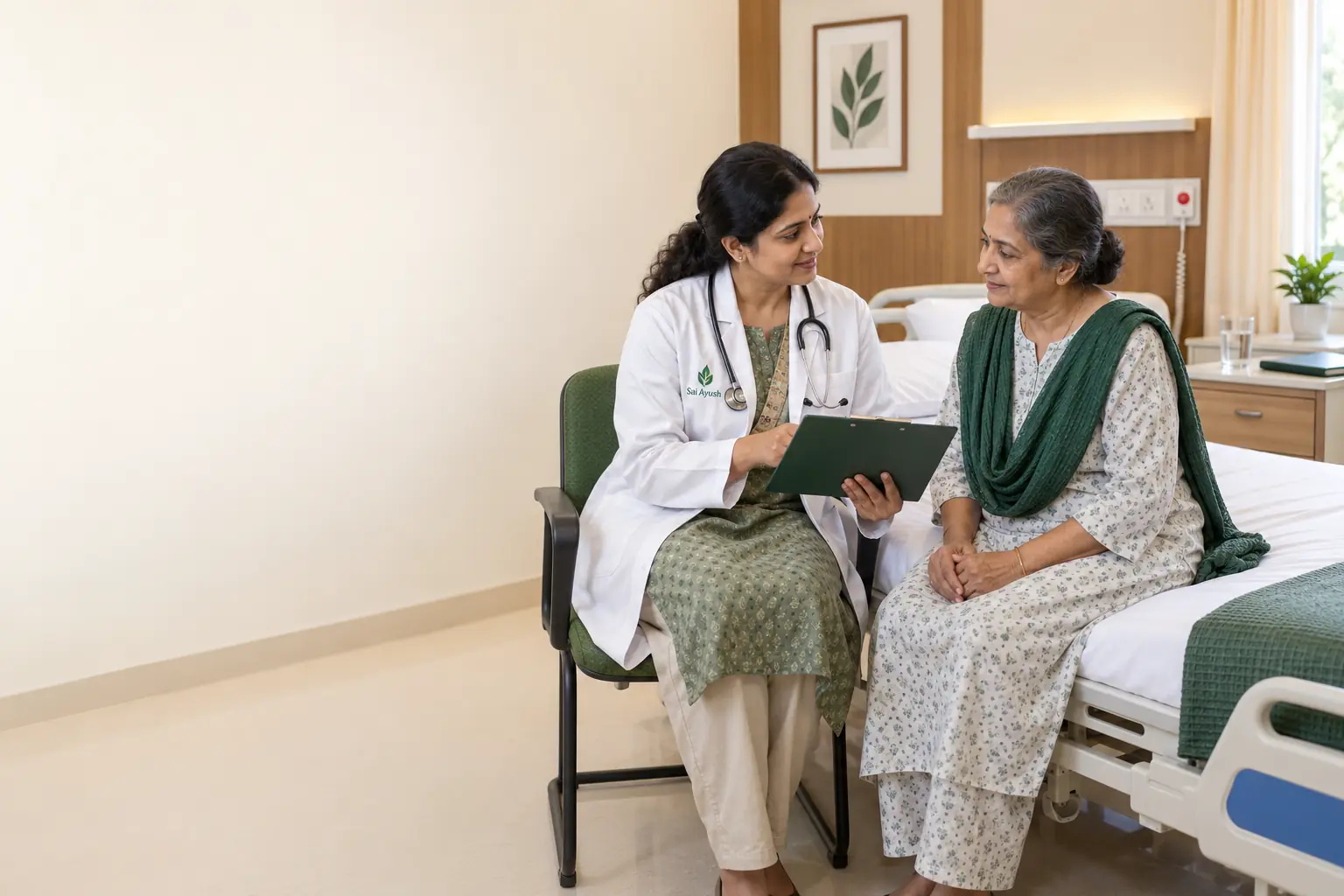
- Discussion with a qualified Ayurveda physician
Pulse recording alone is not a complete consultation.
What May Be Included in the Printed Report?
According to information published by Nadi Tarangini, its report may include:
- Pulse waveform and rate
- Pulse rhythm and variability
- Pulse strength or amplitude
- Questionnaire-based Prakriti presentation
- Nadi-based Vikriti interpretation
- Vata, Pitta and Kapha patterns
- Traditional pulse qualities
- Bala and Agni-related observations
- Graphs and numerical presentations
- General diet or lifestyle recommendations
The exact report format may differ depending on the software version and information entered during the consultation. Sai Ayush should publish only those fields present in its current report version.
What Do Prakriti and Vikriti Mean?
In Ayurveda, Prakriti refers to the individual’s constitution. It is generally assessed through a combination of history, physical characteristics, habits and structured questions.
Vikriti refers to the physician’s assessment of the person’s present functional imbalance within the Ayurvedic framework.
Neither should be treated as a laboratory-confirmed disease diagnosis. Treatment should not be prescribed solely from an automatically generated score.
What Is the Benefit of Digital Recording?
Digital pulse recording may help:
- Document pulse signals in a structured format
- Display pulse waveforms visually
- Maintain consultation records
- Compare recorded information during follow-up
- Support discussion between physician and patient
- Reduce dependence on handwritten pulse notes
Research has explored digital pulse-wave measurement in Ayurveda, but the wider evidence base remains developing. Published reviews emphasise the need for further standardisation and clinical validation. Review of Nadi Pariksha technology
Can the Report Diagnose a Disease?
No. A Nadi Tarangini report should not be used by itself to confirm or exclude:
- Diabetes
- Hypertension
- Heart disease
- Thyroid disorders
- Anaemia
- Kidney or liver disease
- Cancer
- Pregnancy
- Infection
- Neurological disease
These conditions may require blood-pressure measurement, laboratory tests, imaging, ECG or specialist evaluation.
Research has also found variability between practitioners interpreting traditional pulse findings, reinforcing the need for standardised methods and comprehensive assessment. Pulse-assessment reliability study
How Sai Ayush Uses the Report
At Sai Ayush, the safest and most accurate positioning is:
Nadi Tarangini digitally records and organises pulse information. A qualified Ayurveda physician interprets the report alongside the patient’s symptoms, medical history, examination and relevant investigations.
Based on the complete consultation—not the digital report alone—the physician may discuss diet, lifestyle, follow-up or an individualised Ayurveda treatment plan.
Patients can meet the Sai Ayush Ayurveda doctors or learn about the consultation facilities at the KPHB hospital and Madinaguda outpatient clinic.
Important Limitations
The report:
- Is not a stand-alone medical diagnosis
- Does not guarantee early disease detection
- Cannot guarantee treatment results
- Does not replace laboratory tests or scans
- Should be interpreted by a qualified physician
- May be affected by stress, activity, caffeine, medicines, fever and hydration
Conclusion
Nadi Tarangini can add structured digital documentation to traditional Nadi Pariksha. Its appropriate role is to assist a qualified Ayurveda physician—not replace clinical judgement or validated medical investigations.
Medical disclaimer: This article is for general education. A Nadi Tarangini report is not a substitute for diagnosis, emergency care, laboratory testing or advice from an appropriate healthcare professional.