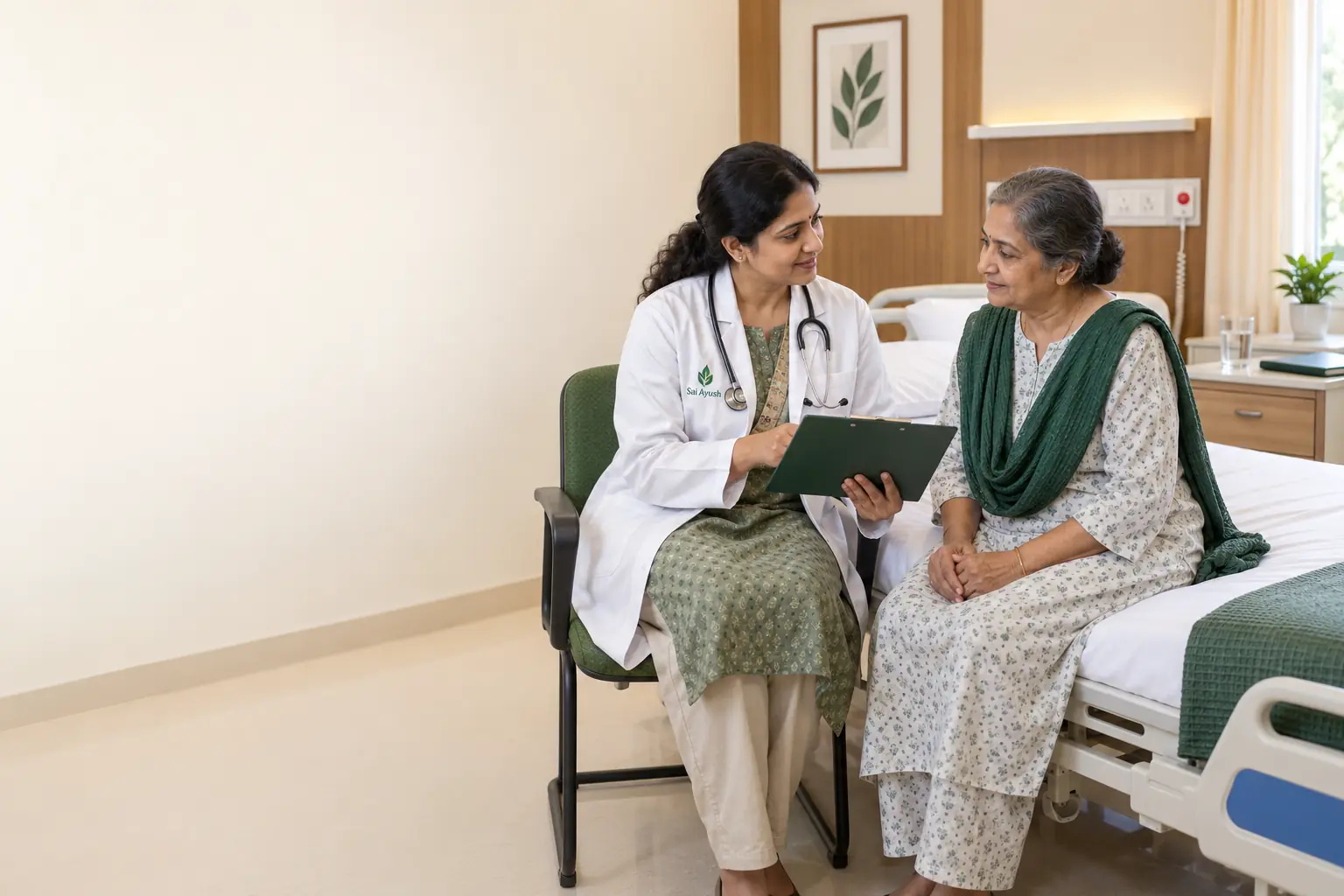


Nadi Pariksha is a traditional Ayurvedic method in which a physician examines the pulse, usually at the wrist, as one part of a broader health assessment. In Ayurvedic practice, the physician observes qualities such as pulse rate, rhythm, strength and movement while also considering symptoms, medical history, digestion, sleep, lifestyle and other clinical findings.
Nadi Pariksha should not be presented as a test that can diagnose every disease from the pulse alone. It does not replace blood-pressure measurement, laboratory tests, scans or evaluation by an appropriate medical specialist.
What Does Nadi Pariksha Mean?
Nadi commonly refers to the pulse, while Pariksha means examination. During the assessment, the Ayurveda physician gently places fingers over the radial pulse at the wrist.
Traditional descriptions associate different pulse qualities with the functional patterns of Vata, Pitta and Kapha. The physician interprets these observations within the wider Ayurvedic assessment rather than treating the pulse as an isolated laboratory result.
Research reviewing traditional Nadi Pariksha describes pulse qualities such as movement, speed, stability and arterial hardness. However, researchers also recognise that manual interpretation is subjective and requires further standardisation. Review the published research overview.
How Is Nadi Pariksha Performed?
The patient is generally asked to sit comfortably and remain relaxed. The physician places the index, middle and ring fingers over the radial artery near the base of the thumb.
The assessment may include observations relating to:
- Pulse rate
- Rhythm and regularity
- Strength or force
- Perceived movement
- Vessel tension
- Changes in the pulse under different finger pressure
Pulse characteristics can be affected by physical activity, stress, sleep, food, caffeine, medicines, fever, hydration and other health factors. The physician should therefore interpret the findings alongside the patient’s complete clinical history.
What May an Ayurveda Physician Assess?
Within an Ayurvedic consultation, Nadi Pariksha may contribute to an assessment of:
- Current functional patterns described in Ayurveda
- Digestive and appetite-related history
- Sleep, energy and daily routine
- Stress and emotional wellbeing
- Bowel habits
- Menstrual and lifestyle history where relevant
- The patient’s suitability for a proposed Ayurveda programme
It is important to distinguish Nadi Pariksha from Prakriti assessment. Prakriti refers to constitution and is generally evaluated using a broader combination of physical characteristics, history, questioning and observation. It should not be decided from the pulse alone.
Can Nadi Pariksha Diagnose a Disease?
Nadi Pariksha may provide information within the traditional Ayurvedic system of assessment, but it should not be used as the sole method for diagnosing a disease.
For example, pulse examination cannot independently confirm:
- Diabetes
- Thyroid disease
- Anaemia
- Kidney or liver disease
- Heart disease
- Pregnancy
- Cancer
- Disc problems or arthritis
- Bacterial or viral infections
These conditions may require physical examination, blood tests, urine tests, imaging, ECG or evaluation by an appropriate healthcare professional.
A study evaluating agreement between Ayurvedic practitioners found low inter-observer reliability for pulse assessment. This means different practitioners did not always interpret the same pulse consistently. The researchers recommended improved standardisation and objective assessment methods. Read the reliability study.
Research into sensors and digital pulse-wave analysis is continuing, but such developments do not currently establish Nadi Pariksha as a replacement for validated diagnostic testing. See the 2024 research review.
Nadi Pariksha and a Complete Ayurveda Consultation
A responsible Ayurveda consultation should not consist only of checking the pulse. Depending on the patient’s concern, the physician may also review:
- Present symptoms and their duration
- Previous diagnoses and treatment
- Prescription medicines and supplements
- Laboratory reports and scans
- Appetite, digestion and bowel habits
- Sleep, stress and physical activity
- Diet and daily routine
- Relevant physical findings
- Warning signs that require referral or further investigation
At Sai Ayush, Nadi Pariksha may be used as one component of a broader consultation. Patients can learn more about the clinical team on the Ayurvedic doctors page.
How Should You Prepare?
Preparation requirements can vary, so follow the physician’s instructions. These simple steps may help make the consultation more useful:
- Bring recent prescriptions, laboratory reports and scans.
- Prepare a list of current medicines and supplements.
- Avoid rushing or strenuous activity immediately before the consultation.
- Inform the doctor if you recently exercised, consumed caffeine or experienced fever.
- Do not stop prescribed medicines before the appointment.
- Explain your symptoms honestly, including their duration and severity.
- Tell the physician about pregnancy, recent surgery or significant medical conditions.
There is usually no reason to fast unless the clinic gives a specific, medically appropriate instruction.
When Is Prompt Medical Evaluation Necessary?
Do not depend on Nadi Pariksha or an online article if you have:
- Chest pain or pressure
- Difficulty breathing
- Fainting or severe dizziness
- A new irregular heartbeat
- Sudden weakness or numbness
- Facial drooping or difficulty speaking
- Severe dehydration
- Very high or very low blood pressure
- Persistent vomiting
- Sudden severe headache
- Uncontrolled bleeding
These symptoms may require urgent conventional medical evaluation.
What Happens After the Assessment?
After reviewing the pulse and the rest of the clinical information, the physician should explain:
- The assessment in understandable language
- Whether additional investigations are needed
- What treatment or lifestyle measures may be considered
- Possible limitations, precautions and side effects
- When follow-up is required
- When another medical specialist should be consulted
An Ayurveda treatment plan may include diet and lifestyle guidance, physician-prescribed medicines, supportive therapies or Panchakarma when clinically appropriate. Treatment should not be selected solely from the pulse finding.
Questions to Ask the Physician
Consider asking:
- What did you assess apart from my pulse?
- Do my symptoms require laboratory tests or imaging?
- Could my current medicines affect the pulse or treatment plan?
- What outcome can reasonably be expected?
- What side effects or precautions should I know?
- Should I continue my existing medical care?
- When should I return for follow-up?
Conclusion
Nadi Pariksha is a traditional Ayurvedic pulse-examination method that may contribute to an individualised consultation. Its value depends on the practitioner’s training and on interpreting the pulse together with symptoms, medical history, examination and appropriate investigations.
It should be viewed as one clinical input—not a stand-alone test, universal disease detector or substitute for emergency and evidence-based medical care.
To discuss your health concerns with a qualified Ayurveda physician, review the Sai Ayush doctors, KPHB hospital or Madinaguda outpatient clinic.
Medical disclaimer: This article is for general education only and does not provide a diagnosis or personalised treatment recommendation. Do not stop prescribed medicines or delay necessary medical care based on this information.