
Herniated Disc: Symptoms, Ayurvedic Perspective, Treatment and Prevention
A herniated disc occurs when material from the softer centre of a spinal disc pushes through a weakened or torn area in its outer layer. It most commonly affects the lumbar spine in the lower back but can also occur in the cervical spine in the neck.
A herniated disc does not always cause symptoms. Problems are more likely when displaced disc material irritates or compresses a nearby nerve. Symptoms may then include radiating pain, tingling, numbness or muscle weakness.
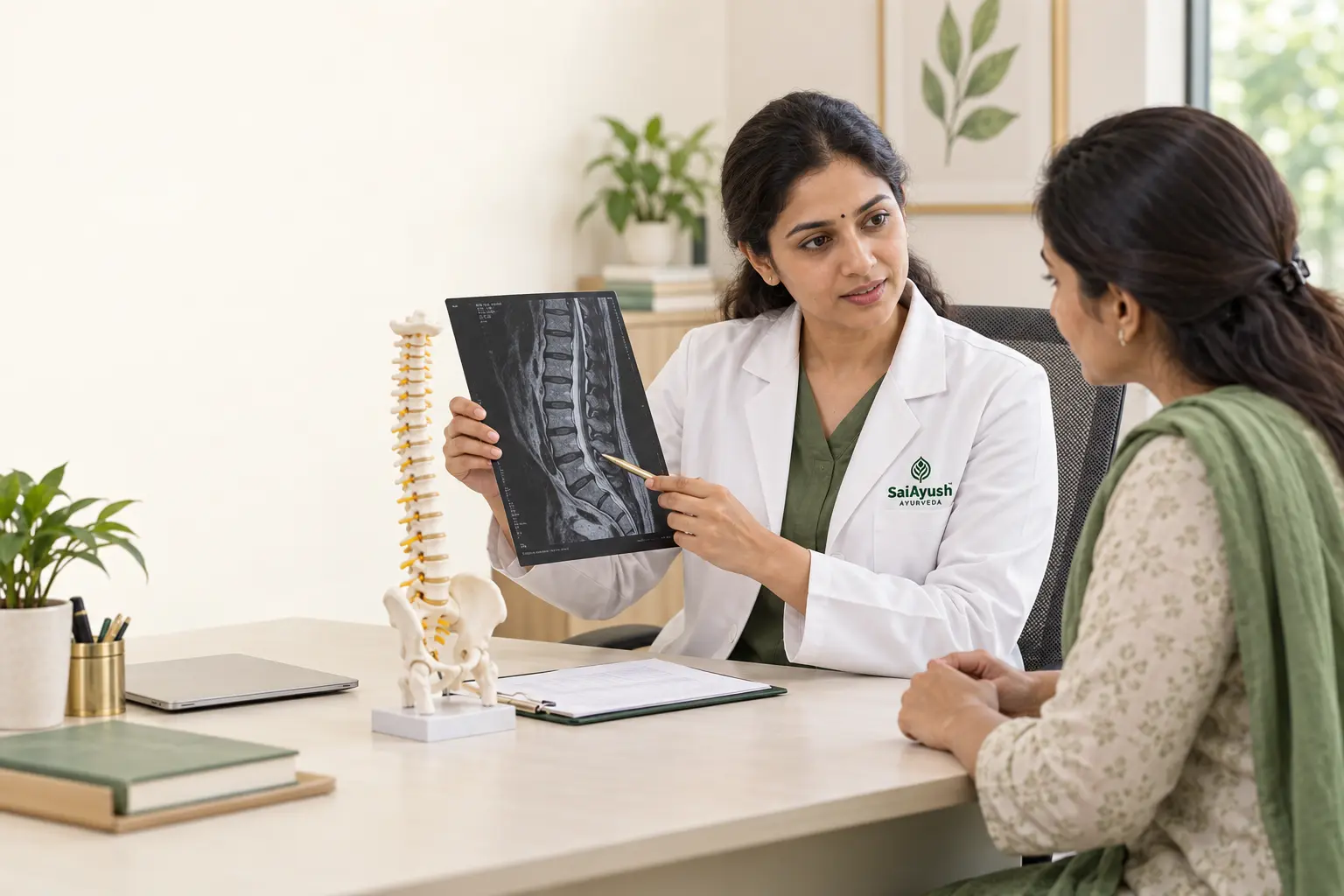
An MRI finding alone does not determine the treatment. A doctor must relate the scan to the patient’s symptoms, neurological examination, functional limitations and medical history.
Are a herniated disc, slipped disc and disc bulge the same?
These expressions are frequently used interchangeably, but they are not always technically identical.
A disc bulge generally describes a broader outward extension of the disc. A herniation occurs when material from the disc’s inner portion passes through a weakened area in the outer ring. “Slipped disc” is a commonly used term, although the entire disc does not literally slip out of place.
The exact wording in an MRI report is less important than whether the finding corresponds with the person’s symptoms and examination.
What are the symptoms of a lumbar herniated disc?
A herniated disc in the lower back may cause:
- Lower-back pain
- Pain spreading into one buttock, thigh, calf or foot
- Burning or electric-shock-like leg pain
- Tingling or numbness in the leg or foot
- Weakness involving the leg, ankle or foot
- Pain aggravated by certain movements, coughing or sneezing
- Difficulty sitting, walking, bending or lifting
Radiating nerve pain from the lower back into the leg is commonly described as sciatica. However, sciatica has several potential causes and should not automatically be attributed to a herniated disc.
What are the symptoms of a cervical herniated disc?
When a disc in the neck irritates a nerve, symptoms may include:
- Neck or shoulder-blade pain
- Pain travelling into an arm or hand
- Tingling or numbness in the arm, hand or fingers
- Weakness in the shoulder, arm or hand
- Symptoms that change with neck position
Symptoms affecting walking, balance, hand coordination or both sides of the body require prompt medical assessment because they may indicate pressure affecting the spinal cord.
Can a herniated disc exist without pain?
Yes. Some disc changes found on MRI do not produce symptoms. Conversely, severe pain can occur even when an imaging change appears relatively small.
Doctors therefore avoid treating the scan in isolation. The location of the pain, nerve distribution, muscle strength, reflexes, sensation and functional limitations must be considered together.
How is a herniated disc evaluated?
Assessment normally starts with a medical history and physical examination. The clinician may review:
- When and how the symptoms began
- Whether pain travels into an arm or leg
- Tingling, numbness or weakness
- Walking ability and balance
- Bladder or bowel changes
- Previous injuries, illnesses and operations
- Occupational lifting, sitting or driving
- Existing medicines and previous treatment
- Available X-rays or MRI reports
The physical examination may include posture, spinal movement, muscle strength, sensation, reflexes and selected nerve-tension tests.
An MRI may be considered when symptoms persist, neurological deficits are present, the diagnosis remains uncertain or a specialist procedure is being evaluated. It is not automatically required for every new episode of back pain.
When is urgent medical attention required?
Seek urgent medical or emergency assessment if back or neck pain is accompanied by:
- New loss of bladder or bowel control
- Inability to urinate
- Numbness around the genitals, inner thighs or buttocks
- Rapidly progressing leg or arm weakness
- Loss of feeling or significant weakness in both legs
- Difficulty walking or sudden loss of balance
- Symptoms following a major accident or fall
- Fever, chills or serious illness
- Unexplained weight loss
- Severe pain that is rapidly worsening
Bladder or bowel disturbance, saddle-region numbness and increasing leg weakness may indicate serious nerve compression. These symptoms must not be managed only with massage, home remedies or routine Ayurvedic therapy.
The Ayurvedic perspective on herniated-disc symptoms
Ayurveda does not describe modern MRI terminology in the same way as contemporary medicine. An Ayurveda physician may interpret pain, restricted movement and radiating symptoms through traditional concepts involving Vata, tissue involvement and the location and pattern of symptoms.
This is a traditional clinical framework—not a substitute for anatomical diagnosis or neurological assessment.
A responsible Ayurvedic evaluation may consider:
- Whether the pain is recent, recurring or persistent
- The location and direction of radiating pain
- Stiffness, restricted movement or muscle spasm
- Strength, sensation and walking ability
- Sleep, digestion and bowel pattern
- Activity, posture and occupational strain
- The person’s constitution and current imbalance
- Medical reports and treatment already received
Not every herniated disc should be labelled simply as a Vata disorder. The physician must first exclude conditions requiring urgent conventional care.
What may a treatment plan include?
Treatment depends on symptom severity, neurological findings, duration and the effect on daily activities. Many patients are initially managed without surgery, but worsening weakness or certain emergency symptoms require specialist evaluation.
Activity modification
Complete bed rest for long periods is generally discouraged. The patient may instead be advised to avoid movements that markedly aggravate symptoms while gradually maintaining tolerable activity.
Heavy lifting, repeated bending and twisting may need to be temporarily modified.
Physiotherapy and rehabilitation
A physiotherapist may assess posture, spinal movement, muscle strength, nerve sensitivity and movement control.
Rehabilitation may include graded walking, mobility work, trunk-strengthening exercises and advice about sitting, lifting and returning to work. Exercises must be individualised; movements that increase radiating pain, numbness or weakness should be reviewed.
Doctor-selected Ayurvedic procedures
An Ayurveda physician may consider selected external procedures as supportive care after completing the assessment. The choice may depend on whether the symptoms are acute or persistent, the patient’s tolerance, skin condition and neurological findings.
Localised oil applications, fomentation or procedures such as Kati Basti must not be presented as methods that physically push a disc back into position. Their possible role should be described in terms of supporting comfort, relaxation or movement where clinically appropriate.
Forceful manipulation and unsupervised massage should be avoided, particularly when neurological symptoms or an acute injury are present.
Panchakarma
Selected Panchakarma procedures may be considered for some patients after medical evaluation. They are not compulsory for every disc condition.
The procedure, formulation, duration and course must be prescribed individually. Panchakarma should not delay MRI evaluation, physiotherapy, pain management or a surgical opinion when these are clinically indicated.
Ayurvedic medicines
Internal medicines should only be prescribed after reviewing the patient’s diagnosis, general health, digestion, allergies and current medicines.
Patients should not take herbal-metallic preparations or combine multiple supplements without professional supervision. “Natural” does not guarantee suitability or freedom from interactions.
Can Ayurveda regenerate a herniated disc?
There is insufficient clinical evidence to claim that Ayurvedic treatment regenerates a spinal disc, permanently reverses a herniation or guarantees avoidance of surgery.
Supportive Ayurvedic care may be considered within a coordinated plan intended to improve comfort, movement and daily function. Results vary, and the structural MRI finding may not change even when symptoms improve.
Any promise of guaranteed recovery, permanent cure or disc regeneration should be avoided.
Does every herniated disc require surgery?
No. Many patients improve with appropriate non-surgical management. However, surgery or specialist intervention may be considered when:
- Muscle weakness is progressing
- Walking is becoming difficult
- Bladder or bowel function is affected
- Severe radiating pain persists despite appropriate care
- Clinical findings indicate significant nerve compression
The decision should be made with an orthopaedic spine surgeon or neurosurgeon after reviewing symptoms, examination findings, imaging and the patient’s preferences.
Ayurvedic care should not be promoted as a guaranteed alternative to necessary surgery.
Can a herniated disc be prevented?
Not every herniated disc can be prevented. Age-related disc changes, genetics, previous injury and occupational demands can influence risk.
Practical measures that may reduce avoidable strain include:
- Remaining physically active
- Building trunk and lower-body strength gradually
- Using safer lifting techniques
- Avoiding simultaneous heavy lifting and twisting
- Taking movement breaks during prolonged sitting or driving
- Adjusting the workstation where necessary
- Increasing exercise intensity progressively
- Maintaining a medically appropriate body weight
- Avoiding smoking
- Following rehabilitation advice after an injury
There is no single yoga pose, food, herb or oil that guarantees prevention.
Doctor-guided care at Sai Ayush
At Sai Ayush Ayurveda Hospital, recommendations for disc-related symptoms are made after consultation and review of the patient’s clinical history, neurological symptoms, functional limitations and available reports.
Where suitable, care may coordinate Ayurveda, Panchakarma support, physiotherapy, activity guidance and lifestyle modification. The plan is determined individually rather than selected only from an MRI report or online dosha questionnaire.
Learn about Sai Ayush’s doctor-guided disc-bulge care or meet our Ayurvedic doctors.
A consultation does not guarantee that Ayurvedic therapy will be recommended. Referral for imaging, neurological evaluation or a surgical opinion may be advised when clinically necessary.
Frequently asked questions
Can a herniated disc heal without surgery?
Many people improve with non-surgical management, but the course differs between patients. Progressive weakness, bladder or bowel disturbance and severe persistent symptoms require specialist assessment.
Is walking advisable with a herniated disc?
Gentle walking may be suitable when it does not worsen radiating pain, numbness or weakness. The appropriate activity level should be based on the person’s symptoms and clinical assessment.
Is Kati Basti suitable for a herniated disc?
It may be considered as supportive external care for selected patients, but it is not suitable for everyone and does not reposition or regenerate the disc.
Can a person continue prescribed medicines?
Do not stop pain medicines, blood thinners or other prescribed treatment without consulting the prescribing doctor. Provide the Ayurveda physician with a complete medication list.
How long does treatment take?
There is no standard course. Duration depends on the location and severity of symptoms, neurological findings, general health, rehabilitation needs and response to care.
Key takeaway
A herniated disc may cause local spinal pain, radiating nerve pain, numbness or weakness—but some herniations produce no symptoms.
Safe management begins with clinical assessment and identification of neurological warning signs. Ayurveda may be considered as supportive, doctor-guided care alongside rehabilitation and appropriate medical coordination. It should not be presented as proven disc regeneration, a guaranteed cure or a replacement for urgent or specialist treatment.
Medical disclaimer: This article provides general education and does not diagnose a herniated disc or prescribe treatment. Seek qualified medical assessment for persistent, worsening or neurological symptoms.