
Ayurvedic Treatment for Radiculopathy: A Doctor-Guided Perspective
Radiculopathy develops when a spinal nerve root becomes compressed, irritated or inflamed. Depending on the affected region, symptoms may travel from the neck into an arm or from the lower back into a leg.
The condition may cause pain, tingling, numbness or muscle weakness. Because similar symptoms can arise from several neurological and musculoskeletal conditions, treatment should begin with a clinical assessment—not with a predetermined oil, herb or Panchakarma procedure.
Ayurveda may be considered as supportive care for selected patients. It should be coordinated with appropriate neurological assessment, imaging, medication, physiotherapy or surgical consultation when these are required.
What is radiculopathy?
Nerve roots branch from the spinal cord and travel through openings between the vertebrae. Radiculopathy occurs when one of these roots is affected.
Common causes include:
- A herniated or protruding spinal disc
- Age-related narrowing around the nerve root
- Bone spurs
- Degenerative changes in spinal joints
- Spondylolisthesis
- Inflammation around a nerve root
- Less commonly, infection, injury or a tumour
The location of the affected nerve root influences where symptoms are felt.
Cervical and lumbar radiculopathy
Cervical radiculopathy
Cervical radiculopathy affects a nerve root in the neck. It may cause:
- Neck or shoulder-blade pain
- Pain travelling into one arm
- Tingling or numbness in the hand or fingers
- Weakness involving the shoulder, arm or hand
- Symptoms that change with neck position
Lumbar radiculopathy
Lumbar radiculopathy affects a nerve root in the lower spine. Possible symptoms include:
- Lower-back discomfort
- Pain travelling into the buttock, thigh, calf or foot
- Burning or electric-shock-like leg pain
- Tingling or numbness
- Weakness in the leg, ankle or foot
- Difficulty walking or performing certain movements
Symptoms do not always follow a perfect textbook pattern. A physical examination is needed to identify the likely nerve root and exclude other causes.
Is radiculopathy the same as sciatica?
No. Radiculopathy is the broader medical term for symptoms caused by an affected spinal nerve root.
Sciatica describes pain or neurological symptoms following the distribution of the sciatic nerve, usually from the lower back or buttock into the leg. Lumbar radiculopathy can cause sciatica, but not every case of leg pain is radiculopathy.
Pain may also arise from muscles, joints, the hip, peripheral nerves or other conditions. This is why online symptom matching is insufficient for diagnosis.
How does a doctor assess radiculopathy?
A clinical assessment may include questions about:
- When and how the symptoms began
- The direction in which the pain travels
- Tingling, numbness or altered sensation
- Weakness or difficulty using an arm or leg
- Changes in walking, balance or coordination
- Positions and movements that aggravate symptoms
- Previous spinal injury or surgery
- Diabetes and other conditions affecting nerves
- Current medicines and previous treatment
- Available X-rays, MRI scans or laboratory reports
The physical examination may evaluate spinal movement, sensation, muscle strength, reflexes, walking and selected nerve-tension tests.
These findings help determine whether the symptoms are consistent with nerve-root involvement and whether further investigation is required.
Is an MRI always required?
No. An MRI is not automatically necessary for every new episode of neck, back, arm or leg pain.
A doctor may consider imaging when:
- Neurological weakness is present or worsening
- Symptoms persist despite appropriate initial management
- Several possible diagnoses need to be distinguished
- Serious underlying disease is suspected
- An injection or surgical procedure is being considered
MRI findings must be interpreted alongside the patient’s symptoms and examination. Disc bulges and other age-related changes can appear in people without corresponding symptoms.
When is urgent medical attention required?
Seek urgent medical or emergency assessment when radiating spinal pain is accompanied by:
- New loss of bladder or bowel control
- Difficulty passing urine
- Numbness around the genitals, buttocks or inner thighs
- Rapidly worsening arm or leg weakness
- Loss of feeling or marked weakness in both legs
- New difficulty walking or maintaining balance
- Loss of hand coordination with walking problems
- Symptoms following a serious accident or fall
- Fever, chills or significant illness
- Unexplained weight loss
- Severe pain that is rapidly worsening
- A history of cancer or serious infection
These symptoms must not be managed only with massage, heat, home remedies or routine Ayurvedic procedures.
The Ayurvedic perspective on radiculopathy
Radiculopathy is a contemporary neurological diagnosis and does not have an exact one-to-one equivalent in classical Ayurvedic terminology.
An Ayurveda physician may interpret pain, altered sensation, restricted movement and functional disturbance through traditional concepts involving Vata and the affected tissues and pathways. The specific interpretation depends on the symptom pattern and clinical findings.
The physician may consider:
- Whether the symptoms are acute, recurring or persistent
- The location and direction of pain
- Stiffness or restricted movement
- Tingling, numbness and weakness
- Sleep and stress
- Digestion and bowel function
- Physical workload and posture
- Previous injury
- The person’s constitution and present imbalance
This Ayurvedic assessment should complement—not replace—a neurological and musculoskeletal examination.
It is not medically appropriate to describe every case as simply “Vata imbalance” or “toxin accumulation.” The structural or neurological cause must be considered.
What may doctor-guided Ayurvedic care include?
There is limited high-quality clinical evidence specifically establishing Ayurveda as an effective treatment for radiculopathy. Any potential role should therefore be presented as supportive and individualised.
External Ayurvedic procedures
A physician may consider selected external applications or carefully controlled fomentation for some patients. Their possible purpose may be to support comfort, relaxation and movement.
The procedure, formulation, temperature and duration depend on the diagnosis and current stage of symptoms.
Heat, oil application or pressure may not be suitable for every patient. Forceful massage or spinal manipulation should be avoided when there is acute injury, significant neurological loss or uncertainty about the diagnosis.
Localised procedures
Procedures such as Kati Basti for the lower back or Greeva Basti for the neck may be considered for selected patients after assessment.
These procedures must not be described as physically releasing a trapped nerve, repositioning a disc or reversing spinal degeneration. They are external supportive procedures and cannot replace neurological monitoring.
Panchakarma
Panchakarma is not automatically required for radiculopathy.
Selected procedures may be considered after reviewing the patient’s age, strength, diagnosis, medicines and general health. The treatment choice and course must be prescribed individually.
Panchakarma should not delay MRI evaluation, physiotherapy, pain management or specialist referral.
Ayurvedic medicines
Internal Ayurvedic medicines should be prescribed only by a qualified physician after reviewing the patient’s complete medical history and current medicines.
Patients should not self-medicate with online herbal combinations. Ayurvedic products can have contraindications, vary in quality and interact with anticoagulants, diabetes medicines and other prescriptions.
Physiotherapy and movement rehabilitation
Rehabilitation is often important in the management of radiculopathy.
A physiotherapist may evaluate movement, strength, nerve sensitivity, posture and functional limitations. Management may include:
- Gradual walking or activity
- Individually selected mobility exercises
- Trunk, neck or limb strengthening
- Movement-control training
- Workstation and lifting advice
- A graded return to work and normal activities
Exercises that increase radiating pain, numbness or weakness should be stopped and reviewed.
Should complete bed rest be taken?
Prolonged bed rest is generally not recommended for uncomplicated radicular symptoms. It can contribute to weakness, stiffness and reduced confidence in movement.
A short reduction in aggravating activities may sometimes be appropriate, followed by a gradual return to tolerable movement. The correct activity level depends on symptom severity and neurological findings.
“Stay active” does not mean continuing heavy exercise through worsening nerve pain or weakness.
Can Ayurveda regenerate a damaged nerve?
There is insufficient evidence to claim that Ayurvedic treatment regenerates a compressed spinal nerve, reverses disc damage or permanently cures radiculopathy.
A coordinated treatment plan may aim to support:
- Symptom management
- Safe movement
- Muscle function
- Daily activity
- Rehabilitation participation
- Reduction of avoidable physical strain
Individual outcomes vary. Claims such as “nerve regeneration,” “permanent cure” or “guaranteed avoidance of surgery” should not be used.
Does radiculopathy require surgery?
Many patients can initially be managed without surgery, depending on the cause and neurological findings.
Specialist assessment may be required when:
- Weakness is progressing
- Walking or hand function is deteriorating
- Bladder or bowel control is affected
- Severe radiating pain persists despite appropriate care
- Imaging shows significant compression corresponding with the symptoms
Ayurveda should not be promoted as a replacement for surgery when surgical treatment is clinically indicated.
Can radiculopathy be prevented?
Not every case can be prevented. Age-related spinal changes, genetics, injuries and occupational demands can affect risk.
Practical protective measures include:
- Remaining physically active
- Building strength gradually
- Using safer lifting techniques
- Avoiding heavy lifting combined with twisting
- Taking movement breaks during prolonged sitting
- Adjusting the workstation where required
- Increasing exercise intensity progressively
- Following rehabilitation after an injury
- Maintaining an appropriate body weight
- Avoiding smoking
No herb, oil, food or yoga posture can guarantee prevention.
Doctor-guided care at Sai Ayush
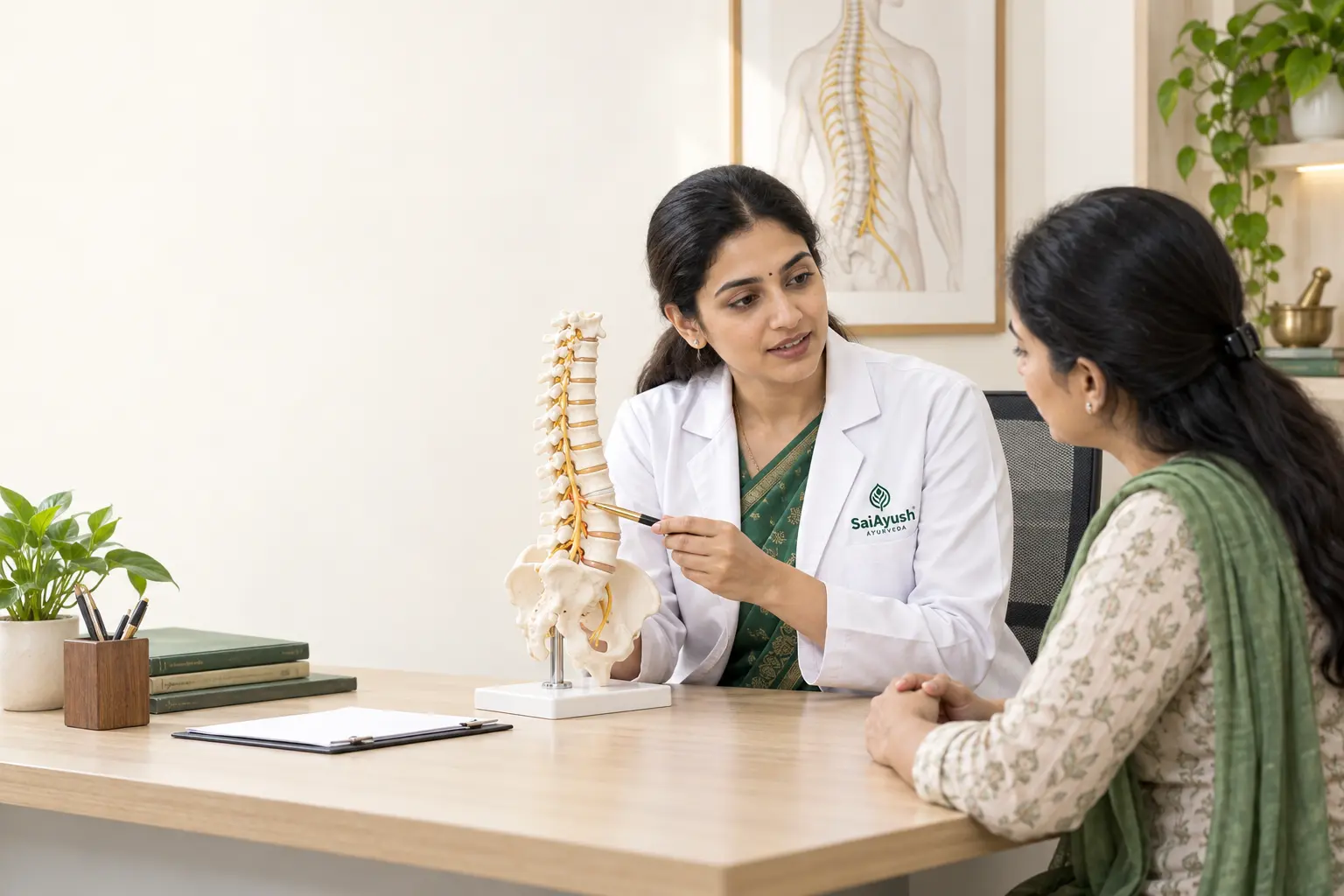
At Sai Ayush Ayurveda Hospital, patients with radiating neck or back symptoms are assessed before any Ayurvedic procedure is recommended.
The doctor reviews the symptom distribution, strength, sensation, functional limitations, current medicines and available imaging. Where appropriate, care may coordinate Ayurveda, Panchakarma support, physiotherapy, movement guidance and lifestyle modification.
Patients whose symptoms indicate significant nerve compression or another serious condition may be referred for imaging or specialist assessment.
Learn more about Ayurvedic care for sciatica or meet our Ayurvedic doctors.
A consultation does not guarantee that a specific Ayurvedic treatment will be advised.
Frequently asked questions
Can radiculopathy affect both arms or both legs?
It can, but symptoms affecting both sides—especially with weakness, walking difficulty or bladder or bowel changes—require prompt medical assessment.
Is tingling always caused by radiculopathy?
No. Tingling may also occur because of peripheral-nerve compression, neuropathy, vitamin deficiencies and other conditions. Clinical examination is required.
Is massage safe for radiculopathy?
Not in every case. Forceful massage may aggravate acute pain or neurological symptoms. Any manual or Ayurvedic procedure should follow a proper assessment.
Can prescribed medicines be continued?
Do not stop or change prescribed medicines without consulting the prescribing doctor. Inform the Ayurveda physician about every medicine and supplement being used.
How long does Ayurvedic care take?
There is no standard duration. It depends on the cause, symptom severity, neurological findings, general health and response to coordinated care.
Key takeaway
Radiculopathy is caused by irritation or compression of a spinal nerve root and may produce radiating pain, numbness, tingling or weakness.
Safe care begins with neurological assessment and identification of warning signs. Ayurveda may have a supportive, doctor-guided role for selected patients alongside physiotherapy and appropriate medical care. It must not be presented as proven nerve regeneration, a guaranteed cure or an alternative to necessary specialist treatment.
Medical disclaimer: This article is intended for general education and does not diagnose radiculopathy or prescribe treatment. Seek qualified medical assessment for persistent, worsening or neurological symptoms.