

Ayurvedic Parkinson's Disease Treatment in Hyderabad
Overview: Parkinson's Disease Treatment
- ✓Doctor-Guided Diagnosis & Prakriti Assessment
- ✓Multi-Disciplinary ANP³ Integrated Care Plan
- ✓Plan Based on Your Assessment and Dosha Balance
- ✓Supervised Panchakarma & Post-Therapy Care
Parkinson's disease is managed by a neurologist, and prescribed medicines should be continued as advised. Ayurvedic support for Parkinson's disease in Hyderabad at Sai Ayush is complementary care for stiffness, tremor and sleep, planned after your reports are reviewed. It may include Shirobasti and Nasyam, along with movement and routine guidance.
Parkinson's disease is a long-term neurological condition that affects movement. It can cause tremor, stiffness, slowness and balance problems, and often begins gradually on one side of the body.
Your doctor reviews the neurologist's reports and current medicines, and asks about movement, sleep, digestion and daily routine. Ayurvedic therapies may be added with movement and routine guidance. Responses vary from person to person.
Prescribed Parkinson's medicines should continue as your neurologist advises. Falls, swallowing trouble, sudden confusion or fever need prompt medical attention.
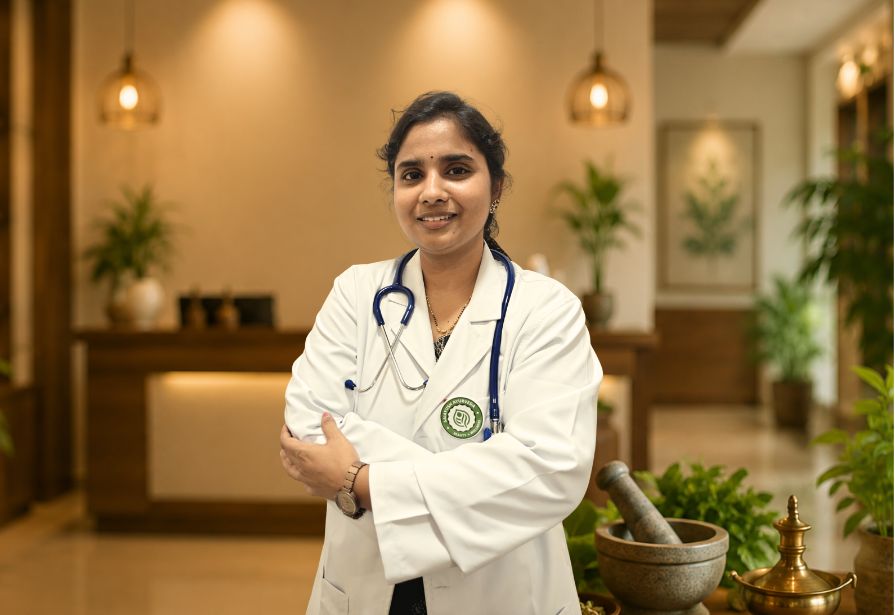
Medically Reviewed By: Dr. Pasalapudi Visalaanjani, B.A.M.S, MD (Kayachikitsa)
Registration No: 1146/A/2016 · Last updated 5 November 2026
Disclaimer: The information provided is for educational purposes and should not replace professional medical advice. Outcomes may vary.
Quick Reference Matrix
| Parameter | Clinical Direction |
|---|---|
| Who it may suit | Patients experiencing progressive tremors and stiffening who want to slow the disease trajectory and reduce dependency on synthetic dopamine drugs. |
| Who should avoid | Any urgent or unstable medical problem, which needs hospital care first. |
| Typical duration | Decided by your doctor after the first assessment. Results vary. |
Clinical Care Framework
Our Parkinson's Disease care follows the integrated ANP³ model (Ayurveda, Naturopathy and Physiotherapy), aiming for steady, sustainable progress.
- Treatment Model: ANP³ (Ayurveda, Naturopathy, Physiotherapy)
- Supervision: Ayurvedic doctors
- Target Conditions: Parkinson's Disease, Neurological Deficits, Nerve Degeneration
- Setting: Hospital Environment (KPHB OP/IP, Madinaguda OP)
- Safety Protocol: Rigorous pre-treatment clinical evaluation required
What Is Parkinson's Disease?
Parkinson's disease is a progressive nervous system disorder that affects movement. It occurs when nerve cells in the brain that produce dopamine slowly break down or die.
Parkinson's disease may be associated with:
- Tremors (shaking), usually beginning in a limb, often the hand or fingers
- Slowed movement (Bradykinesia), making simple tasks difficult
- Rigid, stiff muscles that can be painful and limit range of motion
- Impaired posture and a stooped walking stance
- Loss of automatic movements (like blinking or swinging arms while walking)
- Changes in speech (speaking softly or slurring)
- Severe chronic constipation
- Sleep disturbances and difficulty turning over in bed
Common Symptoms of Parkinson's Disease
People with parkinson's disease may experience:
- Chronic or sharp pain in the affected area
- Reduced mobility or stiffness
- Associated discomfort that affects daily activities
Who Should Avoid Immediate Ayurvedic Therapy?
For Parkinson's Disease, some Ayurvedic therapies are not suitable as a first step and are deferred until the treating physician has ruled out the following:
- The patient is actively experiencing a severe psychotic break or end-stage dementia preventing therapy compliance.
- Pregnancy, unless the treating physician has specifically cleared gentle outpatient care
- Any acute, unstable medical emergency needing immediate hospital care
How Is Treatment Performed?
Detailed Ayurvedic Consultation
The first step is a proper consultation with an Ayurvedic doctor. The doctor reviews your symptoms, duration of tremors, level of rigidity, ongoing neurology medications (like Levodopa), sleep patterns, and bowel movements. Recognizing the exact stage of the disease is crucial before planning any therapy.
Shirodhara for Nervous System Support
Shirodhara, the continuous pouring of warm medicated liquid over the forehead, is a cornerstone of neuro-supportive care. It helps calm the hyperactive nervous system, relaxes the mind, and is traditionally used to manage tremors and improve the severe sleep disturbances often seen in Parkinson's.
Nourishing Abhyanga and Pizhichil
Abhyanga (medicated oil massage) and Pizhichil (continuous pouring of warm oil over the body) are heavily utilized. In Parkinson's, the muscles become extremely rigid and dry. These deep, warm oil therapies help soften muscle stiffness, improve local blood flow, and counteract Vata-induced dryness.
Nasya (Nasal Drops Administration)
Nasya is a specialized Panchakarma procedure where medicated oils are administered through the nasal passage. In Ayurveda, the nose is considered the direct pathway to the brain (Shira). Nasya is recommended for upper body Vata disorders, stiffness of the neck/jaw, and supporting cognitive function.
Basti (Medicated Enema) for Systemic Vata Balance
Parkinson's (Kampavata) is considered a severe, deep-seated Vata disorder. Basti is the ultimate Panchakarma treatment for Vata. Nourishing enemas are used to systematically deliver herbs directly into the lower gut, aiming to calm systemic Vata, lubricate dry tissues, and resolve severe constipation.
Physiotherapy and Balance Guidance
Ayurvedic therapies soften the rigidity, but active, doctor-guided stretching and balance exercises are mandatory to maintain functional mobility and prevent falls.
Conditions Where Ayurvedic Care May Help Support Recovery
Ayurvedic Parkinson's disease treatment may be considered for:
- Patients experiencing early to moderate tremors
- Severe muscle rigidity and stiffness
- Supportive care to manage medication side-effects
- Patients suffering from Parkinson's-related insomnia
- Managing chronic constipation associated with the disease
- Supportive care to maintain daily independence and mobility
What to Expect During Your Visit
During your first visit, the doctor will carefully assess your condition. You MUST bring:
- Your medical history and neurologist's diagnosis
- A list of your ongoing Parkinson's medications (like Levodopa/Carbidopa)
- Details about how many years you have had symptoms
- Information regarding any falls or balance issues
- Details about your sleep patterns and digestion (constipation)
- Any recent MRI or brain scan reports
Lifestyle Guidance for Parkinson's Disease
Along with Ayurvedic treatment, daily routines are vital for safety and managing progression.
General guidance may include:
- Never stop or suddenly change your allopathic neurology medications
- Remove loose rugs and clutter at home to prevent tripping and falls
- Follow a Vata-pacifying diet (warm, moist, easily digestible foods)
- Drink plenty of warm water and include ghee in meals to combat constipation
- Perform doctor-advised gentle stretching and balance exercises daily
- Establish a very strict, calm evening routine to support better sleep
- Avoid cold drafts and stressful situations, which worsen tremors
- Follow the integrated therapy and physiotherapy plan advised by the doctor
When Immediate Medical Attention Is Needed
Do not delay contacting emergency care if the condition involves:
- A sudden, severe worsening of symptoms overnight (possible infection or stroke)
- A severe fall resulting in inability to move or extreme pain
- Sudden inability to swallow food or liquids (choking hazard)
- Severe confusion, hallucinations, or sudden behavioral changes
- High fever or signs of a urinary tract infection
About Sai Ayush Ayurveda Hospital
Sai Ayush is an NABH AYUSH Entry Level certified, multi-specialty Ayurvedic hospital in Hyderabad, delivering integrated care through its ANP³ model — Ayurveda, Naturopathy and Physiotherapy — across its KPHB and Madinaguda branches.
Visit Us in Hyderabad
Consultations for Parkinson's Disease are available at both Sai Ayush branches in Hyderabad, convenient for KPHB, Kukatpally, Madinaguda, Miyapur, Hafeezpet, Chandanagar and nearby areas.
- KPHB (Main Branch, OP & IP) — Plot No 59, JNTU–Hitech City Road, KPHB 7th Phase Rd, Hyderabad, Telangana 500085 · +91 81423 28080
- Madinaguda Branch (OP) — 4th Floor, Kosal, Sai Plaza, above FMS Dental, Ramakrishna Nagar, Hafeezpet, Hyderabad 500049 · +91 84668 82266
- Open: Every day, 7:00 AM – 10:00 PM
Duration of Treatment
The number of days and sessions is decided by your doctor after the first assessment and reviewed at each follow-up. Results vary from person to person.
Clinical Integration
Many patients seeking Parkinson's Disease care are also on neurological medication such as anti-seizure drugs, blood thinners, or blood pressure medication, or are under the care of a neurologist for the same condition. We review current prescriptions and recent scans before starting Panchakarma or oil-based therapies, so Ayurvedic care supports, rather than conflicts with, ongoing neurological management.